Ramos Leo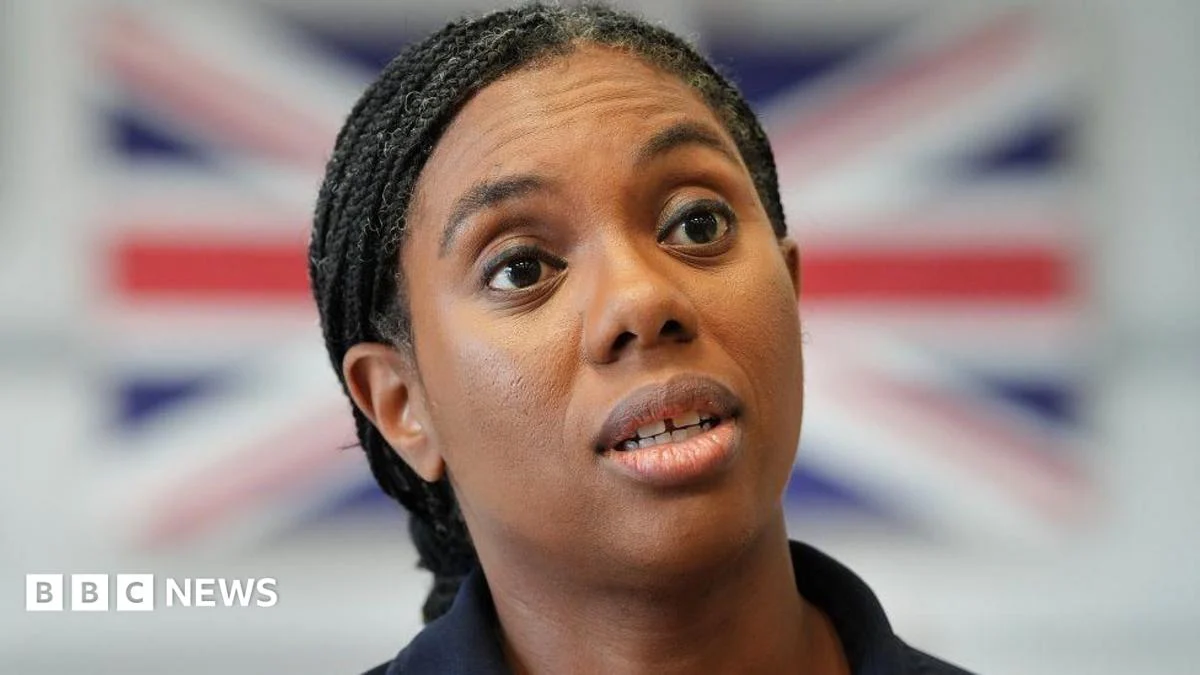
Kemi Badenoch, a prominent voice within the Conservative party, has launched a scathing critique of newly appointed Labour leader Andy Burnham, branding him a "people pleaser" with "airy-fairy" plans. Her remarks, made to the BBC, came in direct response to Burnham’s inaugural speech as Labour leader on Friday, where he promised to usher in "the most significant change moment in our politics for 40 years." This ambitious declaration, invoking a period stretching back to the transformational era of Margaret Thatcher, set a high bar for his leadership, signalling an intent to fundamentally reshape the political landscape rather than merely adjusting policy.
Burnham’s address outlined five core pledges to the public, though specific details beyond two key commitments remained somewhat veiled. Among these pledges were a promise to work collaboratively with other parties, albeit in a "distinctively Labour" direction, and a significant transfer of power from the centralised authority of Westminster to local authorities across the nation. The concept of "distinctively Labour" cooperation immediately raised questions about the potential for genuine cross-party consensus versus an attempt to co-opt other parties into a Labour-led agenda. Historically, such attempts to maintain party ideological purity while seeking broader collaboration have proven challenging, often leading to accusations of political maneuvering rather than genuine partnership. The proposal to devolve power from Westminster, meanwhile, suggests a desire to empower regions and communities, potentially through enhanced mayoral powers or greater local government autonomy. While such moves are often lauded for bringing decision-making closer to the people and fostering local responsiveness, they also present considerable logistical and financial hurdles, requiring careful planning to avoid creating fragmented governance or exacerbating regional inequalities.
Despite Burnham’s stated ambition to move beyond the often-rancorous "point-scoring" culture of Westminster politics, Badenoch made it clear that she has no intention of following suit. "I will score as many points as possible if it means the right thing for the country," she asserted, drawing a stark philosophical line between her approach to opposition and Burnham’s call for a more collaborative spirit. For Badenoch, robust political debate and the vigorous challenging of government policy are not merely tactical games but essential mechanisms for ensuring accountability and driving what she perceives as the correct national direction. Her refusal to engage in a new, less confrontational political paradigm underlines a fundamental belief that effective governance emerges from a marketplace of ideas, where different visions are rigorously tested and scrutinised.
This assertive stance was further underscored by her unequivocal declaration: "What I’m not going to do is give Andy Burnham a blank cheque." This powerful idiom signifies a complete unwillingness to grant the new Labour leader unquestioning support or to waive rigorous scrutiny of his nascent policies and proposals. It signals that the Conservative opposition, under Badenoch’s influence, will demand detailed plans, clear financial costings, and transparent implementation strategies. Such a position is typical of an opposition keen to establish itself as a vigilant guardian of public interest, ensuring that grand pronouncements are backed by concrete, workable solutions. It sets an immediate adversarial tone, suggesting that Burnham’s path to implementing his vision will be met with persistent questioning and resistance from across the aisle.
Badenoch articulated a significant concern about Burnham’s perceived leadership style, suggesting that the country currently requires a leader capable of making "tough decisions" and, crucially, possessing the fortitude to "face down the Labour MPs that don’t want to do anything difficult." This pointed observation implies an internal struggle within the Labour party, or at least a perception of one from the Conservative benches. "And that is what worries me," she added, casting doubt on Burnham’s capacity to navigate potential ideological resistance or entrenched interests within his own ranks. The "tough decisions" she alluded to could encompass a wide range of challenging policy choices, from difficult fiscal austerity measures, potentially unpopular welfare reforms, or contentious industrial strategies to ambitious environmental targets that may face resistance from various sectors. Her critique suggests that a leader must not only possess a vision but also the unwavering resolve to implement it, even in the face of internal party dissent, which she seemingly believes Burnham may lack as a "people pleaser."
Indeed, Badenoch acknowledged a personal liking for Burnham, whom she has met on previous occasions, describing him as a "nice guy" and a "people pleaser." While these might seem like positive personal attributes, Badenoch quickly pivoted to their potential political drawbacks. In the cut-and-thrust world of national leadership, being overly concerned with universal approval can be a significant impediment to decisive action. A "people pleaser" might, she implied, shy away from necessary but unpopular choices, prioritising broad consensus over the hard-nosed pragmatism required for effective governance. This characterisation serves to subtly undermine Burnham’s perceived strength, transforming a personal virtue into a potential political vulnerability.
Expanding on this theme, Badenoch emphatically stated: "The job is not a popularity contest. It is making the lives of all of the people outside this building better." This stark delineation between seeking public affection and delivering tangible improvements to citizens’ lives formed the core of her criticism of Burnham’s early pronouncements. She accused him of failing to articulate a clear path forward, dismissing his initial plans as "airy-fairy stuff." This pointed critique suggests a perceived lack of concrete policy detail, a dearth of actionable strategies, and an absence of clear implementation roadmaps. In the high-stakes arena of national politics, such vagueness can be interpreted as a fundamental weakness, allowing critics to accuse a new leader of offering grand rhetoric without the substance to back it up. For Badenoch, true leadership demands a precise articulation of "what he’s going to do," a clarity that she believes is conspicuously absent from Burnham’s agenda.
In what constituted a direct and comprehensive critique of Burnham’s inaugural speech, Badenoch accused the former Manchester mayor of being "a man who was talking to the Labour Party, not to the country." This distinction is crucial in political communication. Speaking to the party often involves addressing internal factions, appeasing different ideological wings, and rewarding loyalists, sometimes at the expense of a broader national appeal. Conversely, speaking to the country requires articulating a vision that transcends partisan divides, resonates with the diverse concerns of the wider electorate, and addresses pressing national issues like the economy, public services, and national security. Badenoch’s accusation implies that Burnham’s focus remains too inward-looking, still embroiled in the dynamics of his leadership campaign rather than pivoting to the challenges of national governance.
She elaborated on this point, stating: "It was all Labour this, Labour that, their factions, their issues." This suggests that Burnham’s speech was heavily steeped in the lexicon and concerns of the Labour Party itself, potentially alienating voters who are not intimately familiar with its internal workings or ideological debates. The "factions" could refer to the various wings of the party, from the more traditional left to the modernising centrists, each vying for influence. "Their issues" might imply specific policy debates or internal grievances that hold significance within Labour but less resonance with the general public. Badenoch concluded with a stark warning: "I’m not sure that he is aware of what the country’s priorities are and if he’s become prime minister without that then I think he’s going being for a rude awakening, to use his own words." This "rude awakening" could manifest as a clash with the harsh realities of governing, intense public scrutiny, or unforeseen external challenges, all exacerbated by a perceived disconnect from the everyday concerns of the populace, such as the cost of living, economic stability, or the state of public services.
Burnham’s path to the Labour leadership, and by extension, the premiership, has been marked by a deliberate return to national politics. He re-entered Parliament just a month prior to his leadership bid, winning a by-election that provided him with a renewed platform after a period spent as Mayor of Greater Manchester. His ascent to the leadership itself was remarkably swift and comprehensive, cementing his position as the undisputed leader of the Labour Party. He emerged as the sole leadership candidate, a testament to his overwhelming support within the party. This was evidenced by the backing of an impressive 379 Labour MPs, a clear majority of the parliamentary party, alongside the unanimous endorsement of all 11 trade unions affiliated with Labour. This unprecedented level of unity behind a single candidate grants Burnham an exceptionally strong mandate, positioning him as a formidable political force with a unified party behind him.
However, even with such a robust mandate, the challenges of forming a government and leading a nation are immense. Ahead of his first major address as Prime Minister, scheduled for Monday, Burnham has "remained coy about who will be filling the top roles" in his cabinet. This reticence could be interpreted in several ways: it might be a strategic move to build anticipation, a deliberate pause to meticulously weigh options and balance the diverse talents and factions within his party, or a desire to avoid premature commitments that could limit his flexibility. The selection of a cabinet is a critical exercise in political leadership, shaping the government’s direction and reflecting the leader’s priorities and approach. Burnham’s guarded stance on these crucial appointments adds an element of intrigue and anticipation, but also provides another potential point of scrutiny for critics like Badenoch, who will undoubtedly be watching closely for signs of his leadership style and the composition of his future government.



 Nakalama John
 George Anjay
 atisusanti
 Roy Suryo