
 George Anjay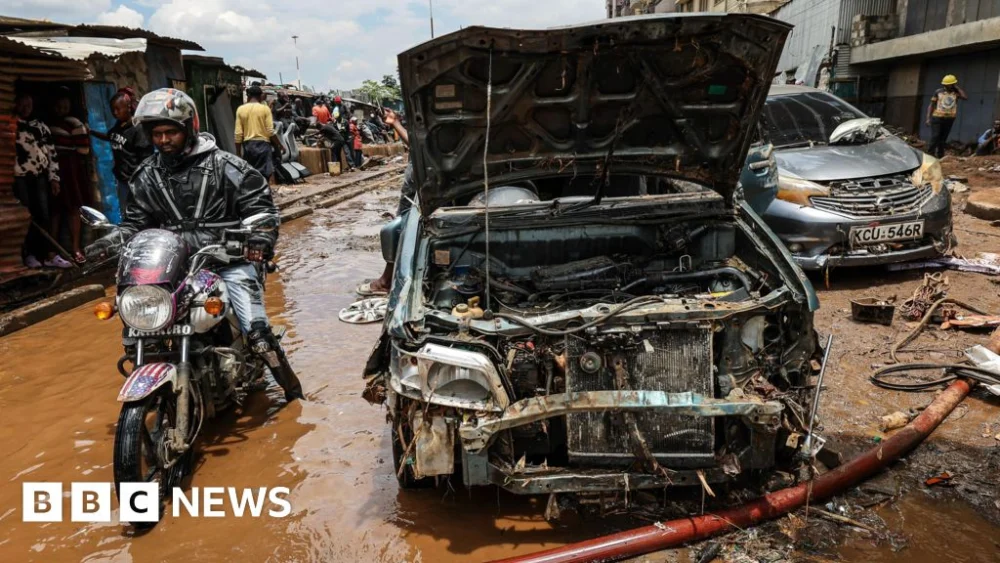
In a dramatic overnight rescue operation, the Kenya Red Cross successfully extricated 11 individuals from a minibus taxi, locally known as a matatu, which had become trapped as floodwaters surged through the city. The organization also reported the successful rescue of two children from a submerged house, highlighting the immediate dangers faced by residents. The torrential downpours, which have persisted for the past week, have overwhelmed the city’s natural drainage systems and rivers, leading to catastrophic flash floods. Water levels have risen dramatically, causing rivers to burst their banks, inundating homes, and severely damaging vital infrastructure, including roads, power lines, and water supply networks.
The extent of the damage has necessitated the closure of several roads in Nairobi due to the structural integrity of bridges being compromised by the relentless flow of water. Educational institutions have also been affected, with reports indicating that some schools were submerged following Saturday’s particularly heavy rainfall, disrupting learning and potentially displacing students and staff. The gravity of the situation prompted the interior ministry to issue a stark warning on Sunday, stating that various regions across the country were expected to continue experiencing heavy rainfall, thereby escalating the risk of further flooding.

In response to the escalating danger, authorities have issued urgent appeals to residents living in low-lying areas, imploring them to evacuate to higher, safer ground. This precautionary measure has already led to the displacement of over 2,000 people who have been forced to seek shelter elsewhere. The National Police Service has confirmed that search-and-rescue operations are actively underway, striving to locate and assist individuals affected by the "torrential rain and subsequent devastating flooding affecting various parts of the country." The sheer force of the water has inflicted immense damage, leaving a trail of destruction in its wake.
Nairobi has emerged as the epicenter of the tragedy, accounting for more than half of the recorded fatalities, with 33 deaths attributed to the floods in the capital. Investigations and observations point to a confluence of factors exacerbating the crisis in Nairobi. The city’s notoriously inadequate drainage systems have proven incapable of managing the sheer volume of rainwater, a problem compounded by the obstruction of natural river channels and waterways. This obstruction is largely a consequence of unregulated and unplanned development, which has encroached upon and significantly altered natural watercourses.
The impact of the floods has been acutely felt by residents. Kareem Hassan Ali, a businessman residing in the Parklands area of Nairobi, recounted the harrowing experience of witnessing approximately 2 meters (6.5 feet) of water outside his apartment block on Saturday night, though he noted that the levels had since receded. While his own apartment remained dry, the underground parking area of his building was completely submerged, with vehicles submerged beneath the rising waters. The scene underscored the destructive power of the floods and the vulnerability of urban infrastructure.
Another resident of Parklands, Deenesh Patel, an auditor, shared his decision to seek refuge at a friend’s house overnight, stating, "I saw the warning and didn’t want to take any risks." Both Ali and Patel voiced their frustration and concern, calling on government officials to implement more robust measures to improve drainage infrastructure and to strictly enforce regulations against construction that impedes the natural flow of rivers. Patel emphasized the recurring nature of heavy rains, stating, "The rain was heavy but this happens each year. Other low-lying areas were not affected because they have the proper infrastructure." This sentiment highlights a perceived disparity in preparedness and infrastructure development across different parts of the city.
President William Ruto addressed the nation on Sunday, acknowledging the ongoing efforts by authorities to clear blocked drainage systems. However, Ali expressed skepticism regarding the immediate impact of these efforts, noting that residents had not witnessed any official intervention in their area and that the Parklands Residents Association had taken it upon themselves to clear debris. The President also assured that emergency food supplies and medical assistance were being dispatched to support those affected by the disaster, signaling a commitment to provide humanitarian aid to the affected populations.
The devastating impact of these floods is not confined to Kenya alone, with neighboring countries also experiencing significant rainfall and flooding. The article also touches upon the broader context of climate change, noting that while many factors contribute to flooding, a warming atmosphere makes extreme rainfall events more probable. The global temperature has already risen by approximately 1.1°C since the beginning of the industrial era, and this trend is projected to continue unless governments worldwide implement substantial reductions in greenhouse gas emissions. This connection to climate change underscores the long-term implications of such events and the urgent need for global action to mitigate its effects. The article also includes a section on "More about Kenya from the BBC," suggesting further related content is available.




 Nakalama John
 atisusanti
 Ramos Leo
 Roy Suryo
 Nana Banana