Ramos Leo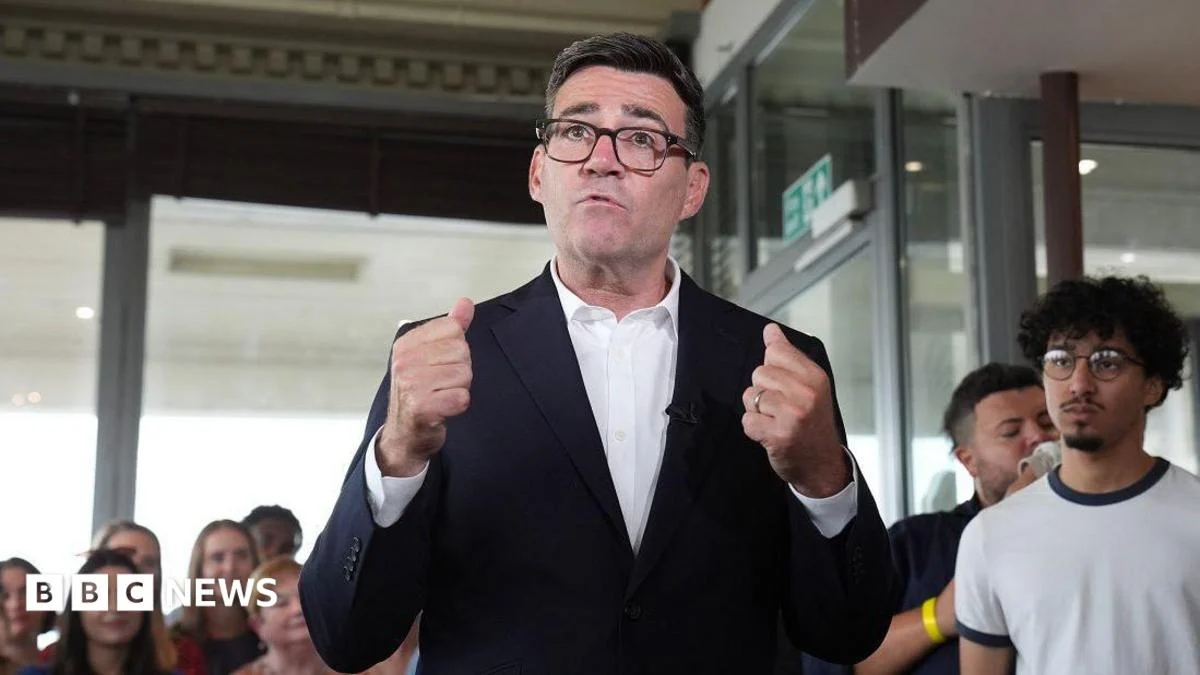
It must feel like one of the biggest weekends of Andy Burnham’s life, a culmination of decades of ambition and a sudden, unexpected twist of fate. Downing Street beckons for a man who has long dreamed of leading his party and his country, a vision he first publicly articulated well over a decade ago. "16 years we’ve been thinking about this, and it’s still felt like a rush in the last few weeks," admitted one supporter, encapsulating the whirlwind nature of his recent ascent. Indeed, a key thing to remember with Burnham’s rise to this pivotal moment is that it happened slowly for a long time, meticulously nurtured through years in opposition, parliamentary roles, and a highly visible mayoralalty, and then, in a blink, it happened quickly in next to no time at all.
Burnham’s designs on Downing Street first became explicit and public way back in 2010. In the immediate aftermath of Labour’s crushing defeat in that year’s general election, which saw the party ousted after 13 years in power, he contested the vacancy left by Gordon Brown. He was to do the same in 2015, following another electoral loss for Labour, hoping to capture the leadership and steer the party back to power. On both occasions, he lost – first to Ed Miliband, and then, more unexpectedly, to Jeremy Corbyn. As some have pointed out in a rather barbed way, on both occasions he lost to those who themselves were ultimately losers at general elections. For many, 2026, then, represents a third time lucky for Burnham, a political redemption story years in the making. Yet, the path to this weekend was far from linear or assured. As recently as January, he was remarkably barred from standing as Labour’s candidate for a parliamentary seat, a decision that seemed to cement his political future outside Westminster. Now, in a dramatic turn of events that few could have predicted, the very man who reportedly barred him, Sir Keir Starmer, is packing his bags in Downing Street – a removal van has already been spotted, signifying the swift end of an era. Sir Keir and his family are scheduled to leave on Monday morning, making way for his successor.
The speed of this transition has been breathtaking. In the end, no one formally challenged Sir Keir for the leadership once he had resigned. Subsequently, and perhaps even more surprisingly, no one stepped forward to take on Burnham to replace him, paving the way for his uncontested ascension. In other words, a process that could have been drawn out, potentially involving weeks of internal campaigning, hustings, and a divisive ballot, wasn’t. It was an expedited handover, almost unprecedented in modern political history for a governing party. So little wonder some in Team Burnham had expected to have quite a bit more time to complete their preparations and strategic planning – hence that palpable feeling of being rushed. The weight of expectation, combined with the condensed timeline, means the new administration must hit the ground running with unprecedented velocity.
In recent days, the machinery of government transition has spun into overdrive. What are known as "access talks" have continued intensively, with Burnham and his nascent team engaging closely with the civil service about their plans for government and the early events they want to hold next week and beyond. These talks are crucial for ensuring a seamless transfer of power, familiarising the incoming team with the complexities of Whitehall, and laying the groundwork for immediate policy implementation. The indications are they want to hit the ground running – in something of a blitz of appearances and announcements in his opening days and weeks in office, designed to project an image of dynamism, competence, and decisive leadership. The next prime minister has also begun to receive national security briefings, a solemn and essential part of the handover, stepping up a gear as the realities of global challenges come into sharp focus. The world does not wait for a new government to settle in.
One of Burnham’s first and most significant tasks will be the formation of his cabinet. He claimed, as he became Labour leader, in an ear-catchingly absolute phrase, that "I haven’t made any decisions yet about who will be in that top team." Later, when pressed on whether this really was the case, or whether in some instances he did know but would wait until next week to make announcements, he refined his statement, saying he was "finalising those decisions." This is precisely the weekend for that crucial finalising. Yes, there is the headline-generating question of who will be Chancellor of the Exchequer – a role that often defines a government’s economic direction and credibility – but there are plenty more jobs to sort too. According to the Institute for Government, a leading authority on Whitehall, there are 149 ministerial posts, held by 122 individuals, each requiring careful consideration.
Some seek to dismiss the journalistic intrigue surrounding who might get which roles as mere political "soap opera" – but it matters profoundly. The individuals selected shape the outlook, style, and tone of a government, influencing everything from legislative priorities to public communication. And it is not remotely easy; cabinet formation amounts to a complex game of organisational jenga, in which a prime minister and their inner team have to take account of myriad factors: political factions within the party, the need for gender and geographical diversity, the balance of experience versus fresh talent, and the rewarding of loyalty alongside the imperative of competence. Plenty, including serving cabinet ministers, have been kept in the dark, leading to intense speculation and lobbying. Those hoping to stay on have, unsurprisingly, been privately making the case for stability and continuity, emphasizing their track records and institutional knowledge. Others, sensing the shift in the political winds, have quietly accepted they are on their way out, preparing for life on the backbenches or beyond.
As for the Labour Party itself, the stand out human observation is that it appears to have remembered how to smile again. After years of internal strife, electoral disappointment, and a period of perceived stasis, a palpable sense of renewed optimism pervades the ranks. There is a deep hope from many among their tribe that, with this leadership reboot, they might, just might, be back in the political match, revitalised and ready to compete. Clutching a water bottle and wearing a huge grin, one Labour MP said, "think of this as a hydration break!" in a nod to the footballing novelty many of us have been trying to adjust to at the World Cup. It’s an apt metaphor: the party has paused, refreshed, and is now ready for the second half, hoping for a dramatic turnaround. And yes, the Labour Party has decided – before the half time point of this parliament – to go for a change of tactics and a key substitution.
Their new captain, Andy Burnham, is a figure of towering ambition, claiming he will personify "the most significant change" in our politics in 40 years. Such a bold declaration sets an incredibly high bar for his incoming administration, promising not just a change of government, but a fundamental realignment of the political landscape. Let’s see if he can deliver on that audacious promise. Burnham’s enthusiasm for taking on the tough stuff appears genuine, for now at least: social care in England being the most striking example. This is a policy area he championed fiercely as Mayor of Greater Manchester, often clashing with central government, and it remains one of the most intractable and emotionally charged domestic challenges, demanding systemic reform and significant funding.
But the tough stuff will be visible wherever he looks come Monday, at home and abroad. Domestically, beyond social care, he inherits an economy grappling with high inflation, a cost-of-living crisis, and persistent regional inequalities. Public services, particularly the NHS, are under immense strain, facing record waiting lists and workforce shortages. Education, housing, and crime will all demand immediate attention. Internationally, the UK faces a volatile geopolitical landscape, from the ongoing conflict in Ukraine to tensions in the Middle East, a complex relationship with the European Union post-Brexit, and the broader challenges of climate change and global economic instability. These are not issues that can be solved with easy answers or quick fixes.
Which poses the big picture question: to what extent does Brand Burnham survive contact with the facts of governing life? Does his blokeish easy charm, which has served him so well in building a popular regional mandate, have the resilience for what lies ahead? Can he translate his campaigning prowess and empathetic communication style into effective, decisive national leadership? And – within the scope of Labour’s manifesto from two years ago, the pamphlet of promises which carries the party’s mandate to govern – can he deliver enough, and quickly, to justify those smiles I was talking about? The public, fatigued by political instability, will be watching closely for tangible improvements to their daily lives.
Our fifth prime minister in four years takes office shortly, a role with vanishingly little job security of late, underscoring the extreme volatility of modern British politics. The rapid succession of leaders has eroded public trust and deepened cynicism, making Burnham’s task even more formidable. He must not only govern effectively but also work to restore faith in the political system itself. And yet again, an impatient, expectant electorate looks on, desperate for stability, competence, and a clear vision for the future. The hopes of a reinvigorated Labour Party, and indeed the nation, now rest squarely on Andy Burnham’s shoulders as he prepares for his much-anticipated policy blitz.


 George Anjay
 Nakalama John
 atisusanti