Nana Banana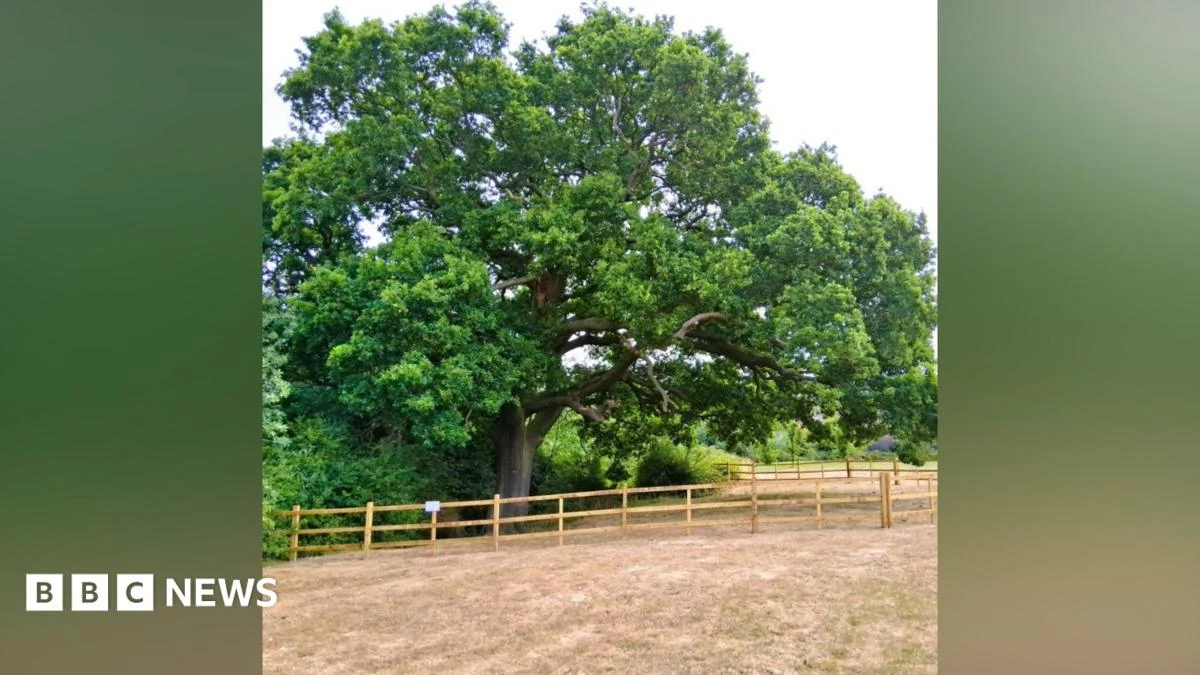
South Kesteven District Council has recently implemented crucial protective measures around a venerable oak tree in Manthorpe, a picturesque village nestled near the historic market town of Grantham, Lincolnshire. This ancient arboreal sentinel is believed to have stood witness to centuries of history, with its origins potentially stretching back to the era of Sir Isaac Newton, who famously resided and made groundbreaking discoveries at nearby Woolsthorpe Manor. The decision to intervene came after a comprehensive assessment revealed the tree was suffering from significant soil compaction, exacerbated by unwitting public interaction, specifically children playing and hanging ropes from its majestic branches.
The protective strategy involves the installation of new wooden fencing, designed to create a necessary buffer zone, limiting direct public access to the immediate vicinity of the tree’s trunk and root system. This "minimal intervention," as described by the authority, is intended to deliver maximum benefits not only for the tree’s immediate health and long-term conservation but also for the wider ecosystem it supports. It also serves a crucial public safety function by preventing access to areas that might be compromised by root issues or where falling branches, however unlikely, could pose a risk.
Councillor Rhys Baker, Cabinet Member for Environment at South Kesteven District Council, underscored the tree’s immense significance. "This is one of the area’s most notable trees and is recorded on the Woodland Trust’s Ancient Tree Inventory," he stated, highlighting its recognition as a nationally important natural heritage asset. He further elaborated on the expected benefits of the new fencing, explaining that "the restriction of access around the tree will also improve the rooting environment and help conserve this historic feature for future generations."
The oak tree’s estimated age, linking it to Sir Isaac Newton (1642-1727), imbues it with a profound historical resonance. Newton spent significant periods at Woolsthorpe Manor, particularly during the Great Plague of London in 1665-1666, a time often referred to as his "annus mirabilis" or "year of wonders," when he formulated his theories on universal gravitation, optics, and calculus. To imagine this very oak tree as a sapling or young tree during Newton’s lifetime connects the natural world to pivotal moments in human intellectual history. It stands as a living monument, a silent observer to the unfolding centuries, from the agricultural revolutions to the industrial age, and now into the digital era. Its survival through such a vast expanse of time makes it not just a tree, but a tangible link to our past, a source of wonder, and a powerful symbol of endurance.
The specific issue identified – significant soil compaction – is a common threat to ancient trees, particularly those in areas with high foot traffic. Soil compaction occurs when the particles of the soil are pressed together, reducing the pore space between them. This reduction in pore space directly impacts the tree’s health by limiting the availability of oxygen to the roots, impeding water penetration and nutrient uptake, and physically restricting root growth. Over time, compacted soil can lead to root stress, disease susceptibility, and a decline in overall tree vitality, potentially leading to premature death. The original report noted that the compaction was exacerbated by children playing and hanging ropes from the branches. While innocent in intent, such activities concentrate foot traffic around the tree’s base, further compacting the soil, and the physical stress of ropes on branches, particularly older ones, can also cause damage to the bark and underlying cambium layer, making the tree vulnerable to pests and diseases.
The Woodland Trust’s Ancient Tree Inventory, on which this oak is proudly listed, is a national record of ancient, veteran, and notable trees across the United Kingdom. Inclusion on this inventory signifies a tree’s exceptional biological, cultural, or aesthetic value. Ancient trees, by their very nature, are irreplaceable habitats, supporting a vast array of biodiversity. Their gnarled trunks, decaying wood, and extensive canopies provide shelter, food, and breeding grounds for countless species of insects, fungi, lichens, mosses, birds, and small mammals. Many of these species are rare or critically dependent on the unique microclimates and resources offered by veteran trees. Protecting this oak, therefore, is not merely about preserving a single tree but safeguarding a complex, miniature ecosystem that has evolved over centuries.
The chosen solution of "minimal intervention" reflects a thoughtful and ecologically sensitive approach to conservation. Rather than undertaking extensive pruning, soil excavation, or chemical treatments, the council has opted for a passive yet effective measure. The wooden fencing creates a physical barrier that encourages natural recovery of the soil by preventing further compaction. Over time, with reduced foot traffic, the soil structure can gradually decompress, allowing air and water to penetrate more effectively, and providing a healthier environment for the tree’s extensive root system to thrive. This method aligns with modern arboricultural best practices that prioritize allowing nature to heal itself with judicious human assistance. The use of wooden fencing is also aesthetically pleasing, blending harmoniously with the natural landscape of Manthorpe and avoiding the starkness of more industrial materials.
Beyond its historical and ecological importance, the Manthorpe oak holds significant cultural value for the local community. It serves as a landmark, a point of local pride, and a silent backdrop to generations of village life. Its presence contributes to the unique character and sense of place in Manthorpe. The council’s proactive stance demonstrates a commitment not only to environmental stewardship but also to preserving the intangible heritage that such a magnificent tree represents. The decision to protect it underscores a growing understanding of the multifaceted value that ancient trees provide – from their role in carbon sequestration and air purification to their immense contribution to biodiversity and human well-being.
The long-term conservation goals extend beyond the immediate fencing project. South Kesteven District Council plans to monitor the tree’s health closely, with regular inspections by qualified arborists. This ongoing vigilance will ensure that any future issues can be identified and addressed promptly. Potential future interventions, if necessary, might include light crown reduction pruning to manage risk or improve structural integrity, or specialized soil aeration techniques if natural recovery proves insufficient in certain areas. Furthermore, there is potential for educational signage to be installed near the tree, informing visitors about its history, ecological importance, and the reasons behind the protective measures. Such signage could transform the site into an educational resource, fostering greater public appreciation and understanding of ancient trees and the importance of their conservation.
The protection of the Manthorpe oak is also indicative of a broader commitment by South Kesteven District Council to safeguarding the natural environment across its jurisdiction. The district boasts a rich tapestry of landscapes, from fertile agricultural lands to pockets of ancient woodland and riverine habitats. Initiatives like this project contribute to the council’s wider environmental strategy, which encompasses biodiversity action plans, sustainable land management practices, and public engagement in conservation efforts. By protecting individual, iconic trees, the council reinforces the message that every part of the natural heritage is valuable and deserves careful stewardship.
In conclusion, the installation of protective fencing around the historic oak tree near Grantham represents a vital step in preserving a remarkable natural and historical asset. This majestic tree, with its potential links to Sir Isaac Newton, serves as a living testament to centuries of history and a critical haven for biodiversity. By addressing the immediate threat of soil compaction through a considered, minimal intervention, South Kesteven District Council is ensuring the oak’s continued health and resilience. This strategic conservation effort will not only safeguard this ancient wonder for future generations to admire and learn from but also reinforces the profound connection between human history, ecological health, and the enduring power of nature. The Manthorpe oak will now, with renewed vigour, continue its silent vigil, a timeless sentinel in the heart of Lincolnshire.




 George Anjay
 Nakalama John
 atisusanti
 Ramos Leo