Nana Banana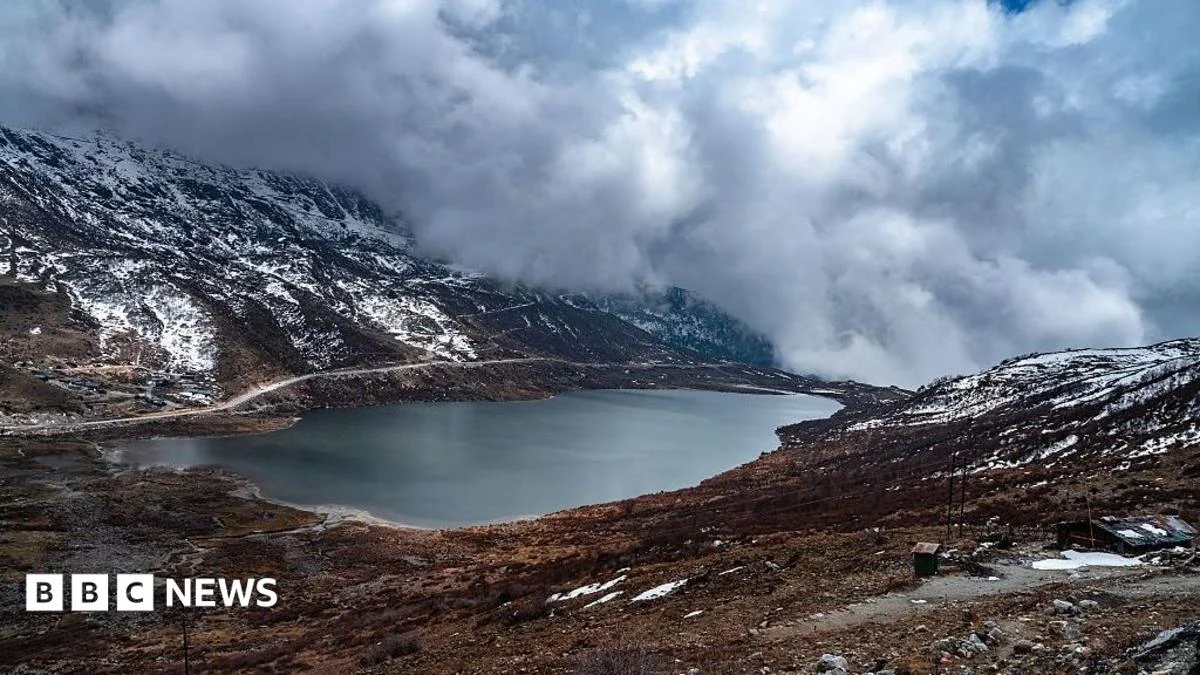
A comprehensive new report, co-authored by global consultancy Systemiq, the Integrated Mountain Initiative, and with crucial technical input from the International Centre for Integrated Mountain Development (ICIMOD) and the GB Pant National Institute of Himalayan Environment, reveals a stark acceleration in glacial mass loss. Himalayan glaciers are now losing mass a staggering 65% faster than they were just a decade ago. This acceleration is a direct consequence of global warming, with the region experiencing higher temperatures that contribute to both increased ice melt and changes in precipitation patterns. The loss of glacial mass not only diminishes the long-term freshwater reserves but also significantly alters the hydrological cycle of the region, impacting river flows crucial for downstream communities.
Despite the critical importance of these glaciers as a vital water source and a barometer of global climate change, the report highlights a severe monitoring deficit. Out of an estimated 40,000 glaciers spanning the vast Himalaya-Karakoram region, a mere 21 are subjected to detailed, sustained monitoring. This represents an alarming oversight, leaving scientists and policymakers largely blind to the real-time changes occurring across the majority of the mountain range. The challenges in expanding this monitoring are considerable, encompassing the remote and treacherous terrain, harsh climatic conditions, and a lack of sufficient funding and technical expertise. This vast data gap impedes accurate risk assessment, limits the development of effective early-warning systems, and hinders informed policy decisions necessary to mitigate future disasters.
The physical landscape of the Himalayas is undergoing rapid and profound transformations. As glaciers retreat, they often leave behind expanding glacial lakes, frequently impounded by unstable moraine dams – natural barriers composed of loose rock and ice debris. These moraine dams are inherently fragile and susceptible to failure due to various factors, including seismic activity, heavy rainfall, or simply the immense pressure of increasing water volumes. Concurrently, rising temperatures are causing permafrost – ground that has remained frozen for at least two consecutive years – to thaw. This thawing destabilizes high mountain slopes, making them prone to landslides, rockfalls, and debris flows, which can, in turn, trigger or exacerbate other hazards, creating a dangerous cascade of environmental risks.
India, with a significant portion of its territory in the Himalayan region, is particularly vulnerable and already bears witness to the scale of this escalating threat. Approximately 18% of India’s landmass lies within the Himalayas, yet this region accounts for an disproportionate 35% of the nation’s total disasters. These disasters encompass a range of events, from flash floods and landslides to glacial lake outburst floods (GLOFs) and extreme weather phenomena, all intensified by the changing climate. The Indian government acknowledged the severity of the situation in July, informing parliament that following a 2025 scientific assessment of 189 high-risk lakes in the Indian Himalayan region, 56 glacial lakes had been classified as "very high risk." Furthermore, the Central Water Commission is actively monitoring 2,485 glacial lakes larger than 10 hectares across India’s Himalayan river basins, indicating a growing recognition of the impending dangers.
The Himalayas have a tragic history of devastating GLOFs. In 2023, a glacial lake outburst flood in Sikkim unleashed a torrent of water and debris, claiming at least 70 lives and inflicting widespread damage on critical infrastructure, including roads, bridges, and vital hydropower projects. Just two years prior, in 2021, a similar catastrophe unfolded in Uttarakhand, where a massive flood swept through the Rishiganga and Dhauliganga valleys, resulting in the deaths of more than 200 people. These events serve as stark reminders of the destructive power of GLOFs and the urgent need for enhanced monitoring, early-warning systems, and robust disaster preparedness.
However, the danger extends far beyond spectacular floods. The Himalayas function as an immense natural water tower, feeding some of Asia’s largest rivers, including the Indus, Ganges, and Brahmaputra, which collectively sustain hundreds of millions of people across South Asia. ICIMOD forecasts that "peak water" is expected around mid-century in most Hindu Kush Himalayan river basins. "Peak water" signifies the point at which glacier runoff reaches its maximum annual volume before beginning a sustained decline as glaciers continue to lose mass. This impending decline in glacier-fed water supply has profound implications for agriculture, energy production, and the overall livelihoods of populations dependent on these rivers.
The new research attaches an unusually large and compelling economic figure to this dependency, estimating that Himalayan water underpins roughly 20% of India’s Gross Domestic Product (GDP). This vast economic contribution supports critical sectors such as agriculture, including the cultivation of staple crops like wheat and rice, as well as high-value commodities like tea. It also fuels India’s burgeoning hydropower sector, a crucial component of the nation’s energy security, and sustains the vibrant pilgrimage economy, which draws millions of devotees to sacred sites in the mountains annually. Yet, despite this enormous economic contribution, the mountain states themselves capture only about 5% of this value, highlighting an economic disparity that can hinder local development and resilience-building efforts.
Lord Nicholas Stern, a renowned economist and chair of the Grantham Research Institute on Climate Change and the Environment at the London School of Economics, powerfully articulated the global significance of the region: "The Himalayas are the Third Pole. Unlike the Arctic or Antarctic, this pole has hundreds of millions of people living beneath it." He further underscored the critical nature of the situation, warning that this ecological system, which serves as a "national and international infrastructure," is "approaching a tipping point." This vivid imagery emphasizes the irreversible consequences that could unfold if urgent action is not taken.
Crucially, not all the forces driving glacier loss are beyond the region’s immediate control. The Systemiq research estimates that approximately one-third of Himalayan glacier melt is attributable to black carbon pollution. Much of this black carbon originates from industrial activities, particularly brick kilns, located in the Indo-Gangetic plains. When soot from these sources is deposited on snow and ice, it reduces their albedo (reflectivity), causing them to absorb more sunlight and accelerating the melting process. Unlike global greenhouse gas emissions, which require international agreements and long-term systemic changes, black carbon pollution represents a more direct and actionable lever that India and its neighboring countries can address domestically. Implementing cleaner technologies, improving industrial practices, and regulating emissions could yield significant and relatively rapid benefits in slowing glacial melt.
Arushi Chopra, Systemiq’s senior director and lead author of the report, reiterated the urgency of the crisis: "The Himalayas are approaching a tipping point, with millions of lives and livelihoods hanging in the balance. Glaciers are melting faster than they were a decade ago." In response to these escalating risks, the report proposes a comprehensive framework of 10 priority transitions designed to build resilience and mitigate the impacts of climate change in the region. These transitions range from direct environmental interventions to systemic economic and governance reforms.
Key among these priorities is the reduction of black carbon emissions, advocating for targeted policies and technological upgrades in polluting industries. Expanding glacier monitoring is also crucial, requiring investment in advanced remote sensing technologies, ground-based observations, and international collaborative research. Improving disaster early-warning systems is paramount, encompassing community-based alert networks, real-time data sharing, and robust communication infrastructure. Furthermore, the report calls for a fundamental rethinking of tourism development in the mountains. With the Indian Himalayan region attracting roughly 400 million tourist visits annually, the objective should shift from merely maximizing visitor numbers to generating sustainable value that is retained and reinvested locally, thereby reducing the ecological footprint and empowering local communities.
Strengthening disaster preparedness is another critical transition, necessitating pre-agreed governmental protocols for action when hazards emerge, ranging from coordinated evacuation strategies to proactive measures for protecting vulnerable infrastructure. Pema Gyamtsho, director general of ICIMOD, emphasized the increasing complexity of these interconnected risks. "Glaciers are retreating, permafrost and high-mountain slopes are becoming increasingly unstable, and communities and infrastructure downstream face growing risks from complex and cascading hazards," he stated.
Crucially, these environmental hazards do not respect national borders. As Gyamtsho pointed out, such risks "do not respect national borders, and no single country can address them alone." This necessitates robust cross-border cooperation in monitoring, the shared dissemination of risk information and early-warning systems, and joint investment in resilience-building initiatives. Such collaborative efforts are not merely about saving lives in the face of imminent disaster; they are fundamental to protecting the long-term livelihoods and economies of the hundreds of millions of people across South Asia who depend inextricably on the health and stability of the Himalayan ecosystem. The time for concerted, regional action is now, before the tipping point becomes an irreversible reality.




 George Anjay
 Nakalama John
 Ramos Leo