
 Ramos Leo
The initial investigation, spearheaded by Parliament’s standards watchdog, had been meticulously examining an alleged failure by Farage to declare a substantial interest: specifically, the £5 million gift from billionaire Reform UK donor Christopher Harborne. This scrutiny began before Farage’s recent brief resignation as an MP last month. His resignation, triggered in response to intensifying questions surrounding his financial backing and the probe itself, momentarily paused the investigation. However, with his resounding victory in the Clacton by-election, his status as an MP is restored, and with it, the parliamentary rules and oversight he is subject to. The Office of the Parliamentary Commissioner for Standards confirmed to the BBC, shortly after the Clacton result was declared, that "the investigation is not suspended anymore," indicating an immediate resumption of their inquiry.
Farage’s victory in Clacton was nothing short of a political spectacle, securing 63% of the vote on a turnout of 44%. This highly unusual by-election was distinctive not only for its protagonist but also for the unprecedented number of candidates – a record 34 individuals vying for the seat. Adding to its unique character, all of the main Westminster parties – Labour, the Conservatives, the Liberal Democrats, the Greens, and Restore Britain – collectively boycotted the contest. They dismissed the by-election as a "gimmick" and a "circus," arguing that it was a self-serving exercise orchestrated by Farage to address his personal controversies rather than a genuine democratic contest for the constituency.
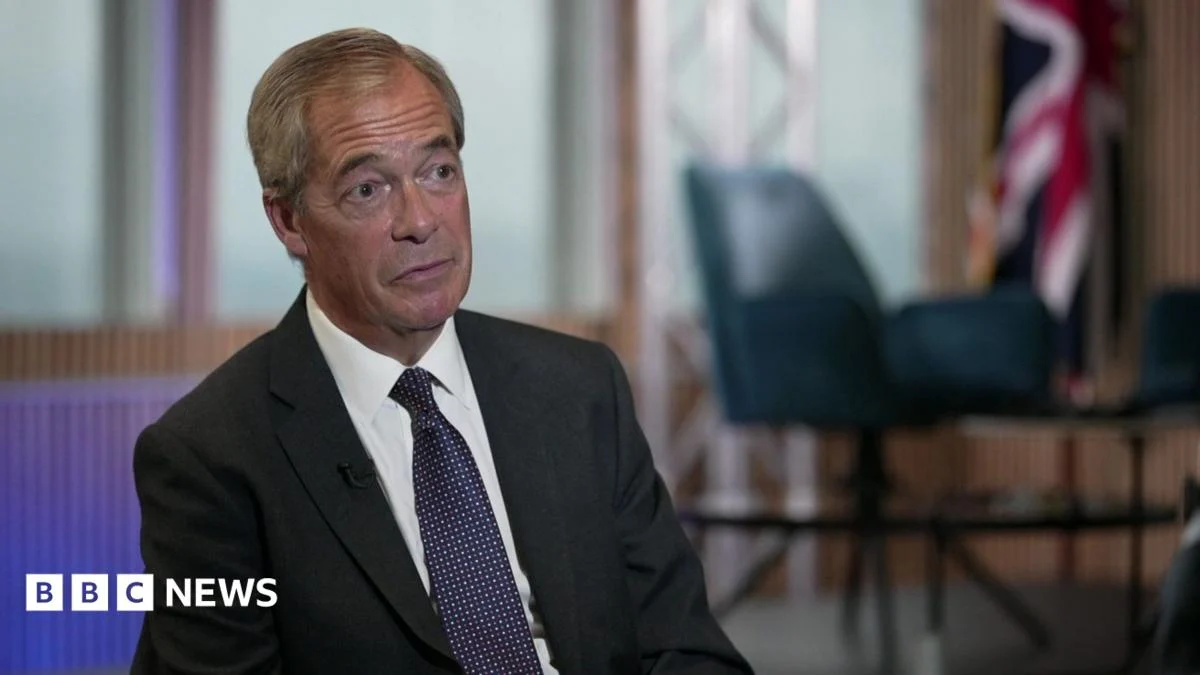
Despite the political theatrics and his commanding lead, Farage himself was notably absent from the count at Clacton Leisure Centre. He later explained to his supporters that Essex Police had warned him of an "organised campaign to disrupt and degrade the result," leading to his decision not to attend. However, this claim was swiftly contradicted by the BBC, which reported that Essex Police had not advised any candidate against attending the count. Speaking to supporters before the official result was announced, Farage defiantly stated: "I’m damned if I’m going to stand on a stage, having won a resounding victory, a ringing endorsement of all that I’ve tried to fight for, and you’ve tried to fight for, and be demeaned and humiliated by nobodies, and I will not sadly be attending the count." The Reform UK party further exacerbated the air of mystery by cancelling what had been billed as a "major speech" by Farage in Clacton on Friday morning, along with some scheduled media appearances.
In a statement released after his victory, the Reform leader proclaimed: "The verdict is now in, and it is a convincing, overwhelming win, with more votes than we got in the general election of 2024. Today, the voters in Clacton have stuck up two fingers to the entire political establishment." He received 22,239 votes, surpassing his winning total at the general election in 2024 by 1,014 votes, when he first became the MP for Clacton. This by-election also saw him increase his majority significantly, from 8,405 to 12,784. While the turnout of 44% was about 14% lower than in the 2024 general election for the constituency, it was considered about average for recent Westminster by-elections. His vote share of 63.3% marked a substantial 17 percentage point increase from his 2024 general election performance of 46%.
The implications of the reopened parliamentary standards investigation are significant for Farage. Should the investigation find that he has breached parliamentary rules, he could face a range of sanctions, including suspension from the House of Commons. Crucially, a sufficiently long suspension could trigger a "recall petition" process, which, if successful, could lead to yet another by-election in Clacton. This would potentially force Farage to fight for his seat again, mere months after his latest victory – a prospect laden with irony given the circumstances of the current by-election. Adding to the pressure, opposition parties have been vocal in calling for another investigation into separate financial support Farage reportedly received from a different political ally, George Cottrell, ahead of the general election in 2024, indicating a broader appetite for scrutiny of his financial dealings.
Prime Minister Andy Burnham, commenting on the by-election result, acknowledged that voters in the area had "come up with their answer" but firmly asserted that the investigation should continue. "It needs to be resolved to make sure we’ve got the highest standards in politics, and that’s incumbent on all of us, including Mr Farage," he told BBC Radio 5 Live, underscoring the government’s stance on upholding probity in public life.
The by-election’s unique character was further highlighted by the performance of novelty candidate Count Binface. His impressive showing of 9,455 votes, securing a 26.9% vote share, was arguably the best by-election performance by a novelty candidate in recent memory. While he still lost his £500 deposit – a fate shared by all candidates except Farage for failing to secure more than 5% of the total valid votes – his significant vote count resonated across the political spectrum. In a video posted on X, Count Binface – comedian Jonathan Harvey, out of costume – humorously declared himself the "winning candidate… of the candidates who bothered to turn up." He further suggested that the result showed "Nigel – who said he didn’t want to be humiliated – maybe has been." Binface quipped, "Over one in four people in this constituency would rather have Count Binface as their MP than the leader of Reform UK – and I’m just getting started."
Reactions from other political parties were equally sharp. Labour Party chairwoman Bridget Phillipson declared this was "no victory" for Farage, asserting that the "mountain of sleaze and scandal" engulfing him had only grown "while he’s been trying to distract the public by fighting a by-election against a bin." The Liberal Democrats chimed in, stating Farage had "come away looking daft" from the by-election and urged the standards investigation into his £5 million gift to "crack on." The Conservatives, for their part, branded it a "fake by-election" that had done nothing to "draw a line under the questions" surrounding the controversial gift.
Beyond the political drama, the by-election came with a significant financial cost and logistical challenges. It is estimated to have cost taxpayers about £250,000. Reform UK had reportedly offered to cover the costs of organising the poll, but political parties are barred from doing so to maintain the independence and impartiality of the electoral process. The record number of 34 candidates also presented practical hurdles, notably requiring the use of unusually large tables to accommodate ballot papers that measured a whopping 90cm in length. This number of candidates surpassed the previous record of 26, set in 2008 at the Haltemprice and Howden by-election, which was famously triggered and won by Conservative MP Sir David Davis to make a powerful point about civil liberties. While Farage’s 63.3% vote share was impressive, it was still lower than the 71.6% received by Sir David in Haltemprice and Howden, a by-election often cited as the most similar historical precedent for an MP resigning to fight a specific political point. As Nigel Farage settles back into Westminster, the shadow of the renewed watchdog probe ensures that the scrutiny surrounding his financial affairs will continue to be a defining feature of his latest chapter in parliamentary politics.

 George Anjay
 Nakalama John
 atisusanti
 Roy Suryo
 Nana Banana