
 Ramos Leo
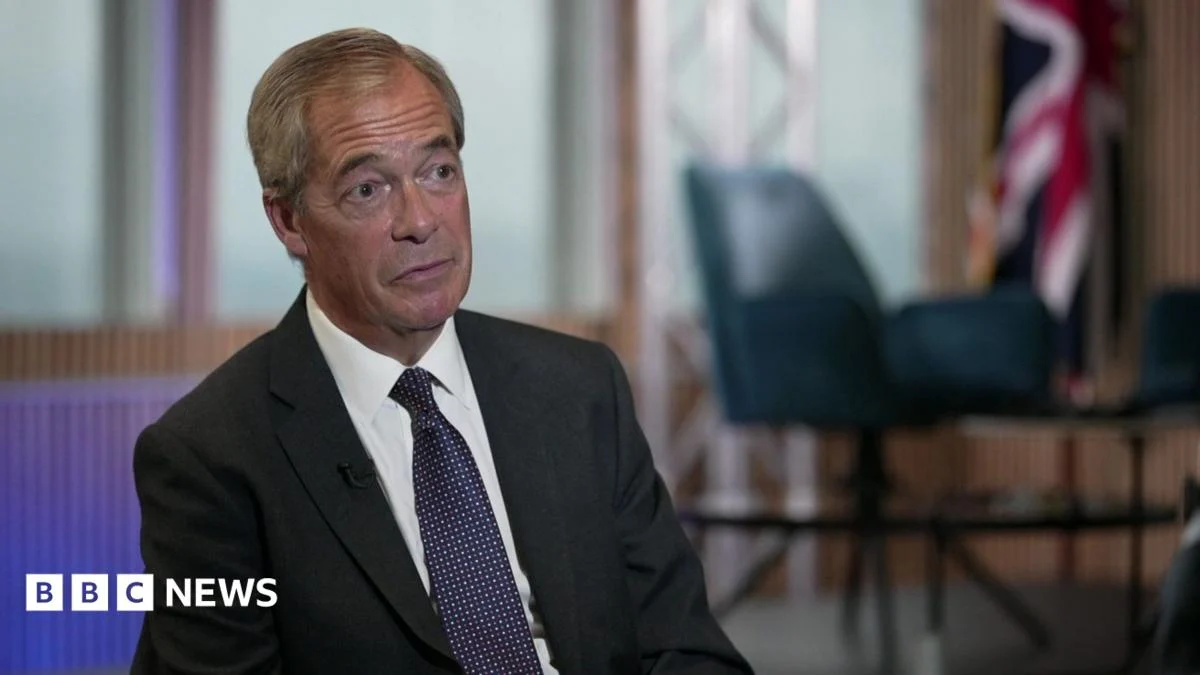
The Clacton by-election has been a spectacle of political theatre from its very inception, and results day proved to be no less idiosyncratic, culminating in the victorious candidate, Nigel Farage, conspicuously absent from the declaration of a contest he himself instigated. This departure from conventional political protocol immediately set a tone of defiance and intrigue around what was already a highly anticipated outcome.
For many observers, the morning was earmarked for an expected Farage victory speech, delivered from the heart of Clacton, followed by a series of interviews detailing his return to Westminster. Neither of these events materialised. The leader of Reform UK abruptly cancelled all scheduled media engagements, including those with the BBC and other prominent outlets, leaving journalists and the public alike without the customary post-election analysis from the victor.
Farage’s explanation for his non-appearance at the declaration, held at the Clacton Leisure Centre, cited warnings from the police regarding an organised attempt to "disrupt and degrade the result." He further expressed a personal disinclination to be "demeaned and humiliated by nobodies," a statement that underscored his characteristic disdain for his detractors. His aides concurrently underscored his deep-seated and persistent anxieties concerning his personal security, a recurring theme throughout his public career.
Beyond these stated reasons, Farage’s strategic vanishing act offered a distinct political advantage. By foregoing a public celebration, he deftly sidestepped, at least temporarily, the barrage of questions surrounding Reform UK’s finances – the very allegations that precipitated the by-election in the first place. This manoeuvre effectively refocused the media’s attention from the financial controversy onto the immediate oddities of the race and its unconventional aftermath, allowing the narrative to centre on his personal triumph rather than his ongoing legal challenges.
Despite the surrounding peculiarities, the numerical outcome of the by-election offered Farage and his team cause for satisfaction. Reform UK’s internal analysis highlighted that Farage garnered a higher vote count in this by-election than he did in the general election just two years prior, a testament to his enduring local appeal, even in a contest where his victory was widely anticipated. Furthermore, for a mid-summer by-election, the turnout of 44% was deemed respectable, suggesting a significant level of local engagement and a populace that took the electoral battle seriously, rather than viewing it as a mere procedural formality.
Interactions with residents in Walton-on-the-Naze and Clacton-on-Sea on results day revealed a divided local opinion. While Farage undeniably commands a segment of vociferous critics within the constituency, a substantial portion of the electorate resonated with Reform’s perspective: that this electoral victory held far greater significance than the impending resumption of the Parliamentary Commissioner for Standards’ investigation. A blunt assertion from one of Farage’s aides, "We consider this matter closed," encapsulated this defiant stance, portraying the by-election as a public vindication that should override any internal parliamentary scrutiny.
However, the reality remains starkly different. The commissioner’s inquiry is indeed active and ongoing, and Farage is expected to be interviewed in the coming weeks. The core of the investigation revolves around a substantial £5 million gift from billionaire businessman Christopher Harborne, allegedly received by Farage in the months preceding his election as an MP, which critics argue should have been duly registered. The potential repercussions of this inquiry are considerable, with the very real possibility that the process could culminate in Farage’s suspension from Parliament, potentially triggering yet another by-election in Clacton.
This looming threat has inevitably sparked an internal debate within Reform UK regarding the party’s strategic direction and Farage’s public persona. Tim Montgomerie, a prominent Reform activist and the founder of the influential ConservativeHome website, who himself defected to Reform two years ago, offered a pointed critique on Radio 4’s The World At One. While acknowledging Farage’s considerable political acumen, Montgomerie expressed deep frustration with his behaviour on results day, stating, "When he goes down this angry route he doesn’t help himself… It’s very frustrating how he’s behaved today. He needs to get a grip of this problem."
Montgomerie’s argument is that Farage and Reform UK are most effective when they project a more positive and outward-looking vision for the country, rather than focusing on what he termed "grievances" or an "inward looking" perspective. This suggests a desire within parts of the party to pivot towards constructive policy proposals rather than relying solely on populist indignation. Conversely, Farage’s inner circle and staunch allies contend that these "grievances," which often centre on issues like immigration, the perceived overreach of the state, and a sense of national decline, are not merely complaints but "real and legitimate" concerns deeply felt by a significant portion of the electorate. From a position of perceived vulnerability, which Farage has often cultivated, this by-election provided him with a platform to seize the initiative, framing the narrative as a battle between the common people he represents and an establishment actively conspiring against him.
His critics, however, vehemently reject this characterisation. They assert that the rules and standards of parliamentary conduct apply universally to all Members of Parliament, and that the failure to declare a financial gift of such magnitude constitutes a serious breach. They insist that the £5 million from Christopher Harborne, irrespective of when it was received, falls squarely within the scope of declarations required for those holding or seeking public office.
In a pre-result interview with GB News in the early hours of that morning, Farage offered a partial concession regarding the financial matter: "If I made one sin, it’s that I haven’t filled in a piece of paper." He reiterated his long-standing defence, maintaining, "I’ve broken no law, I’ve broken no tax law, I’ve taken no public money. I don’t even own a motor home. Maybe I haven’t filled in a piece of paper. I’m confident I’m right – we’ll see where we go." He has consistently maintained that he sought and received legal advice confirming that the money did not need to be declared.
Beyond the immediate Clacton context and the shadow of the financial inquiry, a broader question looms: what is the strategic positioning of Nigel Farage and Reform UK within the wider political landscape, and is their current confrontational approach the most prudent path forward? Recent polling data suggests a dynamic shift. There is early evidence of what has been dubbed a "Burnham bounce" for Labour, indicating a surge in support for the opposition party, which has demonstrably disrupted Reform’s previously entrenched lead in national opinion polls. Concurrently, the Conservative Party appears to be regaining a degree of confidence, projecting a more "chipper and competitive" image than it did a year ago, potentially capitalising on internal Labour divisions or a general desire for stability.
Adding another layer of complexity is the emergence of "Restore Britain," a new political entity led by former Reform MP Rupert Lowe. While currently a nascent force, its presence signals a further potential fragmentation of the right-wing, anti-establishment vote, posing a challenge to Reform’s claim as the sole standard-bearer for this segment of the electorate. It is an undeniable truth that none of the established political parties currently enjoy widespread popularity or overwhelming public trust. However, against this backdrop of general disillusionment, Reform’s support has shown signs of "shrivelling a bit," while their rivals, notably Labour and to some extent the Conservatives, appear to be experiencing a modest uptick in their political fortunes.
As Members of Parliament prepare to return to the Commons in a few weeks, the political landscape for the new Westminster season is distinctly taking shape. Labour, for now at least, appears to be striding forward with a renewed sense of purpose. Reform, despite its by-election victory, finds itself in a precarious position – outwardly "punchy" yet undeniably "under the cosh" from ongoing scrutiny and shifting political currents. Meanwhile, a host of other parties and emerging movements are vigorously "scrapping for attention," vying for their share of the public’s disaffection. The months ahead promise a period of intense political manoeuvring and unpredictable developments.

 George Anjay
 Nakalama John
 atisusanti
 Roy Suryo
 Nana Banana