atisusanti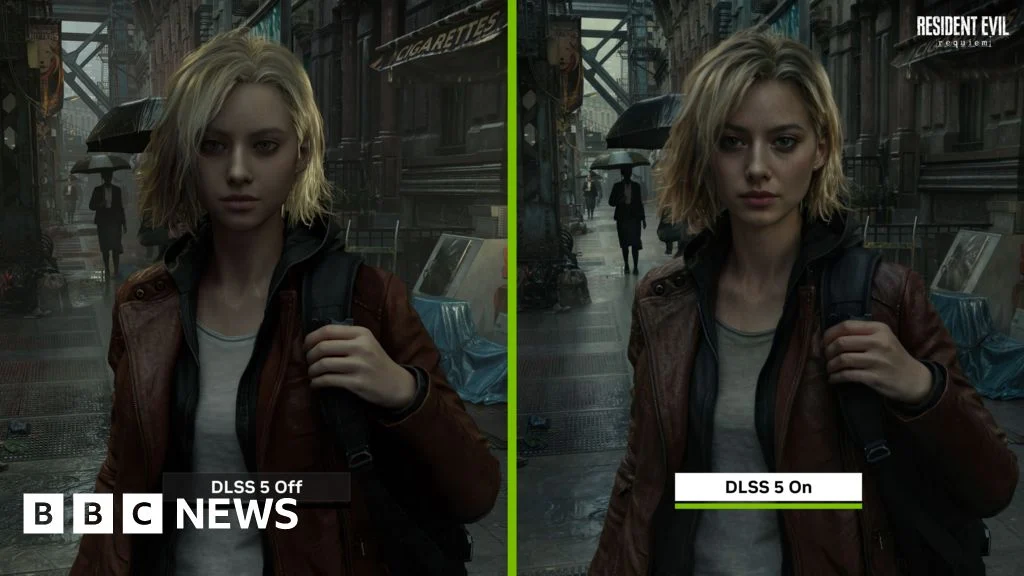
Nvidia, a titan in the semiconductor industry and a ubiquitous name in artificial intelligence, is currently navigating a storm of criticism following the unveiling of its latest graphics innovation, DLSS 5. The company has hailed the feature as a monumental leap forward, promising to "reinvent" the visual landscape of video games and deliver "photoreal computer graphics previously only achieved in Hollywood visual effects." However, this ambitious declaration has ignited a significant backlash from segments of the gaming community and industry professionals alike, who fear that the unchecked embrace of AI in graphics could fundamentally alter the artistic integrity and creative soul of interactive entertainment.
The DLSS 5 tool, slated for release this autumn, was showcased with compelling visual demonstrations, notably featuring stark comparisons in games like Resident Evil Requiem and Hogwarts Legacy. Nvidia presented images where the new technology dramatically transformed the fidelity of characters and environments, showcasing an unprecedented level of detail in textures, lighting, and overall realism. The company’s presentation at its annual Silicon Valley conference positioned DLSS 5 as its most significant advancement in computer graphics since the introduction of real-time ray tracing in 2018, a technique renowned for its ability to render light, shadows, and reflections with remarkable accuracy.
However, the impressive visual upgrades have been met with skepticism and concern from some quarters. Prominent figures within the gaming industry have voiced their reservations, with many describing the AI-generated aesthetics as "uncanny and weird" and expressing worries that artistic expression risks being "squeezed out." Alex Donaldson, a respected video game critic, shared his thoughts on the social media platform Bluesky, acknowledging the "massive glow-up for environments" but finding the character rendering to be unsettling. He articulated a common sentiment: that while the technology might enhance realism, it could also lead to a homogenization of visual styles and a dilution of the unique artistic vision that developers strive to achieve.
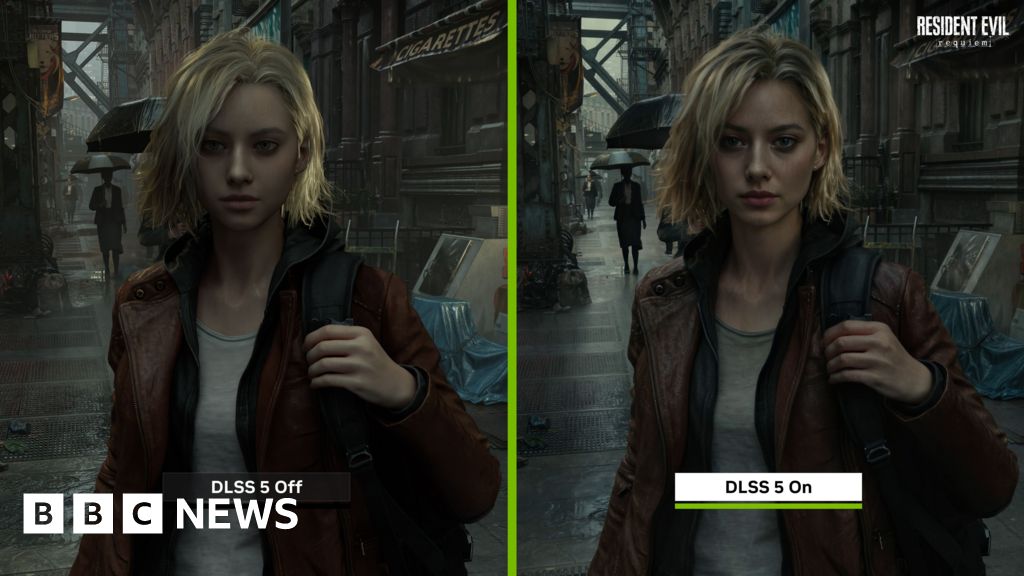
This sentiment was echoed by Jeff Talbot, a concept artist at Gunfire Games, who posted a strong critique on social media. Talbot declared, "This is NOT the direction games should be going in. Each DLSS 5 shot looked worse and had less character than the original." His statement encapsulates the fear that the AI’s algorithmic approach to rendering could inadvertently strip away the nuanced imperfections and deliberate stylistic choices that define a game’s aesthetic identity and imbue it with character. The perceived "airbrushed and hollow" quality of some of the AI-enhanced visuals has become a focal point of the criticism.
Nvidia’s journey to this point is a testament to its evolution. While the company is now globally recognized for the advanced microchips that power AI data centers, its origins are deeply rooted in the gaming industry. Nvidia has consistently been a formidable force driving innovation in gaming hardware and software, and the development of DLSS (Deep Learning Super Sampling) technology has been a cornerstone of its efforts to enhance gaming performance and visual fidelity. DLSS 5 represents the latest iteration of this technology, leveraging advanced AI algorithms to upscale lower-resolution images to higher resolutions, thereby improving performance without a significant sacrifice in visual quality.
At the heart of DLSS 5’s promise is its ability to use AI to generate "photoreal" graphics for intricate details such as hair, fabric, and skin, alongside more sophisticated environmental lighting. Jensen Huang, Nvidia’s CEO, emphasized the revolutionary nature of the technology, stating, "We are reinventing computer graphics once again." He further asserted that DLSS 5 would deliver "a dramatic leap in visual realism while preserving the control artists need for creative expression." This claim, however, has been challenged by critics who question the extent to which artistic control can truly be maintained when AI plays such a significant generative role.
The backing of major publishers and game developers, including industry giants like Bethesda, CAPCOM, and Warner Bros. Games, lends considerable weight to Nvidia’s claims and suggests a widespread adoption of DLSS 5 in upcoming titles. This broad industry support highlights a potential paradigm shift in game development, where AI-driven rendering could become a standard tool.

However, the controversy surrounding DLSS 5 is not an isolated incident. It occurs against a backdrop of growing unease within the gaming community regarding the increasing integration of AI-generated content. This unease has already led to significant repercussions for some studios. For instance, Running With Scissors, the publisher behind the Postal shooter franchise, was compelled to pull a forthcoming game after it faced accusations of utilizing AI-generated graphics. Similarly, the role-playing game Clair Obscur: Expedition 33, which had been lauded with the Game of the Year award at the Indie Game Awards, was later disqualified when it emerged that the developer had experimented with AI-generated images, even though they were ultimately not used in the final product. These incidents underscore the sensitivity and scrutiny surrounding AI in game development, reflecting a deep-seated concern about its ethical implications and impact on creative professions.
Despite the vocal opposition, there are voices within the industry that champion AI content as a progressive force. Charlie Guillemot, joint chief executive of Vantage Studios, a key developer for Assassin’s Creed Shadows, expressed a more optimistic outlook. Guillemot believes that DLSS 5 will significantly enhance the immersive qualities of games, stating, "The way it renders lighting, materials and characters changes what we can promise to players. On Assassin’s Creed Shadows, it’s letting us build the kind of worlds we’ve always wanted to." This perspective suggests that for some developers, AI tools like DLSS 5 are not merely shortcuts but enablers of previously unattainable creative ambitions, allowing them to realize more expansive and visually rich game worlds.
The debate over Nvidia’s DLSS 5 is emblematic of a broader conversation happening across the creative industries about the role of artificial intelligence. While AI offers unprecedented potential for efficiency, realism, and innovation, it also raises fundamental questions about authorship, artistic intent, and the future of human creativity. As Nvidia pushes the boundaries of what’s possible in computer graphics, the industry and its audience are grappling with the implications, seeking a balance between technological advancement and the preservation of artistic integrity. The coming months will likely see further developments and discussions as DLSS 5 makes its way into the hands of developers and players, shaping the future visual landscape of video games.




 George Anjay
 Nakalama John
 Ramos Leo
 Nana Banana