
 Nana Banana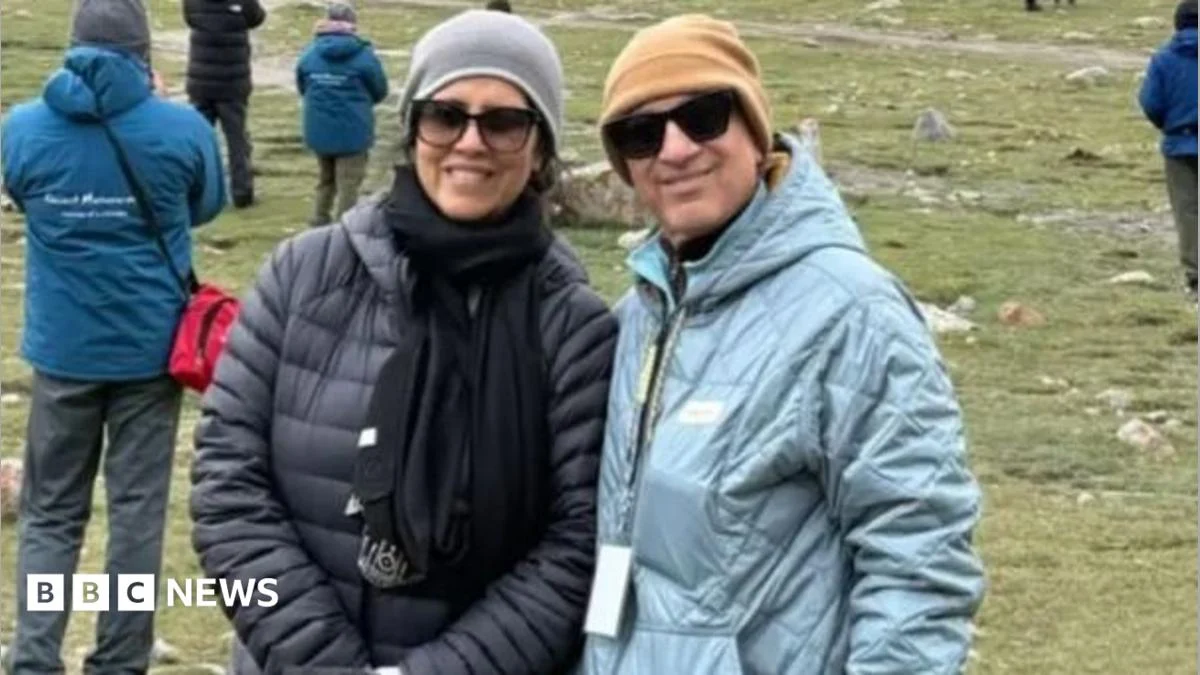
The devastating silence from the remote Nepal-Tibet border has become an agonizing wait for hundreds of families across the globe, as a deadly flash flood and mudslide swallowed communities and pilgrimage routes whole. Among those caught in the cruel grip of uncertainty are Deepak and Madhu Ahuja, a couple from Texas who embarked on a spiritual journey to Mount Kailash, a revered site in the Himalayas. Their daughters, Shreya and Ashna Ahuja, are thousands of miles away, tethered to news updates, their world shrinking to the frantic search for any sign of their parents.
"It’s only been one day, but it has felt like much longer," the sisters shared with the BBC, their voices heavy with a mixture of fear and exhaustion. "We just love them a lot and want them to come home." The last communication with their parents was a brief, reassuring call from one of the siblings just before the heavens opened and the earth gave way. Deepak and Madhu were part of a group pilgrimage, a sacred trek that often involves crossing the rugged border region between Nepal and Tibet. The fact that they were reportedly an hour away from crossing into Tibet when the catastrophe struck has added another layer of unbearable specificity to the Ahuja sisters’ anguish. They envision their parents, perhaps pausing for a rest or preparing for the next leg of their journey, unaware of the impending torrent that would reshape the landscape and their lives forever.
The scale of the disaster is staggering, with nearly 2,000 people still reported missing, a number that includes an international contingent of tourists from the US, Australia, Canada, India, and the UK, alongside countless local residents and porters. Nepali authorities have confirmed more than 575 fatalities, but the remote and treacherous terrain, combined with widespread destruction of infrastructure, makes accurate casualty counts a monumental challenge. Rescue efforts are hampered by impassable roads, collapsed bridges, and ongoing risks of further landslides.
Adding to the list of missing Americans is Prabhath Sajeepa, a US citizen whose last known whereabouts were with the Isha Foundation, a spiritual organization whose group of 77 pilgrims was caught in the deluge. Sajeepa, an accomplished software engineer based in California, has been deeply involved with the Isha Foundation for several years, dedicating his time to its meditative practices and humanitarian initiatives. His niece, Kavya Koulagi Jayatheertha, residing in Germany, described the past days as "terrible," a sentiment echoed by countless relatives now living in a suspended state of dread. "I hope he is somewhere safe," she conveyed to the BBC, her voice laced with a fragile hope that belies the grim reality of the situation. "We are hoping for good news." The Isha Foundation itself has issued an appeal for information, working tirelessly to account for its members, many of whom were on a life-altering spiritual quest that has tragically turned into a fight for survival.
The international community has rallied, albeit grappling with the immense logistical challenges. The US State Department confirmed its embassy in Nepal is working in close coordination with local tour agencies and authorities to ascertain the whereabouts and provide assistance to affected American citizens. However, citing privacy concerns, officials have refrained from releasing specific figures or additional details regarding the number of Americans impacted. On the global stage, US President Donald Trump addressed reporters, stating his administration’s immediate offer of aid to the Nepalese government. "We are sending aid and we’ve spoken to the leadership," Trump affirmed, extending a blanket promise: "And we let them know anything they want, we’ll have." The commitment, while broad, underscores the severity of the crisis and the urgency of the international response.
Canada’s foreign office, Global Affairs Canada, has also been actively monitoring the situation, confirming awareness of 32 Canadians and permanent residents in Nepal and the Tibet region whose well-being remains unconfirmed. "Given the extremely difficult circumstances on the ground, this number may fluctuate as new information comes in," a statement from Global Affairs Canada on Thursday cautioned, highlighting the fluidity of information in such a chaotic environment. Randeep Sarai, Canada’s Secretary of State for International Development, expressed profound empathy on Friday afternoon, stating his focus was squarely on helping families navigate what he could "only imagine to be a living nightmare." Prime Minister Mark Carney issued a critical appeal, urging all Canadians currently in the affected region to register for the ‘Registration of Canadians Abroad’ service. This free federal program is vital during emergencies, enabling the government to contact and assist citizens abroad. Currently, 820 Canadians are registered as being in Nepal and five in the Tibet Autonomous Region, China, according to the system – figures that represent only a fraction of those potentially present.
Nepali police reports indicate that more than 500 tourists from 28 different countries are missing, predominantly foreign nationals. The Nepal Tourism Board has taken the unprecedented step of publicly breaking down the missing by nationality, attempting to bring transparency to a situation shrouded in fog. Across the border, Chinese state media, which controls Tibet, reported three fatalities and at least 558 people missing within its territory, including 260 foreign nationals, according to CCTV. The overlap, or lack thereof, between these figures provided by Nepal and China remains unclear, underscoring the complexities of cross-border disaster management and data reconciliation.
Initial assessments from Nepal had speculated that an earthquake might have triggered the catastrophic ice avalanche and subsequent landslide. However, the US Geological Survey, renowned for its seismological studies, has since offered a refined analysis. Their further examination indicates "that the seismic energy was instead generated by a landslide" itself, suggesting the ground’s collapse was the primary event, rather than an earthquake precursor. Landslides and avalanches are complex natural phenomena with multiple potential triggers. In this instance, one significant possibility being investigated is the role of water – whether from unusually heavy rainfall or accelerated melting ice – in destabilizing the ground and ice formations.
The Hindu Kush Himalaya region is particularly vulnerable to the impacts of climate change, with scientists observing a clear trend of faster glacier melt. While the long-term effects of climate change are undeniable, scientists caution against directly attributing this specific event solely to global warming without further comprehensive study. However, the heightened instability of glacial regions due to rising temperatures undeniably contributes to an increased risk of such natural disasters. The flash flooding was merciless, sweeping away entire communities, not just the isolated pilgrimage groups. Government officials informed BBC Nepali that initial estimates suggest roads and bridges worth more than 15 billion Nepalese rupees (£72.18m, $98.33m) were decimated by the floods, crippling vital arteries and severing access to remote villages.
In response to the escalating crisis, Nepal’s President Ram Chandra Paudel issued a fervent call to action, imploring the government, political parties, social organizations, security forces, and the general public to intensify rescue and relief efforts. "I urge everyone to remain vigilant and actively engage in necessary coordination and cooperation in the lower coastal areas," he stated, emphasizing the need for collective action to mitigate further damage and provide aid to those affected. The aftermath presents a multi-faceted crisis, demanding not only immediate rescue and humanitarian assistance but also a long-term strategy for rebuilding shattered infrastructure and supporting resilient communities in a region increasingly exposed to the raw power of nature. The wait continues for the Ahuja sisters and countless others, a global community holding its breath for any shred of hope from the unforgiving Himalayan peaks.
With additional reporting by Anahita Sachdev, Gabriela Pomeroy, Helena Humphrey and Mark Poynting, climate and science journalist



 George Anjay
 Nakalama John
 atisusanti
 Ramos Leo
 Roy Suryo