
 Nana Banana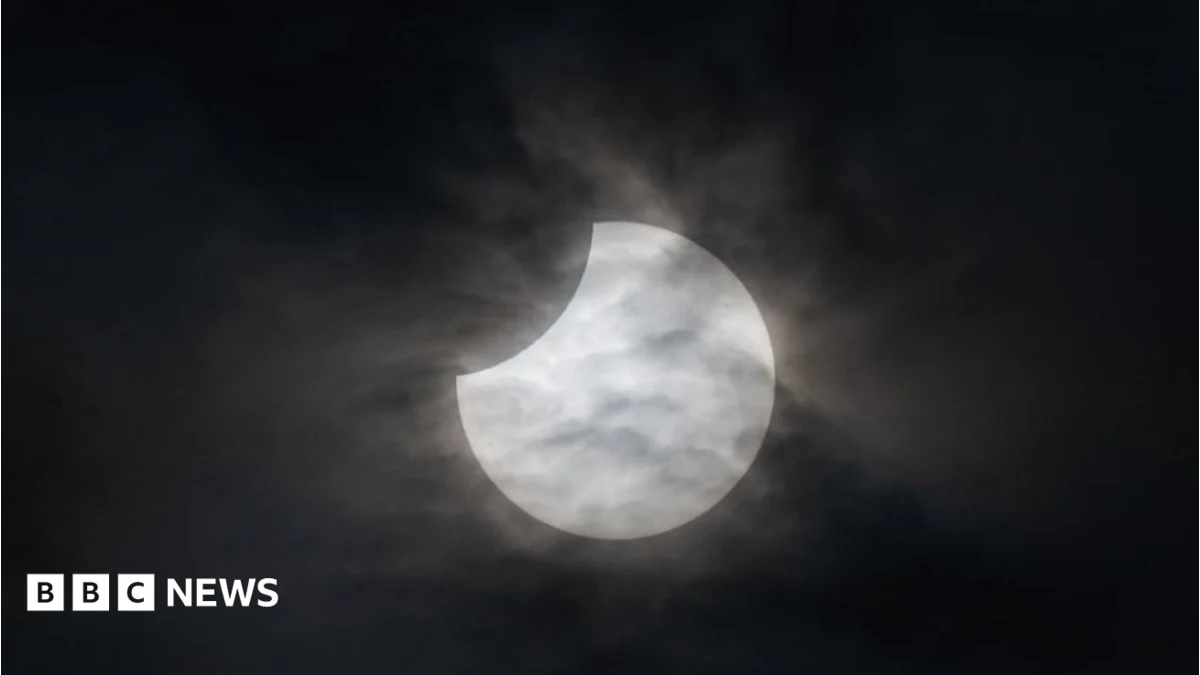
Skywatchers across the island of Ireland are poised for an extraordinary week of celestial events, beginning with a deep partial solar eclipse on Wednesday, followed by the spectacular peak of the Perseid meteor shower. This particular solar eclipse is set to obscure over 90% of the sun’s surface across Ireland, marking it as the most significant solar eclipse visible from the island in decades, a phenomenon not to be surpassed until September 2090. While a total solar eclipse will grace the skies mainly over Spain for those holidaying abroad, the partial spectacle over Ireland promises a noticeable and rare astronomical display.
David Moore, Editor of Astronomy Ireland Magazine, expressed immense excitement about the upcoming events, noting their exceptional confluence. "Not only is it the first total eclipse visible from western Europe since 1999, but just a few hours later it’s one of the best meteor showers of the year — as if to celebrate the event with celestial fireworks," Moore enthused. He further highlighted the broader astronomical richness of the month, adding, "And then in two weeks we have a lunar eclipse visible, so August is an incredible month for stargazers."
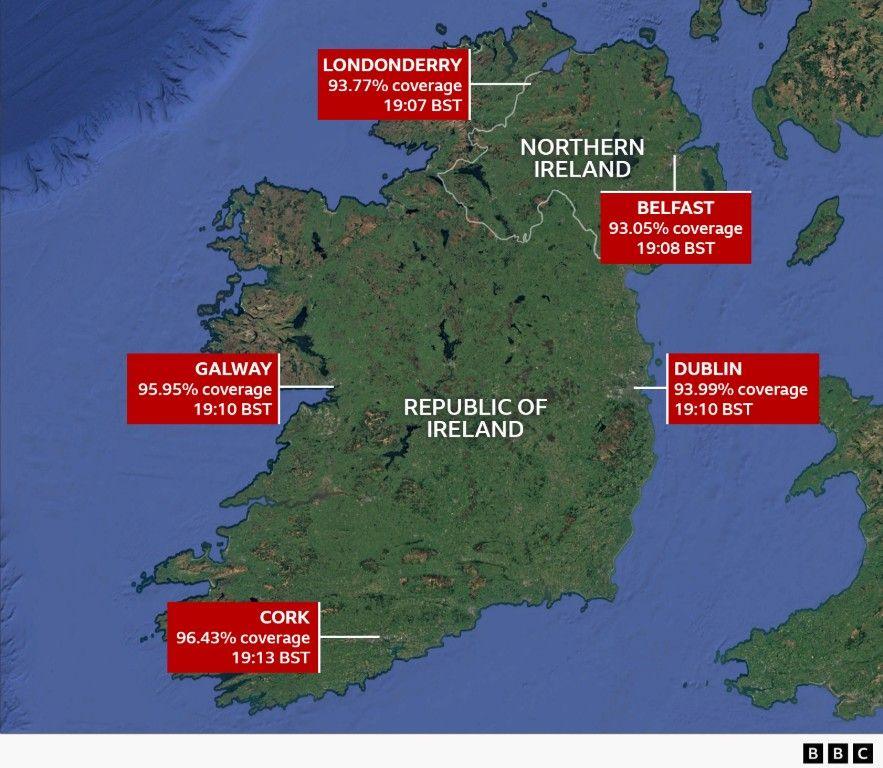
The partial solar eclipse is expected to commence across the island at approximately 18:10 BST (British Summer Time), though the exact start, peak, and end times, as well as the percentage of obscuration, will vary slightly depending on the observer’s specific location. This variance is due to the curvature of the Earth and the precise path of the moon’s shadow.
For instance, residents of Belfast can anticipate a significant 93.05% of the sun being covered by the moon at the eclipse’s peak, which is projected to occur around 19:08 BST. Further west in Londonderry, the obscuration will be even more pronounced, reaching 93.77%. In the Republic of Ireland, the capital city of Dublin will witness 93.99% coverage by 19:10 BST. Moving westward, Galway is set to experience a substantial 95.95% obscuration, while Cork, on the southwest coast, will see an impressive 96.43% of the sun eclipsed at its maximum around 19:13 BST. The most dramatic view on the island is reserved for the remote Skellig Michael, off the County Kerry Coast, where a staggering 98.01% of the sun will be blocked out by the moon, creating an almost surreal twilight effect.
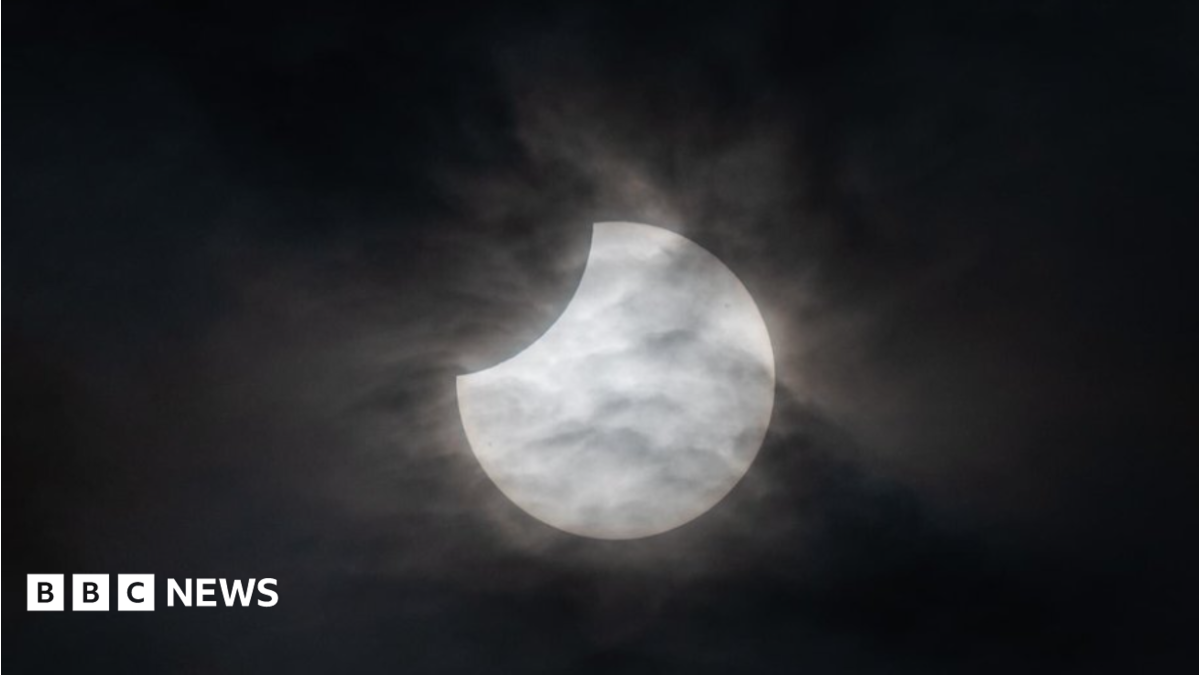
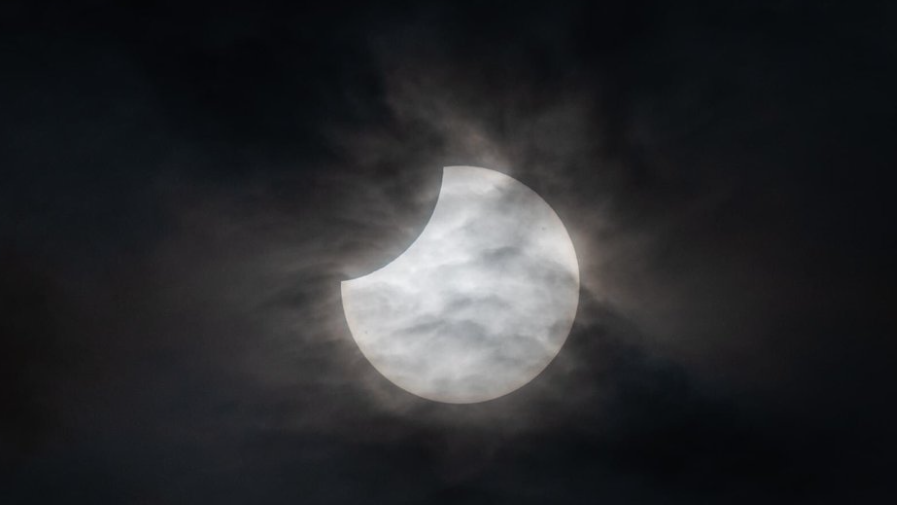
Dr. Rok Nežič from Armagh Observatory and Planetarium provided insights into the visual impact of such a deep partial eclipse. "It should get noticeably darker," he explained. "Even though more than 90% of the sun will be covered, it will still be kind of bright, but it should seem like you’re under some thick cloud. It won’t be as extreme or as spectacular as a total solar eclipse, but it will still be noticeable." This shift in ambient light could be compared to a very overcast day, or perhaps a prolonged dusk, with a peculiar quality to the light that is distinct from normal cloud cover. Animals may also react to the sudden dimming, and temperatures might drop slightly during the peak phase.
Crucial Safety Guidelines for Eclipse Viewing
While the prospect of witnessing such a rare celestial event is thrilling, astronomers and health experts universally stress the paramount importance of safety when observing a solar eclipse. Looking directly at the sun, even when partially obscured, can cause severe and permanent damage to the eyes, a condition known as solar retinopathy.
Dr. Nežič issued a stark warning: "The problem is that our retinas don’t have pain receptors, so you won’t know that you’re damaging your eyes." This means that irreversible harm can occur without any immediate discomfort, making safe viewing methods absolutely essential.
Approved Methods for Direct Viewing:
- Certified Eclipse Glasses: The only safe way to look directly at the partially eclipsed sun is through specially manufactured, certified eclipse glasses. These are not ordinary sunglasses; they are thousands of times darker and meet the ISO 12312-2 international safety standard. It is critical to inspect these glasses for any scratches, tears, or damage before use, as even a small imperfection can compromise their protective capabilities. Never use them if damaged.
- Solar Filters for Telescopes/Binoculars: If using optical instruments like binoculars or telescopes, they must be fitted with a certified solar filter on the front (objective) lens. Never look through an unfiltered telescope or binoculars while wearing eclipse glasses, as the concentrated sunlight will burn through the filter and damage your eyes.
Indirect Viewing Methods (Projection):
For those without certified glasses, or who prefer a hands-off approach, projection methods offer a safe and engaging way to observe the eclipse:
- Pinhole Projector: A simple pinhole projector can be made using two pieces of card. Punch a small, clean hole in the centre of one card, and hold it up to the sun. The light passing through the hole will project an image of the eclipsed sun onto the second card held a few feet behind it. Cereal boxes can be adapted for this purpose, offering a more enclosed viewing chamber.
- Kitchen Colander: A common kitchen colander can serve as a multi-pinhole projector. Hold it up to the sun, and dozens of crescent-shaped images of the eclipsed sun will appear on the ground or a white surface below.
- Binocular/Telescope Projection: While dangerous for direct viewing, binoculars or small telescopes can be used to project an image. Point the instrument towards the sun (without looking through it!) and hold a white card a short distance behind the eyepiece. A magnified image of the eclipsed sun will be projected onto the card. Crucially, ensure no one looks directly through the eyepiece during this process.
Photography and Device Safety:
Astronomers also advise against pointing an unfiltered smartphone or digital camera directly at the sun. The intense light can permanently damage the camera’s sensor. Special solar filters are available for cameras if one wishes to photograph the eclipse safely.
It’s important to remember that the only time it is safe to look at the sun with the naked eye is during the brief period of a total solar eclipse, when the moon completely covers the sun’s face. As David Moore reiterated, there hasn’t been a total solar eclipse visible from Irish soil since 1724, and the next one won’t occur until September 2090, underscoring the unique nature of this partial event.
The Perseid Meteor Shower: A Nocturnal Display
Just a few hours after the solar eclipse captivates daytime observers, the night sky will offer its own dazzling performance: the peak of the annual Perseid meteor shower. This beloved celestial event will reach its maximum activity later on Wednesday night and into the early hours of Thursday morning.
One of the most favourable aspects for this year’s Perseid display is the timing of the new moon. A new moon means there will be minimal moonlight interfering with the view, creating exceptionally dark skies and ideal conditions for spotting even fainter meteors, provided the weather remains clear.
The Perseids are a cosmic spectacle generated by the Earth’s annual passage through the debris trail left behind by Comet Swift-Tuttle. This comet, a magnificent icy body, orbits the sun, shedding tiny pieces of dust and rock – some no larger than a grain of sand – as it travels. When Earth’s atmosphere encounters these particles at speeds of tens of thousands of miles per hour, the intense friction causes them to heat up, ionize the surrounding air, and burn brightly, creating the fleeting streaks of light we know as "shooting stars."
While the meteors can appear anywhere in the night sky, their paths seem to radiate from a single point within the constellation Perseus, hence their name. Perseus typically rises in the north-east sky and climbs higher throughout the night, making it easier to locate the radiant point as the evening progresses.
To maximize the viewing experience for the Perseids, observers are strongly advised to find a dark location, far away from the pervasive glow of city streetlights and other sources of light pollution. Allowing at least 10 to 20 minutes for eyes to fully adjust to the darkness is also crucial, as this improves night vision significantly. No special equipment like telescopes or binoculars is needed for meteor showers; the naked eye provides the widest field of view, allowing observers to catch meteors streaking across broad swathes of the sky. Under truly ideal, dark-sky conditions, it’s possible to witness as many as 100 meteors per hour, although typical urban or suburban views will yield fewer.
An August Trifecta: A Lunar Eclipse Awaits

As if the solar eclipse and Perseid meteor shower weren’t enough, August promises yet another treat for sky-gazers: a lunar eclipse. Expected approximately two weeks after the solar eclipse, this event will see the Earth pass directly between the sun and the moon, casting a shadow upon our natural satellite. Unlike solar eclipses, lunar eclipses are entirely safe to view with the naked eye, offering a relaxed opportunity to witness the moon take on various hues, often a reddish glow, as sunlight is filtered through Earth’s atmosphere.
This extraordinary alignment of celestial events makes August a truly memorable month for astronomy enthusiasts and casual observers alike across the island of Ireland. With proper preparation and adherence to safety guidelines, particularly for the solar eclipse, residents will have a unique opportunity to connect with the cosmos and witness some of the most captivating spectacles our universe has to offer.


 atisusanti
 George Anjay
 Nakalama John

 Ramos Leo