
 Ramos Leo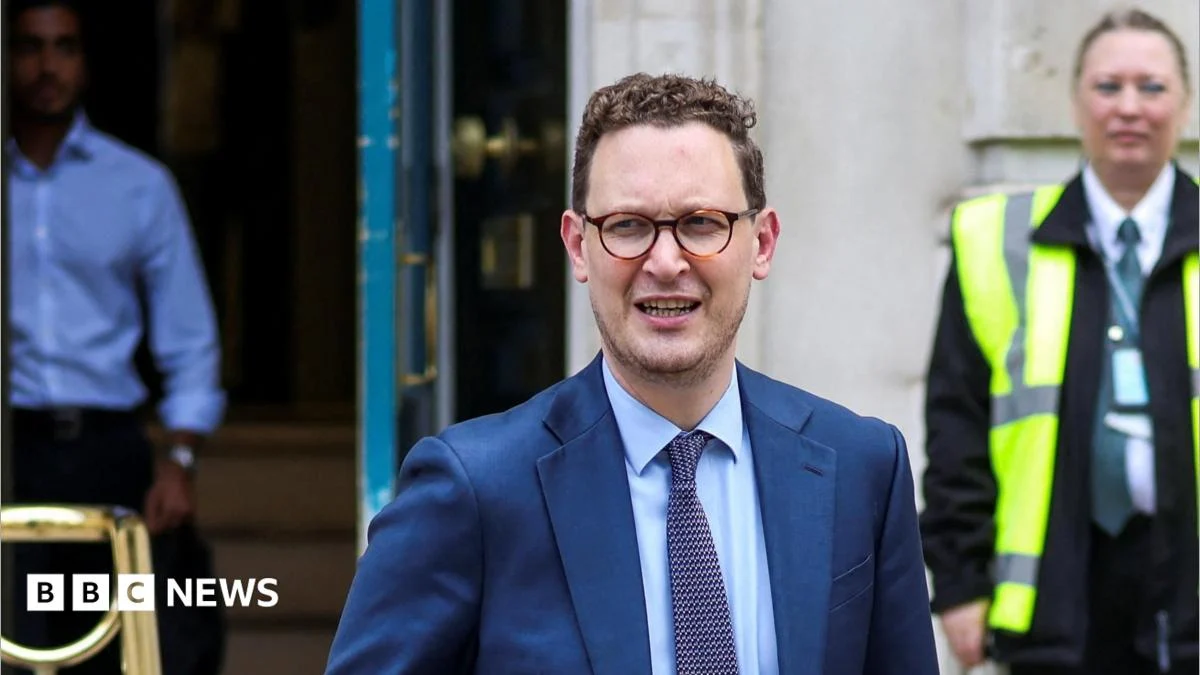
Whenever there is a significant reshuffle at the highest echelons of government, particularly following a change in leadership, it is imperative to pay close attention to the movements, statements, and actions of those who have been dislodged, demoted, or otherwise rejected from their former ministerial posts. Their choices of what to do and say next often provide the earliest indicators of internal dissent, shifting power dynamics, and the challenges facing a new administration. In the current political climate, with Andy Burnham having just ascended to the premiership, the scrutiny on these former power players is exceptionally intense, especially as he attempts to forge a unified front for his nascent government.
Andy Burnham, having taken the reins, began his first full day in office with a bold and populist promise: a commitment to cut VAT from household electricity bills, effective from 1 October. This move, designed to offer immediate financial relief to families grappling with the cost of living crisis, was undoubtedly intended to signal his government’s responsiveness and prioritize the everyday concerns of ordinary people. It’s a policy designed for immediate impact and public approval, echoing similar measures seen in other European nations during energy price spikes. However, the honeymoon period for the new Prime Minister proved astonishingly brief. Within mere hours of this announcement, Burnham found himself facing sharp criticism from an unexpected quarter: a man who, just the day before, held a senior position within Downing Street, working closely alongside the now-former Prime Minister, Sir Keir Starmer.
The individual in question is Darren Jones, who, until Monday night, served as the Chief Secretary to the Prime Minister. His departure was part of the wider reshaping of government following Starmer’s exit. On Monday evening, Jones had posted a seemingly innocuous picture on X (formerly Twitter) of himself enjoying a beer, accompanied by the caption, "thank you and good night. See you September." This post was widely interpreted as a polite, if perhaps slightly melancholic, vow of silence, suggesting a period of reflection away from the political fray. Such declarations from departing ministers are common, often indicating a desire to avoid immediate public comment and allow the new administration space to establish itself. Yet, if it was indeed intended as a vow of silence, its duration proved remarkably short-lived, lasting little over 12 hours.
By breakfast time the following morning, Jones broke his self-imposed hiatus with another post, this one conspicuously unaccompanied by any picture, but loaded with undeniable political bite and strategic timing. "Good news that VAT will be cut on electricity bills," Jones began, acknowledging the policy’s superficial appeal. He continued, "It’s a simple way for families to save a few quid, and to mechanically help to keep inflation that little bit lower. But the DigitalID program was unfunded. The government will have to set out how it will pay for its new policies at the budget." This seemingly innocuous observation carried a potent sting, targeting the very heart of fiscal responsibility and government accountability.
The swiftness and pointed nature of Jones’s critique resonated sharply through political circles. The charge that a policy was "unfunded" is a perennial weapon in political discourse, particularly potent when aimed at a new government attempting to establish its economic credibility. And indeed, Jones was not fabricating his claims. There are no fewer than four specific references in the Office for Budget Responsibility’s (OBR) Economic and Fiscal Outlook from November of the previous year that directly address the Digital ID program and the conspicuous lack of clarity regarding its funding.
For instance, on page 10 of the OBR report, it explicitly states: "the cost of digital ID cards, for which no specific funding has been identified." This sentence highlights a fundamental concern for fiscal prudence: a significant government initiative being planned without a clear financial roadmap. Further underscoring this issue, on page 172, the report details "the risks around the implementation of digital ID cards for which no explicit provision has been made for its £0.6bn annual cost." This revelation is particularly damning, indicating a substantial recurring expense — £600 million each year — for which the previous government, including the one in which Darren Jones served, had failed to allocate specific funds. The OBR, an independent body tasked with scrutinizing government finances, had flagged this as a material risk, casting a shadow over the financial planning of the then-incumbent administration.
The implicit hypocrisy in Jones’s critique was not lost on observers. His charge that Burnham’s government would have to explain how it would pay for its new policies at the budget was, by extension, a mirror held up to the very government he had just served. The "unfunded" Digital ID program was a policy advocated by Sir Keir Starmer’s government, with Jones himself holding a senior economic role within that administration. Therefore, the financial scrutiny Jones was now applying to Burnham’s electricity VAT cut was equally, if not more, pertinent to the Starmer government’s own proposed initiatives. It was a charge that, if truly applied universally, reflected as much on his past colleagues and their ideas as it did on Andy Burnham and his nascent agenda.
Despite this implicit self-critique, it is Andy Burnham who now occupies Downing Street and faces the immediate pressure. As he articulated in his very first speech as Prime Minister, a central tenet of his administration would be to clearly set out "how we pay for" the policies they are advocating. Jones’s timely intervention directly challenges this foundational commitment, forcing Burnham’s team to address financial accountability on their very first day, even before their full economic strategy has been unveiled. It’s a pointed reminder that while a new government enjoys a mandate, it does not inherit a clean slate, especially concerning fiscal transparency.
This early skirmish gains added significance when viewed through the lens of recent political pronouncements. Just days prior to this public spat, Sir Keir Starmer’s successor – now identifiable as Andy Burnham – had emphasized the urgent need to end "factionalism" within the Labour Party. Burnham’s call was a clear attempt to draw a line under the internal divisions and power struggles that had plagued the party in recent times, aiming for a united front as he took the helm. Darren Jones’s swift and public critique, emanating from a former Starmer loyalist, therefore stands as a direct and immediate challenge to this plea for unity, signaling that the deep-seated loyalties and internal rivalries within the party may not be so easily quelled. It immediately raises questions about the extent of the "healing" process and whether Burnham can truly command the loyalty of all wings of the party.
At lunchtime on the same day as Jones’s tweet, Burnham was scheduled to gather his cabinet for the first time, following an appointment process that had stretched late into the night. The formation of his top team had been something of a nocturnal affair, with the political drama unfolding well past traditional working hours. Indeed, at gone 10 pm on Monday night, a minibus filled with ministerial hopefuls was reportedly still waiting inside Downing Street, the occupants anxiously anticipating the confirmation of their new positions, highlighting the frenetic pace and tension of a new government taking shape.
Among the later posts to be filled was that of Defence Secretary, a crucial and high-profile role ultimately taken by Wes Streeting. Streeting’s appointment carries significant weight, not least because his resignation as Health Secretary just two months prior had been a key event that contributed substantially to the draining of Sir Keir Starmer’s authority as prime minister. His re-entry into the cabinet, particularly in a role as significant as Defence, speaks volumes about Burnham’s efforts to balance continuity with a new vision, and perhaps to co-opt figures who had previously challenged Starmer’s leadership.
The broader narrative surrounding the reshuffle was a pretty significant cull of ministers who were considered closest and most loyal to the now-former Prime Minister, Sir Keir Starmer. Darren Jones was among this group, but he was certainly not alone. Other prominent Starmer loyalists who found themselves out of ministerial roles included David Lammy, Peter Kyle, Lord Hermer, and Steve Reed. Notably, Rachel Reeves, a key figure in the previous administration, was also part of this group. However, it is understood that Reeves was, in fact, offered a cabinet post by Burnham but ultimately chose to turn it down, a decision that adds another layer of intrigue to the reshuffle and potentially signals a deliberate distancing from the new regime or a refusal to serve under specific conditions.
The overarching question that now looms large over Andy Burnham’s nascent government, and indeed over the Labour Party as a whole, is how much public discourse and open criticism will emanate from these "banished Starmerites" in the coming days, weeks, and months. As Burnham’s administration sets out its stall, defines its agenda, and begins to implement its policies, will these former ministers maintain a disciplined silence, or will they, like Darren Jones, feel compelled to voice their concerns or critiques publicly? The early and pointed nature of Jones’s intervention suggests that a period of uneasy truce, rather than genuine unity, may be the immediate reality for Andy Burnham. Few would have anticipated such a public challenge to the new Prime Minister’s authority to emerge so swiftly, setting a potentially turbulent precedent for the road ahead.



 Roy Suryo

 Nakalama John
 atisusanti
