
 Ramos Leo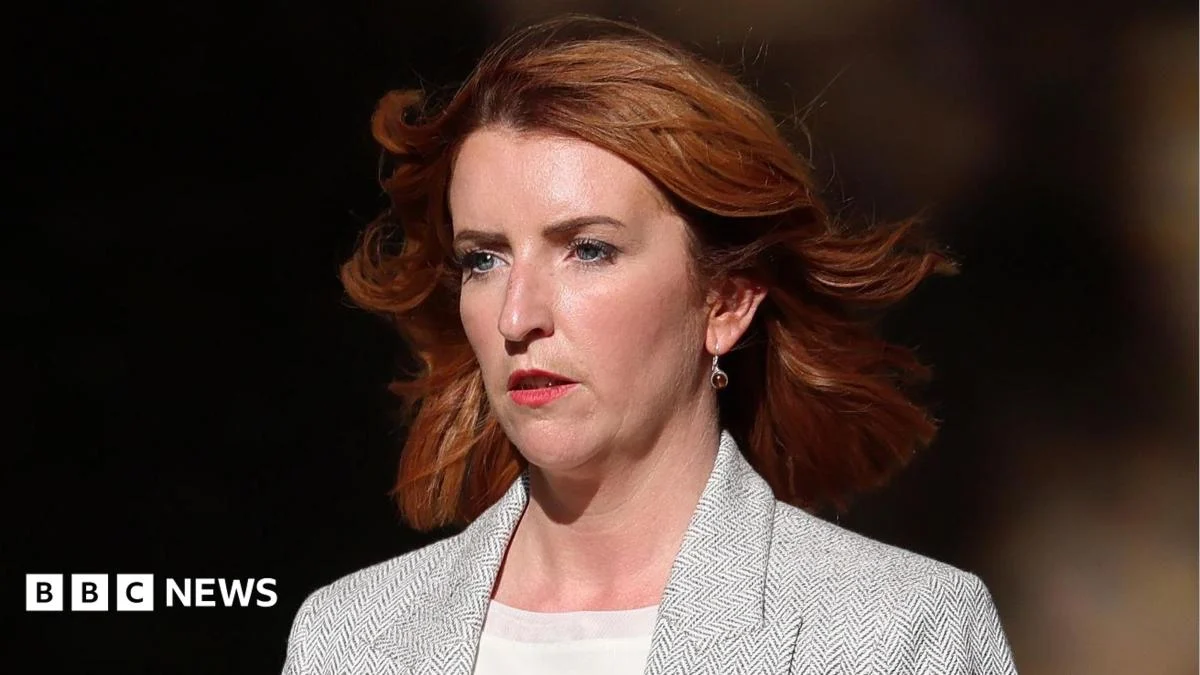
Louise Haigh had enjoyed a stratospheric political rise before her ministerial career came to a juddering halt shortly after Labour’s return to power, a dramatic turn of events that saw her momentarily step back from the front lines only to re-emerge as a formidable architect of a new political era. Her ascent had been swift and impressive, culminating in her becoming the youngest-ever female cabinet minister at the age of 36, a testament to her sharp intellect, strong convictions, and effective political instincts. However, this promising trajectory was abruptly interrupted when she resigned as transport secretary just four months into the role in November 2024, following the public revelation that she had pleaded guilty to a fraud offence during her twenties. The incident, though years in the past, cast a shadow over her early ministerial tenure, forcing a difficult decision that would ultimately prove to be a crucial pivot point in her career.
Now, Andy Burnham, fresh from his own improbable return to Westminster and ascension to Downing Street, has brought her back into government with a significant and strategically vital role: running the Cabinet Office and holding the prestigious title of First Secretary of State. This dual appointment unequivocally denotes her senior rank and the profound trust Burnham places in her, cementing the Sheffield MP’s place at the very heart of his new administration. Her return was far from a surprise to those within Burnham’s inner circle; she had been among a tiny, select group of key allies entrusted with holding sensitive "access talks" with civil servants ahead of his arrival in Downing Street, a clear indicator of her central role in planning the transition of power.
Her departure from the cabinet in November 2024, rather than leading to political oblivion, seemed instead to galvanize her, affording her the freedom to operate with greater independence and influence from the backbenches. She maintained a remarkably high profile, demonstrating her continued political prowess and ideological commitment. One of her most notable interventions during this period was playing a key role in orchestrating a significant Labour rebellion against proposed welfare cuts. These cuts, championed by the then-Starmer government, were met with fierce opposition from a section of the party, and Haigh’s strategic acumen was instrumental in galvanizing dissent, highlighting her unwavering commitment to social justice and her ability to mobilize political forces even from outside the cabinet.
Perhaps even more significantly, Haigh went on to revive the Tribune group, a storied caucus within the Labour Party dating back to the 1960s. Under her stewardship, Tribune re-emerged as a vibrant and influential home for the "soft left" wing of the party – a faction that, crucially, had been instrumental in fuelling Andy Burnham’s rise to power. By providing a platform for this ideological current, Haigh helped articulate a distinct vision for Labour, positioning it in contrast to the more centrist leanings of the outgoing government and providing an intellectual and organizational bedrock for Burnham’s burgeoning movement.
Becoming increasingly critical of the Starmer government’s direction and policies, Haigh signed up wholeheartedly to the Burnham project in the run-up to elections scheduled for May this year. This pivotal alignment reportedly came after a crucial meeting with Burnham in Manchester, where she sounded out his plans for power and presumably found a compelling resonance with her own political convictions. Her subsequent commitment was absolute, as she then oversaw his audacious and successful bid to return to Westminster as MP for Makerfield. During this intense period, Haigh immersed herself completely in the campaign, living out of an AirBnb in the constituency and running a dynamic campaign headquarters located within a bustling community club – a vibrant hub shared with local weddings, enthusiastic tribute bands, and even exotic bird auctions, offering a unique glimpse into the heart of British working-class life.
She openly admitted that she was initially sceptical about using a seat outside Wigan as the launchpad for Burnham’s Westminster return, branding it a "huge risk" given the traditional political landscape. However, it was a decision that has ultimately paid off handsomely for both of them, not only paving the way for Burnham’s triumphant return to Parliament but also directly leading to her own elevation back into the cabinet. This shared risk and subsequent success forged an even deeper bond and mutual trust between the two, solidifying her status as an indispensable ally.
Born and raised in Sheffield, Haigh has often reflected that party politics did not play a significant role in her early life. Her political awakening came later, in her teens, when she joined the Labour Party after being profoundly influenced by a "very left-wing economics teacher." This early ideological shaping proved foundational. Her parents separated in her early teens, and she lived with her mother, who made the choice to enroll her in a private girls’ school in the city. This experience, Haigh would later admit, she found "quite uncomfortable" as a Labour MP, highlighting an early awareness of social disparities and a discomfort with privilege that would inform her later political stance.
She started a degree at the prestigious London School of Economics, but found herself leaving after "absolutely hating" student life in the capital, an experience that perhaps reflected a preference for a more grounded, less elite environment. She instead decided to study politics at Nottingham University, a choice that seemed to align more with her developing political identity. After graduation, her career path saw her working for various Labour MPs, including party veteran Jon Trickett, known for his left-wing views, and Lisa Nandy, a prominent figure in the party. This period provided her with invaluable insights into the workings of Parliament and the Labour movement. Concurrently, she became a volunteer police officer for the Met, gaining direct experience of public service and community engagement, further broadening her understanding of societal challenges.
Demonstrating an early commitment to workers’ rights, she served as shop steward for parliamentary staff at Unite the union. In this capacity, she spearheaded a cost of living push, advocating fiercely to reduce the price of food and snacks on the parliamentary estate, a tangible effort to improve the daily lives of her colleagues. In a move that showcased her distinctive ideological bent, she also campaigned for a mothballed bar on the estate to be reopened by a "workers’ co-operative," a clear articulation of her belief in collective ownership and democratic control, long before her return to frontbench politics.
Elected in 2015 as MP for Sheffield Heeley at the youthful age of 27, Haigh immediately faced a critical juncture in Labour politics. In that year’s Labour leadership contest, she notably nominated Jeremy Corbyn instead of Andy Burnham, a decision she would later claim to regret in more recent years, perhaps reflecting an evolution in her political analysis and strategic thinking. It was during this period that she began to forge a more personal connection with Burnham, an anecdote she fondly recalls involving her mother confronting him at a party hustings in Doncaster, directly asking whether he planned to give her daughter a job if his bid for the Labour crown was successful – a moment that no doubt endeared her to him and foreshadowed their future collaboration.
Despite her initial preference for Corbyn, he recognized her talent and gave Haigh her first shadow ministerial role, demonstrating his willingness to include diverse voices. Remarkably, he kept her on his frontbench even after she backed Owen Smith’s failed 2016 bid to topple him as Labour leader, a testament to her perceived competence and perhaps her ability to navigate internal party divisions. Despite nominating former boss Nandy in the 2020 contest to replace Corbyn, eventual winner Sir Keir Starmer also recognized her abilities, promoting her into the shadow cabinet as Shadow Northern Ireland Secretary, before she later became Shadow Transport Secretary. It was in this crucial role that she forged a close and effective working relationship with England’s metro mayors, including Burnham, who by that point had begun his second term as mayor of Greater Manchester, laying the groundwork for their eventual political partnership.
After Labour’s election victory, Haigh took the helm at the transport department, making immediate headlines with an early, decisive move to give train drivers a 14% pay rise across three years, a bold decision aimed at ending their long-running strike action. This intervention was widely seen as a significant shift in Labour’s approach to industrial relations, signalling a willingness to engage directly with unions and prioritize workers’ concerns. During this period, she was affectionately dubbed "Red Lou" in the press, a nickname reflecting not only her vibrant shades of dyed hair but also her emerging reputation as one of the more left-leaning and outspoken members of Starmer’s cabinet, unafraid to champion progressive causes.
Her strong criticism of P&O Ferries’ decision to sack hundreds of workers in 2022 further solidified her image as a staunch defender of workers’ rights, leading to a public rebuke by the prime minister at the time, after her remarks threw the attendance of P&O’s parent company at a government investment summit into doubt. This incident highlighted her willingness to challenge corporate power, even at the risk of diplomatic friction.
Just a month later came her dramatic resignation. Her previous conviction for making a false report to police in 2013 was revealed in the media. The incident dated back to her time working at insurance giant Aviva, when a work phone she had reported as stolen was later found. She maintained it was a "genuine mistake" and that she had pleaded guilty on the advice of her lawyer. Haigh stated she had informed Sir Keir about the episode when Labour was in opposition, but was asked by Downing Street to offer her resignation after the story broke because "additional information" had come to light. "But at no point would any of them tell me what that additional information was," she recently said in an interview, expressing a lingering sense of injustice and lack of transparency surrounding her departure.
Her resignation, however, paradoxically afforded her the crucial freedom to expound the political ideas and policies that are now expected to feature heavily in Burnham’s administration. Unburdened by collective responsibility, Haigh seized the opportunity to articulate a radical vision for the future. In two influential essays published shortly before Burnham’s Makerfield campaign, Haigh meticulously set out a blueprint for a fundamental reshaping of the British state and its economic priorities.
This included a significant loosening of Labour’s debt rules, proposing the rolling five-year debt target be extended instead over 10 years. This, she argued, would allow for greater long-term public investment necessary for national renewal, moving away from what she viewed as overly restrictive fiscal conservatism. She also called to "re-examine the mandate" of the Bank of England, advocating for a greater focus on economic growth alongside its traditional inflation-targeting remit, suggesting a more proactive role for monetary policy in driving prosperity. Furthermore, she forcefully argued for several key policies previously advocated by the new prime minister, including a new tax on the value of land to replace the economically distorting stamp duty on house purchases, a move designed to unlock land for development and promote fairer wealth distribution.
"The status quo is not sustainable," she wrote with conviction. "We cannot afford to wait any longer before we change the system we inherited." This powerful declaration encapsulates the urgency and ambition that defines her political philosophy. It is precisely this task, the monumental challenge of delivering a radical reshaping of the British state and its economy, that she will now be charged with delivering, occupying a pivotal seat in the cockpit of the new Burnham administration. Her journey, from early political promise to a controversial resignation and now to a powerful return, marks her as a truly influential and indispensable figure in the new Labour landscape.



 Roy Suryo

 Nakalama John
 atisusanti
