Nana Banana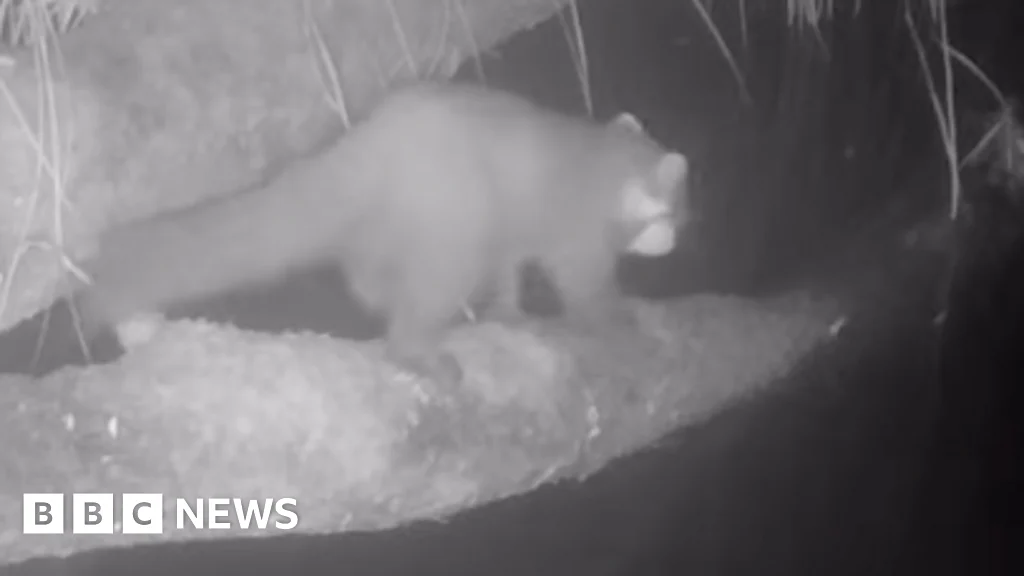
A moment of profound excitement has swept through the conservation community in Cornwall following the unexpected capture of a pine marten on a camera trap, an event that heralds a potential return for this elusive native mammal to the county after centuries of absence. The discovery, made during routine ecological monitoring by Kernow Conservation on the historic Trewithen Estate near Truro, offers a beacon of hope for the broader restoration of biodiversity across the South West of England. This creature, once a common inhabitant of Britain’s ancient woodlands, has largely been confined to the wilder reaches of Scotland and Ireland for generations, making its appearance in Cornwall a truly remarkable occasion.
Kernow Conservation, a dedicated organisation focused on safeguarding and enhancing Cornwall’s unique natural heritage, was conducting surveys on the Trewithen Estate, an area renowned for its commitment to environmental stewardship and the restoration of native wildlife populations. The estate, a sprawling landscape of ancient woodlands, wetlands, and traditional parkland, has been a hub of rewilding efforts aimed at bringing back species that have long vanished from the region. The specific camera trap that recorded the pine marten was initially deployed as part of an ongoing project to monitor reintroduced water voles, a vital keystone species whose return signals improving health in aquatic ecosystems. The serendipitous nature of the discovery underscores the interconnectedness of conservation initiatives and the unexpected rewards that dedicated ecological management can yield.
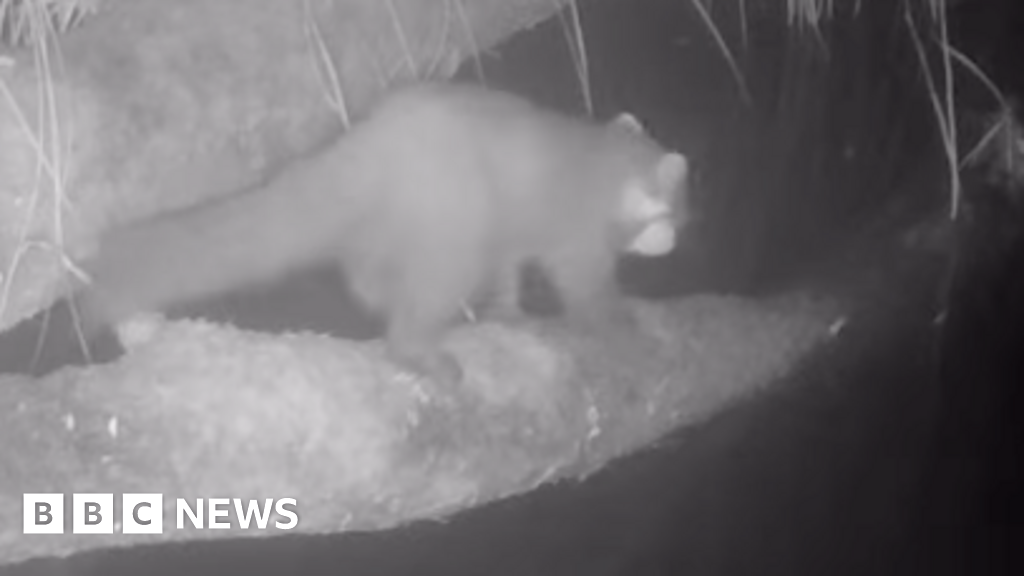
Nellie Kottler, a lead conservationist from the Trewithen Estate, articulated the collective astonishment and elation of the team. "We have been utterly staggered to see one," Kottler exclaimed, her voice reflecting the profound significance of the sighting. "The initial reaction was one of disbelief, quickly followed by immense joy and a renewed sense of purpose. Our cameras are set to capture specific target species, and to find a pine marten among the footage was simply extraordinary. It’s a testament to the quiet, persistent work being done to create suitable habitats, even if we weren’t explicitly expecting this particular visitor." The infrared image, captured under the cover of night, depicts the lithe, arboreal mammal moving gracefully along a fallen log, its distinctive pale throat patch glowing faintly against its rich brown fur – an unmistakable signature of Martes martes.
The historical context of pine martens in the South West paints a stark picture of decline. These charismatic members of the mustelid family were once widespread across much of Britain, thriving in the dense, ancient woodlands that covered the landscape. However, from the 18th century onwards, a combination of relentless human persecution and catastrophic habitat loss led to their dramatic decline. Gamekeepers, often operating under directives to protect game birds, systematically hunted pine martens, viewing them as pests. Simultaneously, vast swathes of ancient woodland, their primary habitat, were cleared for agriculture, development, and timber, fragmenting their populations and isolating them to increasingly smaller, less viable territories. By the early 20th century, pine martens were considered extinct in England and Wales, with only a tiny, isolated population clinging on in the remote Scottish Highlands. Their disappearance represented a significant ecological loss, removing a key predator from woodland ecosystems and diminishing the rich tapestry of British wildlife.
In recent decades, however, concerted conservation efforts have been underway to reverse this historical decline. While robust populations have persisted in the expansive forests of Scotland and the Republic of Ireland, pioneering reintroduction projects have begun to establish new populations in England and Wales. Notable successes include initiatives in Cumbria, the Forest of Dean, and more recently, on Dartmoor and Exmoor. These projects, often spearheaded by organisations like the Vincent Wildlife Trust and local wildlife trusts, involve translocating individuals from healthy Scottish populations to carefully selected release sites with suitable habitat and minimal human disturbance. The goal is to create stepping-stone populations that can eventually connect and allow for natural recolonisation of their former ranges. The successful reintroduction to Dartmoor in 2024, for instance, marked a significant milestone, demonstrating the viability of bringing these animals back to the South West. The Cornwall sighting, therefore, raises the tantalising possibility that this individual could be a pioneering explorer from one of these reintroduction sites, or even a previously undetected remnant population.
The ecological role of the pine marten is crucial for healthy woodland ecosystems. As an opportunistic omnivore, their diet primarily consists of small mammals like voles and mice, birds and their eggs, insects, and fruits and berries depending on the season. They are highly agile and arboreal, spending much of their time in trees, which gives them a unique niche in the food web. One of the most significant potential benefits of their return is their known ability to suppress grey squirrel populations. Grey squirrels, an invasive species introduced from North America, outcompete native red squirrels for resources and carry a pox virus lethal to reds. Studies have shown that where pine marten numbers recover, grey squirrel populations decline, often allowing red squirrels to flourish. This "grey squirrel hypothesis" makes the pine marten a crucial ally in the broader fight to save Britain’s iconic red squirrel. Beyond this, their presence acts as an indicator of a healthy, biodiverse woodland, demonstrating the success of habitat restoration efforts.
The immediate next steps for Kernow Conservation and the Trewithen Estate are focused on understanding the nature of this discovery. As Kottler noted, "At this stage, we don’t yet know whether the animal is a transient visitor, perhaps dispersing from a reintroduction site, or if it is resident to the area." A transient individual might be a young male ranging widely in search of new territory or a mate, whereas a resident animal would suggest a more established presence, possibly even an undetected, small local population. "We’ll be continuing monitoring in the coming weeks and months to better understand its presence, potentially even whether it could be part of a breeding pair," Kottler added. This will involve deploying more camera traps across a wider area, potentially setting up bait stations to encourage repeat visits, and even attempting to collect scat samples for DNA analysis, which could reveal the animal’s origin and sex. The prospect of a breeding pair establishing themselves in Cornwall is the ultimate dream for conservationists, signalling a truly self-sustaining return.
Kernow Conservation articulated the profound significance of this event, stating that pine martens’ "gradual recovery across the UK means moments like this could become more common, but seeing one here, now, is something truly special." It serves as a powerful reminder of nature’s resilience and the potential for ecological recovery when dedicated efforts are made. The sighting also underscores the importance of public awareness and support for conservation initiatives, as local communities play a vital role in protecting these vulnerable species and their habitats.
Five facts about pine martens:
- Distinctive Appearance: Pine martens are slender, cat-sized mammals with rich brown fur, a long bushy tail, and prominent rounded ears. Their most distinguishing feature is a creamy-yellow or orange-yellow bib (throat patch) that is unique to each individual, much like a human fingerprint.
- Arboreal Acrobats: Highly adapted to woodland life, pine martens are incredibly agile climbers, capable of scaling trees with remarkable speed and grace. They use their long tails for balance as they navigate branches and even leap between trees, making them perfectly suited to their forest habitats.
- Nocturnal and Elusive: Primarily nocturnal or crepuscular (active at dawn and dusk), pine martens are notoriously shy and elusive creatures, making direct sightings rare. They are largely solitary animals, marking and defending territories, though they may interact during the breeding season.
- Opportunistic Omnivores: While often portrayed as predators, pine martens have a diverse diet. They are opportunistic omnivores, feeding on small mammals (voles, mice, squirrels), birds, eggs, insects, carrion, and a significant proportion of berries, fruits, and nuts, particularly in autumn.
- Protected Status: After facing near extinction in England and Wales, pine martens are now fully protected under the Wildlife and Countryside Act 1981. It is illegal to intentionally kill, injure, or disturb them, or to damage or destroy their denning sites, reflecting their critical conservation status and the ongoing efforts to aid their recovery.
This surprise sighting in Cornwall represents not just the presence of a single animal, but a powerful symbol of hope and progress in the long journey of rewilding Britain. It reinforces the belief that with sustained effort and a commitment to restoring natural processes, even the most cherished and long-lost species can find their way home.




 George Anjay
 Nakalama John
 atisusanti
 Ramos Leo