Nana Banana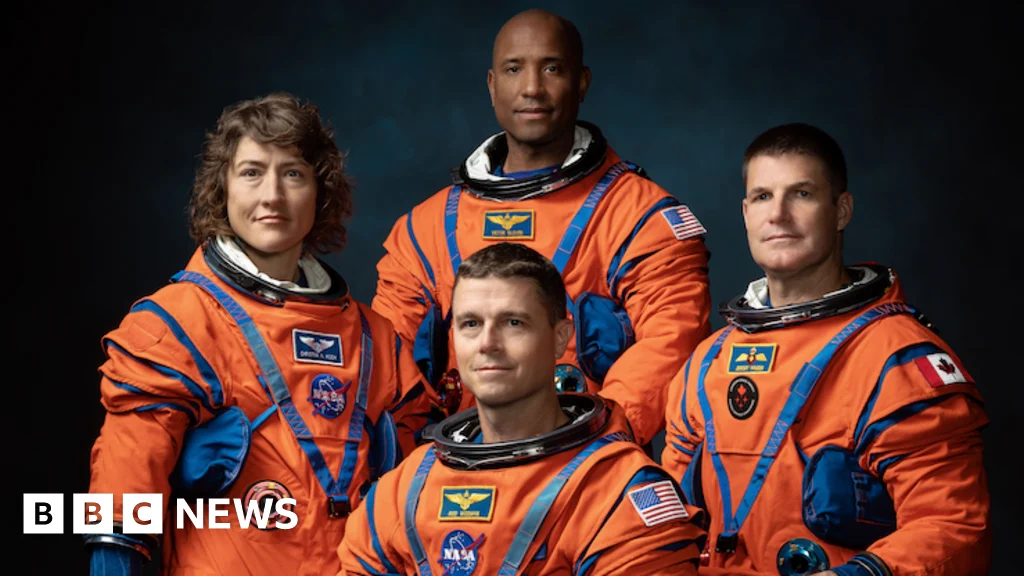
NASA is meticulously preparing for a monumental step in human space exploration with the Artemis II mission, marking the first crewed journey around the Moon in over half a century. This pivotal mission is currently targeted for September 2025, following a revised schedule that prioritizes crew safety and the thorough testing of its cutting-edge hardware. Artemis II is designed to be a critical precursor to humanity’s return to the lunar surface, laying the groundwork for future landings and the establishment of a sustained human presence on and around the Moon.
When Will Artemis II Launch?
The journey to the Moon is fraught with technical complexities and demands absolute precision, which has led to adjustments in the Artemis II launch timeline. Originally, earlier targets such as "early April" were discussed, but these have been superseded by more comprehensive evaluations. NASA officially announced a new target launch window for September 2025. This adjustment comes after extensive reviews of critical systems and the resolution of technical challenges encountered during pre-flight testing.
For instance, a "wet dress rehearsal" – a crucial test involving fueling the Space Launch System (SLS) rocket – was halted due to a hydrogen rocket fuel leak detected at a connection point between the launch tower and the rocket. Subsequently, a helium leak was also discovered, necessitating further investigation and repairs. These issues underscore NASA’s unwavering commitment to safety and mission success, ensuring all systems are thoroughly vetted before entrusting them with human lives. Beyond these technical fixes, mission planners must also align launches with specific lunar orbital mechanics. These "launch windows" are periods when the Moon is in the optimal position relative to Earth, allowing for an efficient and safe trajectory. This typically creates a pattern of launch opportunities lasting roughly a week at the beginning of each month, followed by about three weeks without suitable conditions, further influencing scheduling.
Who Are the Artemis II Crew?
The four astronauts selected for the historic Artemis II mission represent a blend of seasoned spaceflight veterans and trailblazers, embodying the international spirit of lunar exploration. The crew consists of NASA Commander Reid Wiseman, Pilot Victor Glover, Mission Specialist Christina Koch, and a second Mission Specialist, Jeremy Hansen of the Canadian Space Agency (CSA).
Reid Wiseman (Commander): A distinguished veteran of the U.S. Navy, Commander Wiseman brings 27 years of military service, including extensive experience as a test pilot and engineer. Hailing from Baltimore, Maryland, he was selected as a NASA astronaut in 2009. His prior spaceflight experience includes serving as a Flight Engineer aboard the International Space Station (ISS) for Expedition 41 in 2014, where he spent 165 days in orbit. His leadership and operational expertise will be crucial in commanding the Orion spacecraft through its complex lunar trajectory.
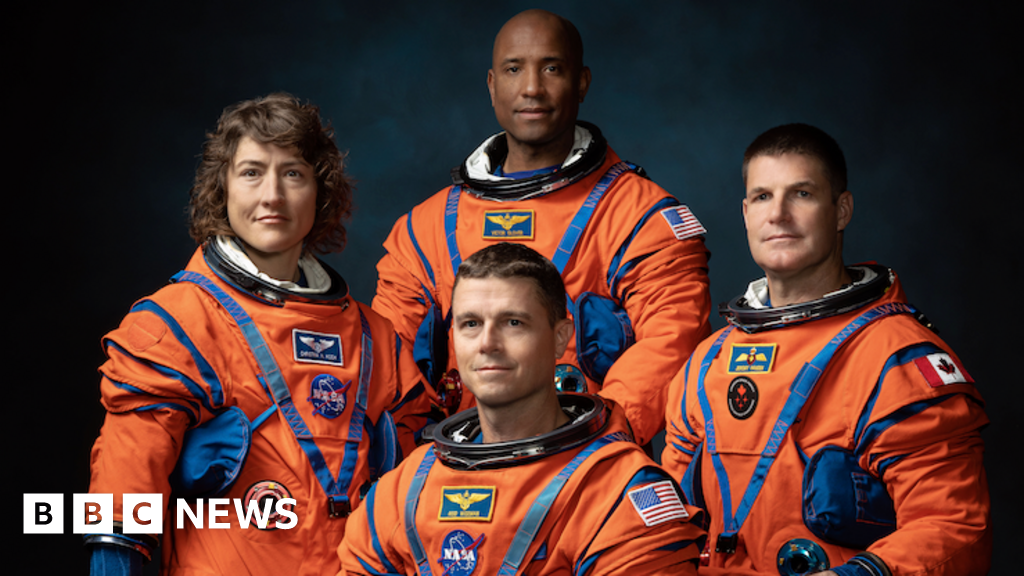
Victor Glover (Pilot): Selected as a NASA astronaut in 2013, Victor Glover is a highly accomplished individual with a rich background in the U.S. Navy, where he flew F/A-18s and served as a test pilot. Born in California, he holds three master’s degrees, showcasing his intellectual prowess and dedication to learning. Glover made history as the pilot of SpaceX Crew-1, the first operational flight of a Crew Dragon spacecraft to the ISS, and was the first African American astronaut to complete a long-duration mission on the ISS. He is married with four children, and his experience in piloting new spacecraft systems will be invaluable for Artemis II.
Christina Koch (Mission Specialist): A native of Michigan, Christina Koch joined the astronaut corps in 2013. Her remarkable career includes a record-breaking 328-day single spaceflight on the International Space Station from 2019 to 2020, setting the record for the longest continuous spaceflight by a woman. During her time on the ISS, she also participated in the first all-female spacewalk alongside Jessica Meir, a monumental achievement in human spaceflight. Her extensive experience with long-duration missions and spacewalks will be critical for monitoring systems and performing in-flight tasks.
Jeremy Hansen (Mission Specialist): Representing the Canadian Space Agency, Jeremy Hansen joined the CSA in 2009 after a distinguished career as a fighter pilot in the Royal Canadian Air Force. He became the first Canadian to lead astronaut training at NASA’s Johnson Space Center, demonstrating his exceptional leadership and instructional capabilities. Hansen will make history as the first Canadian to venture to the Moon, underscoring the vital international collaboration integral to the Artemis program. His role as a mission specialist highlights Canada’s significant contributions to space exploration.
What Will the Artemis Crew Do During the Moon Mission?
The Artemis II mission is far more than just a joyride around the Moon; it’s a rigorous test flight designed to push the boundaries of human spaceflight and validate critical systems. The mission involves the first crewed flight of NASA’s colossal Space Launch System (SLS) rocket, the most powerful rocket ever built, and the Orion spacecraft, specifically designed for deep-space exploration.
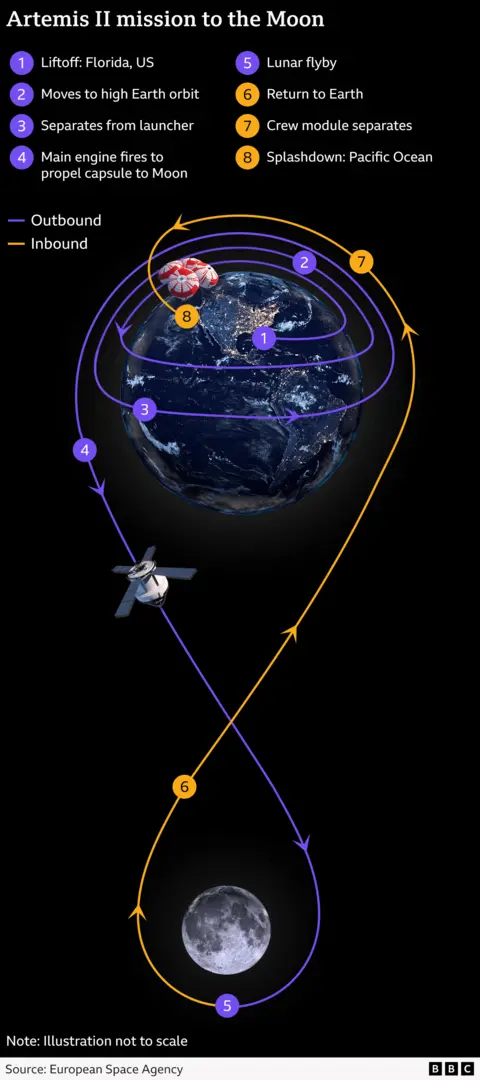
Once launched from Kennedy Space Center and safely in Earth orbit, the astronauts will embark on a series of crucial tests. A primary objective is to evaluate how the Orion capsule performs with a crew on board. This includes manually flying the capsule in Earth orbit, allowing the astronauts to practice steering, maneuvering, and aligning the spacecraft – skills that will be essential for future lunar landings and rendezvous operations.
Following these initial tests, Orion will fire its engines to propel itself out of Earth orbit and toward the Moon. The spacecraft will then perform a lunar flyby, executing a "free-return trajectory" that will take the crew thousands of kilometers beyond the Moon, further into space than any human has ever traveled. During this phase, the astronauts will meticulously check Orion’s life-support systems, propulsion, power, and navigation systems under deep-space conditions.
The crew themselves will act as vital medical test subjects, constantly sending back data and imagery from deep space. They will operate within the compact nine cubic meters of living space inside the Orion crew module, experiencing weightlessness for the entirety of their approximately 10-day mission. This environment will expose them to higher radiation levels than those experienced on the ISS, which is protected by Earth’s magnetic field. Monitoring their physiological responses to this increased radiation and the deep-space environment is crucial for understanding the long-term effects of lunar and future Mars missions. Upon their return, the astronauts will endure a high-speed, bumpy re-entry through Earth’s atmosphere, culminating in a splashdown off the west coast of the United States in the Pacific Ocean, where they will be recovered by a waiting naval vessel.
Will Artemis II Land on the Moon?
No, Artemis II will not land on the Moon. Its primary objective is to validate the Orion spacecraft and its life support systems with a crew aboard, ensuring it is safe and ready for future missions that will involve lunar landings. This mission is a crucial stepping stone, a dress rehearsal for humanity’s return to the lunar surface.
The first human landing on the Moon as part of the Artemis program is planned for Artemis III, currently targeted for September 2026. This mission will see astronauts touch down near the Moon’s south pole, a region believed to harbor significant reserves of water ice in permanently shadowed craters, a vital resource for future lunar bases.
Before Artemis III, NASA is developing two rival commercial lunar landers: SpaceX’s Starship Human Landing System and a craft designed by Jeff Bezos’s company Blue Origin. These private sector partnerships are a hallmark of the Artemis program, aiming to leverage commercial innovation for cost-effective and efficient space exploration. Artemis III will involve Orion docking with one of these landers, transferring crew, and then descending to the lunar surface. Subsequent missions, such as Artemis IV, targeted for September 2028, will continue to build up the infrastructure for a sustained human presence, including delivering the first elements of the Lunar Gateway, a small space station orbiting the Moon. This Gateway will serve as a staging point for lunar surface missions and a testbed for technologies needed for journeys to Mars.
Ultimately, the Artemis program envisions a future where astronauts from an expanding group of nations live and work on and around the Moon for extended periods, conducting scientific research, utilizing lunar resources, and advancing technologies for future deep-space endeavors.
When Was the Last Moon Mission?
The last time humans walked on the Moon was during the Apollo 17 mission, which landed in December 1972 and returned to Earth later that month. Eugene Cernan and Harrison Schmitt were the last of 12 astronauts to have stepped onto the lunar surface during the six successful Apollo landing missions. In total, 24 astronauts have journeyed to the Moon, and of those, only a handful are still alive today.
America’s initial drive to reach the Moon in the 1960s was primarily fueled by the Cold War and the geopolitical "space race" with the Soviet Union. Once the United States achieved this goal, demonstrating technological and ideological superiority, political enthusiasm and public interest gradually waned, leading to a significant reduction in funding for future lunar missions. The Artemis program represents a renewed commitment to lunar exploration, but with a fundamentally different ethos. It’s not merely about planting flags and collecting samples, but about establishing a sustainable, long-term human presence, fostering international collaboration, and using the Moon as a proving ground for the ultimate journey to Mars.
Do Other Countries Plan to Send Astronauts to the Moon?
The new era of lunar exploration is distinctly international. Several other nations harbor ambitions to send their own astronauts to the Moon in the coming decades, often in collaboration with or inspired by the Artemis program.
The Artemis Accords, a series of bilateral agreements outlining principles for peaceful and responsible lunar exploration, have been signed by numerous countries, paving the way for international cooperation. European astronauts are slated to join later Artemis missions, leveraging the European Space Agency’s (ESA) contributions to the Orion service module and the Gateway. Japan has also secured seats for its astronauts on future Artemis missions, reflecting its advanced capabilities in space technology.
China has an ambitious and independent lunar program, aiming for its first crewed landing near the Moon’s south pole by 2030. They are developing their own heavy-lift rockets, crew capsules, and lunar landers, signaling a potential new space race, or at least a parallel path, in lunar exploration.
Russia continues to express intentions of flying cosmonauts to the lunar surface and building a small base sometime between 2030 and 2035. However, ongoing geopolitical sanctions, significant funding pressures, and technical setbacks mean that this timeline is widely regarded as highly optimistic.
India has also declared its aspirations to send its own astronauts to the Moon. Following the resounding success of its Chandrayaan-3 mission, which achieved a historic landing near the lunar south pole in August 2023, the Indian Space Research Organisation (ISRO) has set a goal of putting Indian astronauts on the Moon by approximately 2040. This bold objective is part of a broader push to expand India’s human spaceflight program beyond low Earth orbit and establish itself as a major player in deep-space exploration.
As the Artemis II crew prepares for their historic voyage, the global landscape of space exploration is vibrant and diverse, with an increasing number of nations looking towards the Moon as humanity’s next frontier.



 Nakalama John
 George Anjay
 Ramos Leo
 atisusanti
 Roy Suryo