
 Nana Banana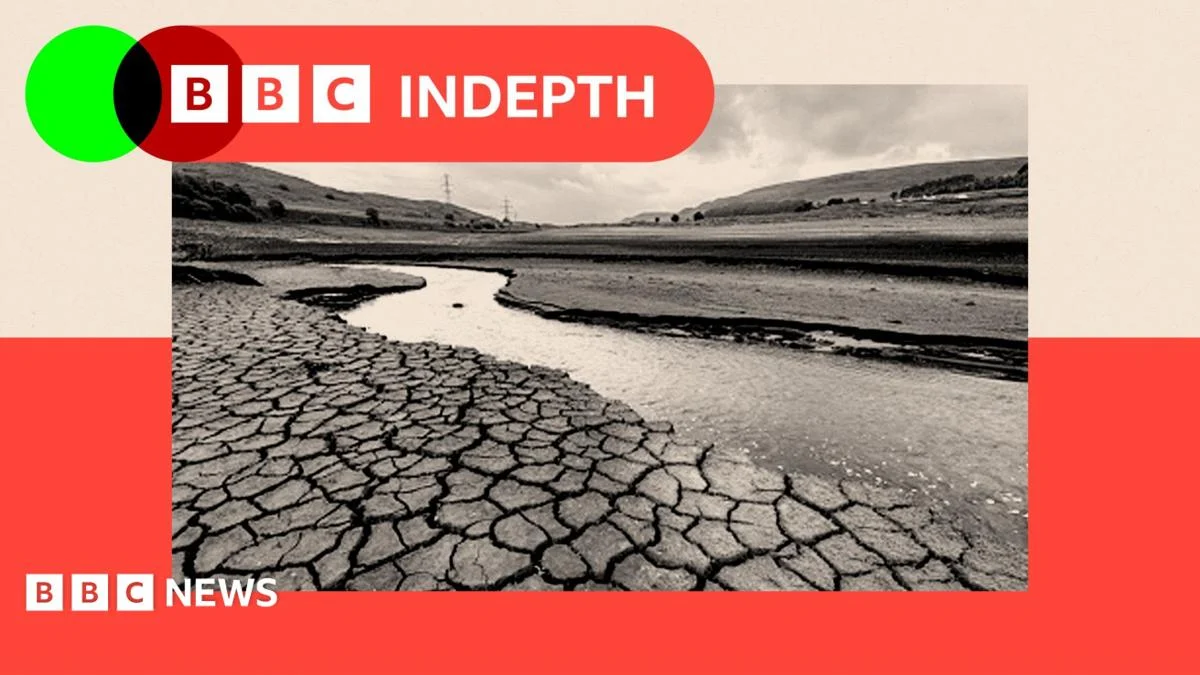
The stark reality of England’s water usage becomes apparent when benchmarked against nations like Denmark, a country often cited for its exemplary water efficiency. Russell highlights a seemingly simple yet profoundly impactful change: if every person in England were to reduce their shower time by just one minute, the cumulative saving would be nearly one billion litres of water daily by 2050, even accounting for projected population growth. This statistic underscores the immense potential for demand reduction through individual behavioural changes, extending beyond showers to more efficient appliances, smarter gardening practices, and a general cultural shift towards water conservation.
However, despite concerted efforts by water companies to run public awareness campaigns urging reduced consumption, their success has been notably limited. Will Willoughby, director of water supply at Wessex Water, candidly acknowledges that the pervasive negative public perception of the water industry itself has severely hampered the efficacy of these messages. Accusations of failing infrastructure, persistent sewage discharges into rivers, and the payment of substantial dividends to shareholders while neglecting vital investments have eroded public trust. Willoughby suggests that a more neutral and authoritative voice, such as the government, might be better positioned to deliver the conservation message. Such an intervention, he believes, "would absolutely go a long way to undoing some of the disdain towards the water companies and get people on board to help look after our water resources," by fostering a sense of collective responsibility rather than corporate obligation.
A fundamental differentiator between England and Denmark in water management is pricing. In Denmark, water meters are mandatory, and consumers pay significantly more for their water than in the UK. While water bills have been climbing across the UK, fueling public outrage directed at water companies for their perceived failures, there’s a compelling argument that consumers are still not paying enough to reflect the true value and scarcity of this essential resource. In Denmark, the average cost of water and wastewater stands at a substantial £9.45 per cubic metre. In contrast, English prices are considerably lower, ranging from Thames Water’s £4.21 per cubic metre (one of the cheapest) to Southern Water’s £7.06 (the most expensive).
Daniel Johns, managing director of Water Resources East, an organisation collaborating with farmers, water companies, and local authorities, unequivocally states that water in England is "too cheap." This low cost fosters a dangerous misconception among the public: "People assume that it will always be readily available. And we need to wean ourselves off that kind of idea that water will always be there." This economic undervaluation of water not only discourages conservation but also limits the financial capacity for water companies to invest adequately in upgrading aging infrastructure, developing new supplies, and mitigating environmental impacts, perpetuating a cycle of underinvestment and public dissatisfaction. If water were priced to reflect its true environmental and economic cost, it could incentivise both individual conservation and robust corporate investment, aligning consumer behaviour with long-term resource sustainability.
The climate crisis presents another layer of complexity. England is already experiencing wetter winters, a trend climate models predict will intensify. This paradox – more rain but less water security – prompts a critical question: could England simply store more of this excess winter water for the drier periods? The answer, in theory, is yes, but in practice, it demands a significant increase in reservoir capacity. However, England has not constructed a major new reservoir in over 30 years.
The reasons for this prolonged hiatus in storage development have been hotly debated. Campaigners have consistently pointed to a lack of investment from the privatised water sector, arguing that profit motives have overshadowed long-term strategic planning. Conversely, water companies have contended that regulators have been reluctant to grant permission for such significant capital expenditure, fearing the inevitable impact on consumer water bills. The government’s landmark independent Cunliffe review into the water sector in 2025 ultimately acknowledged the validity of both arguments, highlighting a systemic failure to balance investment needs with affordability concerns.
Now, a belated shift in policy sees 10 new reservoirs planned across England by 2050. Yet, even with renewed financial and political backing, the construction of new reservoirs is far from straightforward. Dr. Ross Woods, associate professor of water and environmental engineering at the University of Bristol, explains the fundamental geographical challenges: "Building enough reservoirs to hold all that water requires good places, which means places where the land is sloping, where we can find a valley." He adds, "I don’t think that’s realistic countrywide," underscoring the scarcity of suitable sites that can accommodate the vast scale of modern reservoir projects.
One such site, identified as suitable for a mega-reservoir capable of serving 15 million people, is near Abingdon, a picturesque Oxfordshire town on the banks of the River Thames. Traditionally known for its quirky bun-throwing traditions, Abingdon now finds itself at the epicentre of a national debate on water security. Public opinion on the proposed reservoir is sharply divided. While proponents stress the urgent need for water supply, opponents voice significant environmental concerns, particularly the destruction of ancient woodlands and the irreplaceable loss of biodiversity that such a large-scale development would entail.
Recognising the urgency, the government has designated the Abingdon site, along with one other reservoir, as Nationally Significant Infrastructure Projects (NSIPs). This designation aims to streamline the planning process, bypassing some local decision-making hurdles to accelerate development. However, NSIP status does not circumvent the rigorous environmental hurdles that these projects must still clear. Reservoirs, as water bodies, are legally required to achieve "good" status for water quality under environmental law, meaning they must be free from pollutants such as agricultural runoff and invasive species. Alarmingly, only 14% of existing water bodies in England currently meet this standard. The Environment Agency, in its submission to the Cunliffe Review, issued a stark warning: "the treatment costs of meeting ‘good’ may render the new reservoirs infeasible." This critical point highlights that simply building a reservoir is not enough; ensuring it can hold water of sufficient quality for consumption without incurring prohibitive treatment costs presents a formidable, and potentially insurmountable, challenge.
The race to secure England’s water future requires a multi-faceted strategy that transcends simple solutions. It demands a radical overhaul of public perception and behaviour towards water, driven by a more effective public discourse and potentially reformed pricing structures that reflect its true value. Simultaneously, it necessitates a significant, sustained investment in both traditional infrastructure like reservoirs and innovative technologies such as leakage detection, water recycling, and even desalination, where economically viable. Crucially, all these efforts must be underpinned by robust environmental protection and a holistic understanding of water as a vital, interconnected ecosystem, not merely a commodity. The stakes are high, and the time for decisive action is now if England is to avoid the looming threat of running dry.



 George Anjay
 Nakalama John
 atisusanti
 Ramos Leo
 Roy Suryo