
 George Anjay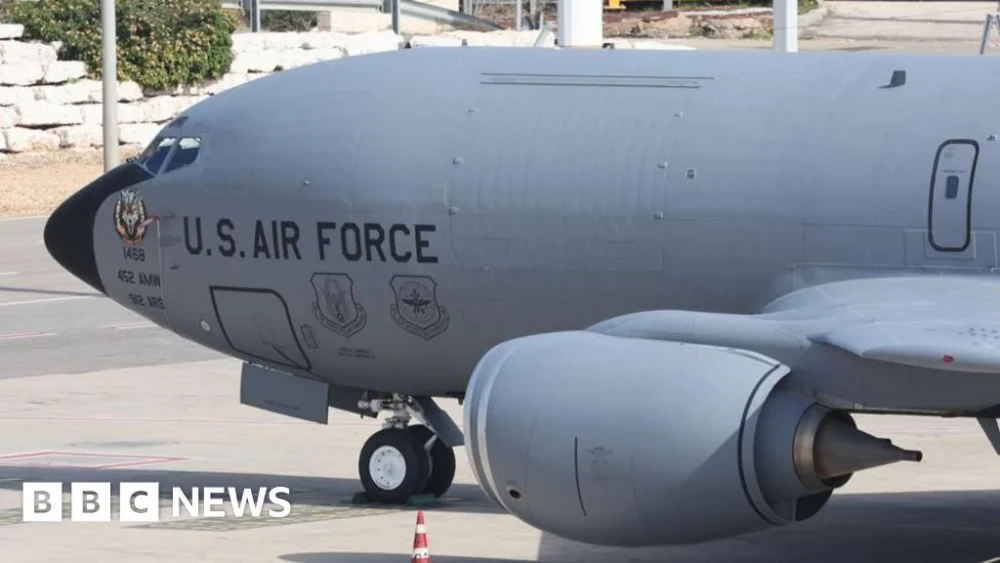
The US military has officially identified the six brave airmen who tragically lost their lives when their KC-135 Stratotanker refuelling aircraft crashed in western Iraq. The Pentagon confirmed the identities of the fallen service members as: Captain John Klinner, 33, from Alabama; Captain Ariana Savino, 31, from Washington; Major Ashley Pruitt, 34, from Kentucky; Staff Sergeant Seth Koval, 38, from Indiana; Staff Sergeant Curtis Angst, 30, from Ohio; and Airman First Class Tyler Simmons, 28, also from Ohio. The initial three were distinguished members of the US Air Force, while the latter three served honorably with the National Guard, demonstrating the unified effort of American forces in the region.
The devastating incident occurred on Thursday, and initial reports from the US military emphatically stated that neither hostile fire nor friendly fire was involved in the aircraft’s loss. The KC-135 was actively engaged in a combat mission, a critical component of the ongoing US operations against Iran, which commenced a fortnight prior. The aircraft was part of a two-plane formation at the time of the crash; its counterpart successfully landed without incident, underscoring the potential for a catastrophic, isolated event.

US Defense Secretary Pete Hegseth, in a somber tribute, lauded the fallen crew members, proclaiming them "American heroes" for their unwavering dedication and ultimate sacrifice. While the military initially refrained from speculating on the cause, US officials speaking to CBS News, the BBC’s trusted US partner, indicated that a midair collision is a strong possibility under investigation. However, they stressed that the investigation is ongoing and conclusive findings are yet to be determined. Centcom, the US military’s Central Command, had previously stated that the crash occurred over friendly airspace, a detail that adds complexity to the unfolding narrative.
Further details from an Iraqi intelligence source, shared with CBS News, placed the crash site near Turaibil, a strategic location situated on the Iraqi-Jordanian border. This region is known to be an area where pro-Iranian militias maintain a presence, a factor that adds a layer of geopolitical tension to the investigation. In a conflicting narrative, Iran’s military claimed on state television that an allied group had targeted the plane with a missile, a statement that directly contradicts the initial US military assessment. This divergence in accounts highlights the contested information environment surrounding the incident.
The loss of the KC-135 brings the official US military death toll in the escalating conflict with Iran to 13. This toll includes six soldiers who perished in Kuwait and one additional service member in Saudi Arabia, underscoring the widening scope of casualties in this burgeoning war. To date, the US military has sustained the loss of at least four aircraft since the commencement of hostilities, which began with coordinated US and Israeli strikes on Iran on February 28th. This statistic points to the significant challenges and risks faced by American air power in the current theater of operations.
The KC-135 Stratotanker, a venerable workhorse of the US military’s aerial refuelling capabilities, was manufactured by Boeing in the late 1950s and early 1960s. For decades, it has served as the backbone of the US military’s air refuelling fleet, a critical asset that enables combat aircraft to extend their operational range and loiter times, thereby projecting power and maintaining mission effectiveness over vast distances. Its ability to transfer fuel in mid-air allows fighter jets and bombers to conduct extended missions without the need for frequent landings, a capability that is indispensable in modern warfare.
The KC-135 Stratotanker is a four-engine, swept-wing, subsonic strategic refuelling aircraft. It is derived from the Boeing 367-80, which also served as the basis for the Boeing 707 airliner. The KC-135’s primary role is to provide aerial refuelling to US Air Force, Navy, and allied nation aircraft, significantly extending their combat radius and endurance. The aircraft can carry over 200,000 pounds of fuel, which can be delivered through a boom system or, in some configurations, through wingtip hoses and drogue adapters. A typical KC-135 crew consists of a pilot, co-pilot, and a boom operator, who remotely controls the refueling boom. In some variants and mission profiles, a navigator may also be present.
The introduction of the KC-135 into service in 1957 marked a significant advancement in air mobility and power projection. It allowed for the sustained operation of strategic bombers and fighter aircraft, playing a crucial role in the Cold War and subsequent global military operations. Despite its age, the KC-135 has undergone numerous upgrades and modifications to maintain its operational relevance. These upgrades have included advancements in avionics, engines, and communication systems, ensuring its continued utility in supporting modern air combat operations. The aircraft’s robust design and proven reliability have made it a cornerstone of US air power for over six decades.
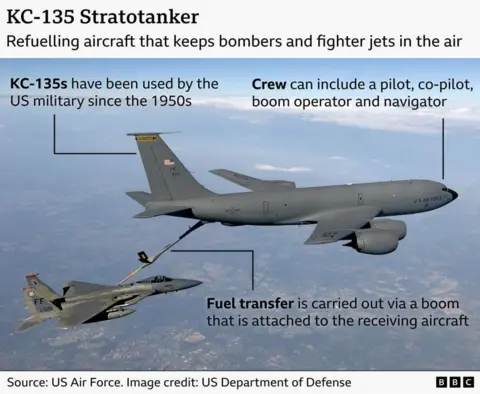
The strategic importance of aerial refuelling cannot be overstated in modern military operations. It provides air forces with unprecedented flexibility, enabling them to respond to crises anywhere in the world with greater speed and sustained presence. Without refuelling capabilities, the range and operational tempo of many aircraft would be severely limited, impacting their effectiveness in both offensive and defensive roles. The KC-135, as one of the primary platforms for this critical function, has been instrumental in the success of countless missions, from long-range reconnaissance to complex air-to-air combat scenarios.
The crash of the KC-135 in Iraq, therefore, represents not only a tragic loss of life but also a significant blow to the operational capacity of the US military in the region. The ongoing investigation into the cause of the accident will be crucial in determining the specific factors that led to this event and in implementing measures to prevent future occurrences. The geopolitical implications of the crash, particularly in light of conflicting claims from Iran, are also significant and will likely shape regional dynamics and international relations. The bravery and sacrifice of Captain Klinner, Captain Savino, Major Pruitt, Staff Sergeant Koval, Staff Sergeant Angst, and Airman First Class Simmons will be remembered as they answered their nation’s call to duty, a call that ultimately led to their untimely demise. Their service and commitment serve as a poignant reminder of the profound costs of conflict and the immense courage displayed by those who serve. The US military remains committed to honoring their memory and to understanding the circumstances surrounding this tragic loss.



 Nakalama John
 atisusanti
 Ramos Leo
 Roy Suryo
 Nana Banana