Nana Banana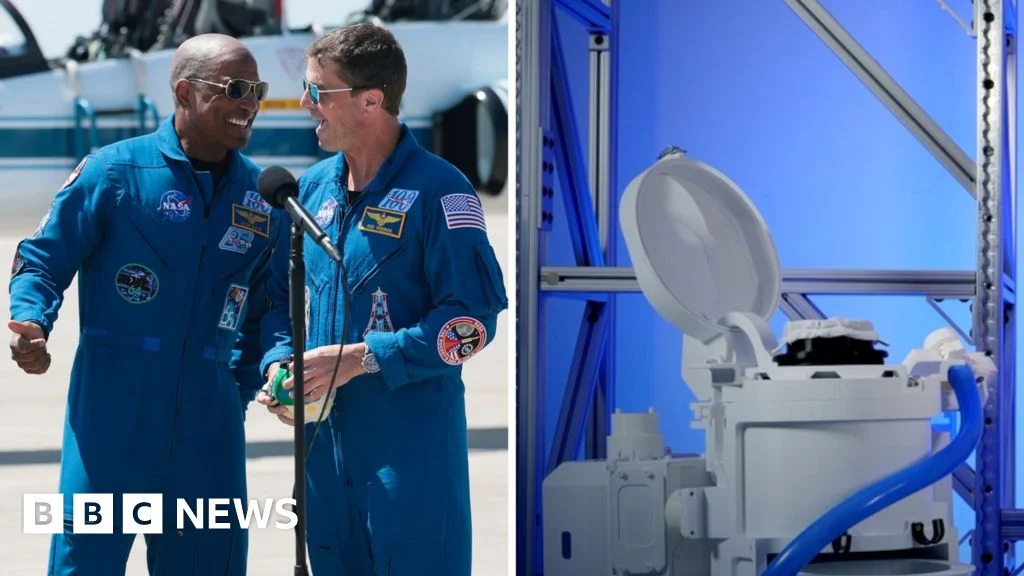
When venturing beyond the protective embrace of Earth’s atmosphere, the most fundamental human needs become complex engineering challenges. One such challenge, often overlooked but critical for long-duration spaceflight, is how astronauts will manage personal hygiene, specifically going to the toilet, in the peculiar environment of zero gravity. This seemingly mundane problem has been a significant focus for NASA scientists, who have invested more than $23 million into its resolution, ensuring readiness for the upcoming launch of Artemis II, initially anticipated for April 1st. This substantial financial commitment underscores the intricate nature of designing systems that must function flawlessly in the unforgiving vacuum of space while maintaining astronaut comfort and health.
The culmination of this extensive research and development is what NASA is calling the ‘Universal Waste Management System’ (UWMS). This innovative system represents a significant leap forward from previous space toilet designs, engineered to accommodate both stool and urine efficiently and, crucially, designed with equal consideration for both women and men. Its development addresses long-standing issues faced by female astronauts with earlier, male-centric designs, ensuring a more equitable and comfortable experience for all crew members on deep-space missions.
Artemis II, poised to be the first lunar fly-around mission carrying humans in over half a century, is a pivotal step in humanity’s return to the Moon and beyond. Following the successful unmanned Artemis I mission in 2022, which thoroughly tested the Orion spacecraft and its systems in a deep-space environment, the Artemis program is meticulously preparing for increasingly ambitious deep-space journeys. The ultimate goal is nothing less than landing humans on Mars in the 2030s, a monumental undertaking that necessitates robust and reliable life support systems, including advanced waste management.
The physics of waste management in zero gravity presents a unique set of hurdles. Without gravity to pull waste down, liquids and solids would simply float around the cabin, creating unsanitary conditions, potential equipment damage, and a significant biohazard. Early space missions, such as Mercury and Gemini, relied on rudimentary solutions like bags and absorbent pads, often leading to discomfort and hygiene issues. Apollo missions saw the introduction of more sophisticated collection bags, but privacy and ease of use remained significant concerns within the cramped confines of the spacecraft. The Skylab space station introduced one of the first vacuum-based toilets, a precursor to modern designs, which used airflow to pull waste away from the body.
The Space Shuttle era refined these systems, introducing dedicated vacuum toilets, but these still had limitations. Issues such as splashback, odor control, and the need for precision positioning were constant challenges. The International Space Station (ISS) currently operates with both Russian and American-made vacuum toilets, which separate liquids from solids using powerful airflow. Urine is then processed and recycled back into potable water, a critical element of the ISS’s closed-loop life support system. Solid waste is compacted and stored for eventual disposal, usually during cargo vehicle re-entry. However, even these systems require regular maintenance, can be noisy, and have experienced their share of malfunctions, underscoring the continuous need for improvement, especially for missions extending far beyond Earth orbit.
The ‘Universal’ aspect of the UWMS is a testament to NASA’s commitment to inclusivity and efficiency. Previous space toilet designs often struggled to accommodate the anatomical differences between men and women, particularly concerning urine collection. Women frequently found existing funnels difficult to use effectively without leakage or splashback. The UWMS addresses this by integrating a more adaptable and user-friendly design that functions effectively for all genders. This universality is not just about comfort; it’s about reducing complexity, minimizing training requirements, and ensuring reliable performance regardless of the crew’s composition, a crucial factor for diverse teams undertaking multi-year missions to Mars.
At its core, the UWMS operates on a vacuum-based principle, much like its predecessors, but with significant enhancements. Astronauts position themselves on a seat, and powerful airflow, rather than gravity, pulls waste into the system. Liquids are directed through a sophisticated filtration and processing system, designed for eventual recycling into clean water, mirroring the advanced capabilities of the ISS but with an eye towards even greater efficiency and reliability for longer durations. Solids are compacted and sealed in bags, ready for storage. The system incorporates advanced sensors to monitor waste levels, detect potential clogs, and provide real-time feedback to both the crew and ground control. This level of automation and monitoring is vital for preventative maintenance and ensuring operational continuity on missions where resupply is impossible.
The $23 million investment reflects the rigorous demands of developing such a critical piece of technology. This cost covers extensive research and development, prototyping, materials science (including specialized coatings to prevent microbial growth and odor), stringent testing in simulated space environments, safety certifications, and the iterative design process required to refine the system for optimal performance. Every component must be space-hardy, radiation-resistant, and capable of operating without failure for years. Furthermore, the system must be compact enough to fit within the constrained volume of the Orion capsule and potentially the Lunar Gateway, while being robust enough to withstand the vibrations and G-forces of launch.
Artemis II will serve as the crucial proving ground for the UWMS in deep space. With a crew of four astronauts, this mission will take them further from Earth than any humans have traveled since Apollo. The extended duration of this lunar fly-by will provide invaluable data on the UWMS’s performance under realistic mission conditions, evaluating its ease of use, reliability, and maintenance requirements. This feedback will be instrumental in fine-tuning the system for Artemis III, which aims to land astronauts on the lunar surface, and subsequent missions to establish a sustained human presence around and on the Moon.
Looking ahead to Mars, the UWMS’s implications are even more profound. A journey to Mars could take six to nine months one way, followed by an extended stay on the Martian surface. Such long-duration missions necessitate life support systems that are not only highly reliable but also incredibly efficient in resource management. The ability to recycle urine into potable water becomes paramount, as resupply options are virtually non-existent. Solid waste management also takes on new dimensions; storing years’ worth of waste is impractical. Future iterations of waste management systems for Mars missions might explore bioregenerative approaches, where waste could potentially be processed into resources, or even methods for safe disposal on the Martian surface without contaminating the environment.
Beyond the technical marvel, the reliability and comfort provided by the UWMS are vital for the psychological well-being and health of the astronauts. A malfunctioning or uncomfortable toilet system can significantly impact morale, stress levels, and overall crew performance. Ensuring a dignified and hygienic means of managing waste is a fundamental aspect of crew welfare, contributing to a more positive and productive environment during arduous missions far from home.
In conclusion, the development of the Universal Waste Management System is far more than just creating a high-tech toilet. It represents a foundational element of human deep-space exploration, demonstrating NASA’s unwavering commitment to solving every challenge, no matter how seemingly trivial, to enable humanity’s ambitious journey to the Moon, Mars, and beyond. The $23 million investment is an investment in human longevity in space, ensuring that as we push the boundaries of exploration, our astronauts can maintain health, hygiene, and focus on the extraordinary scientific and exploratory goals that lie ahead. Video edited by Alex Foster.




 George Anjay
 Nakalama John
 atisusanti
 Ramos Leo