
 George Anjay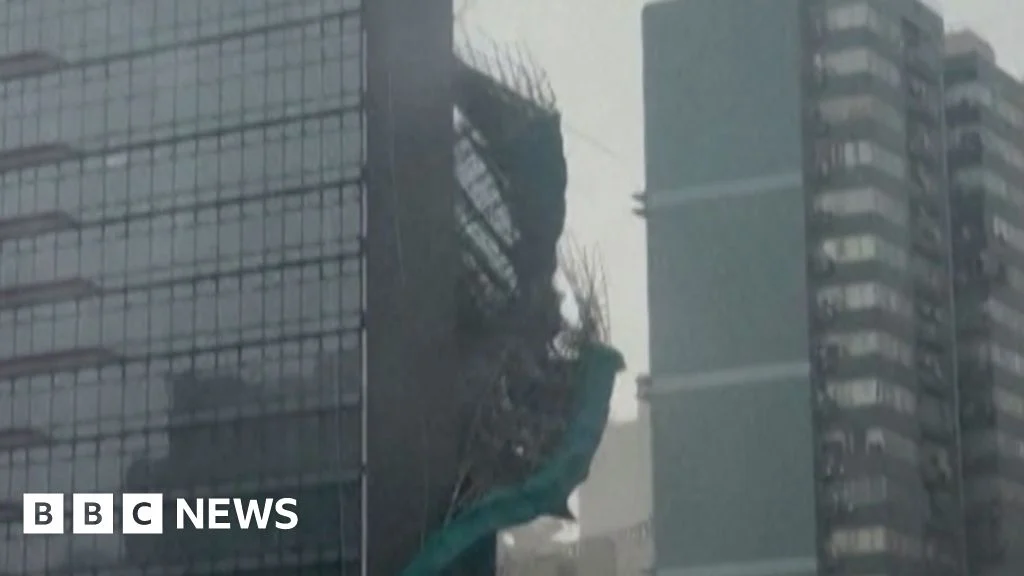
Hong Kong was battered by the ferocious onslaught of Typhoon Noul on Sunday morning, a tempest that not only disrupted air travel and brought the city to a standstill but also unleashed its raw power upon the urban landscape. The most dramatic visual testament to the typhoon’s destructive force was the terrifying spectacle of multi-storey scaffolding being ripped from a building along Cheung Sha Wan Road, a scene that sent shockwaves through the community and prompted numerous calls to the police. Fortunately, in this particular incident, no injuries were reported, a testament to the vigilance of authorities and perhaps a stroke of luck amidst the chaos. However, the image of the mangled metal structure, twisted and torn from its moorings by the typhoon’s relentless gusts, served as a stark and chilling reminder of the typhoon’s immense power.
Typhoon Noul, a meteorological behemoth, made its official landfall in southern China on Sunday morning, unleashing its fury upon a vast swathe of the region. The impact was immediate and widespread, with Hong Kong bearing the brunt of the initial onslaught. The city was lashed with winds of alarming velocity, described by witnesses as howling and relentless, accompanied by torrential downpours that transformed streets into temporary rivers. The sheer force of the weather system rendered many outdoor activities impossible and forced residents to seek shelter indoors, peering out at the tempestuous scenes unfolding outside.
The economic and logistical impact of Typhoon Noul was equally significant. Hong Kong International Airport, a vital hub for global connectivity, was brought to its knees by the adverse weather conditions. In a stark illustration of the typhoon’s disruptive power, approximately 360 passenger flights were unceremoniously cancelled, leaving thousands of travelers stranded and disrupting countless itineraries. This extensive cancellation spree underscored the severity of the typhoon and the precautionary measures taken by aviation authorities to ensure the safety of passengers and crew. The ripple effect of these cancellations extended far beyond the airport, impacting businesses, tourism, and the daily lives of many.
Further compounding the narrative of Typhoon Noul’s potency, state media reports unequivocally declared it the strongest typhoon to make landfall in China in 2026 to date. This declaration, while a chilling statistic, provided a crucial context for the widespread disruption and damage experienced. The designation as the "strongest to date" in a given year immediately elevates the typhoon in terms of its meteorological significance and its potential for widespread devastation. It suggests a level of intensity that surpasses previous storms, demanding a heightened level of preparedness and response from the affected regions.
The scaffolding incident on Cheung Sha Wan Road, while fortunately resulting in no injuries, was a vivid and tangible manifestation of the typhoon’s destructive potential. The multi-storey structure, designed to provide a safe working platform for construction or maintenance, became a terrifying projectile in the typhoon’s grip. Witnesses described the terrifying sound of metal groaning and tearing as the wind ripped through the scaffolding, sending debris and sections of the structure tumbling. The collapse was not a gradual deterioration but a violent dismemberment, a stark demonstration of the wind’s overwhelming force. The calls received by the police were undoubtedly a mix of alarm, concern, and a desire to report the hazardous situation unfolding in their vicinity. The immediate priority for emergency services, even without reported injuries from the scaffolding collapse itself, would have been to cordon off the area, assess the stability of any remaining structures, and ensure the safety of the public.
The meteorological science behind Typhoon Noul’s ferocity is complex, involving a confluence of factors that can create such a powerful storm. Warm ocean waters provide the energy for tropical cyclones to form and intensify, and as Noul churned over the South China Sea, it likely absorbed significant heat and moisture. The atmospheric conditions, including wind shear and upper-level outflows, also play a crucial role in a typhoon’s development and trajectory. Once formed, these systems can rapidly gain strength, feeding off the oceanic energy until they make landfall. The "strongest to date" designation suggests that Noul may have benefited from exceptionally favorable conditions, perhaps a prolonged period over warm waters or a particularly conducive atmospheric environment, allowing it to reach peak intensity before impacting the coast.
The impact on Hong Kong’s infrastructure extended beyond the dramatic scaffolding collapse. Power outages were reported in various districts as high winds brought down power lines and damaged electrical infrastructure. The heavy rainfall led to localized flooding, particularly in low-lying areas, disrupting traffic and further isolating some communities. Public transportation systems, while attempting to operate with reduced services, faced significant challenges due to the hazardous conditions. The MTR, Hong Kong’s extensive subway system, likely experienced service disruptions or speed restrictions in exposed sections. Bus services would have been severely curtailed, and ferry services would have been suspended entirely as the sea became too rough.
The economic repercussions of Typhoon Noul will likely be felt for some time. Beyond the immediate costs of repair and recovery, the disruption to trade and commerce, the loss of productivity due to business closures, and the impact on the tourism sector will all contribute to the overall economic toll. The agricultural sector in the affected regions of mainland China would also have suffered significant damage to crops and livestock. The cost of rebuilding damaged infrastructure, homes, and businesses will be substantial, placing a burden on both government resources and insurance companies.
The response to Typhoon Noul involved a multi-faceted effort from various agencies. Emergency services, including the police, fire department, and ambulance services, were on high alert, responding to a multitude of incidents ranging from fallen trees and power outages to structural damage. The government’s emergency management agencies would have been coordinating rescue and relief efforts, assessing damage, and providing essential services to affected communities. Public warnings and advisories would have been broadcast continuously, urging residents to stay indoors, avoid unnecessary travel, and take precautions to secure their homes and properties.
The resilience of Hong Kong and the broader region in the face of such powerful natural disasters is a recurring theme. While the immediate aftermath of Typhoon Noul brought destruction and disruption, the spirit of community and the dedication of emergency responders would have been instrumental in the recovery process. The swiftness with which authorities would have moved to assess damage, clear debris, and restore essential services would be crucial in minimizing the long-term impact.
The event also serves as a stark reminder of the ever-present threat posed by climate change and its potential to exacerbate the intensity and frequency of extreme weather events. While attributing any single typhoon to climate change is complex, scientific consensus suggests that rising global temperatures can contribute to warmer ocean waters, which in turn can fuel more powerful tropical cyclones. This makes preparedness and adaptation strategies increasingly important for vulnerable regions like Hong Kong and southern China. The "strongest to date" designation for Typhoon Noul in 2026 might be a harbinger of future trends, necessitating continuous investment in early warning systems, robust infrastructure, and comprehensive disaster management plans. The images of the scaffolding being ripped from the building serve as a powerful, albeit distressing, visual testament to the forces of nature and the importance of respecting their power. The aftermath would involve not just physical repairs but also a collective reflection on preparedness and resilience in the face of an increasingly volatile climate.




 Roy Suryo

 Nakalama John
 atisusanti
 Ramos Leo
