
 Ramos Leo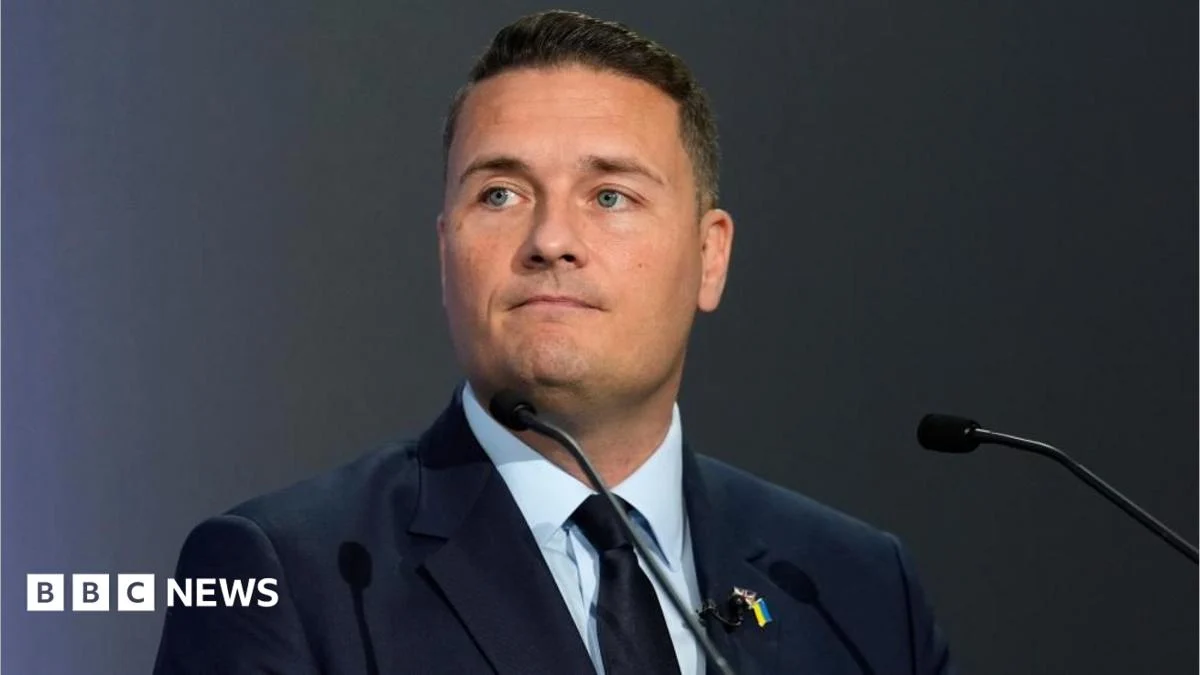
Healey, having championed greater defence spending during his tenure at the MoD, now faces the formidable task of locating the additional funds he previously argued the preceding government failed to secure, all in the name of national security. Meanwhile, Prime Minister Andy Burnham, still fresh in his role, has publicly affirmed his administration’s unwavering commitment to honouring the United Kingdom’s defence spending pledges. These include the ambitious target of meeting NATO’s core defence spending benchmark of 3.5% of gross domestic product (GDP) by 2035. The recently published Dip, however, projects a more immediate figure, indicating that defence expenditure will reach 2.7% of GDP by the close of the current decade.
When pressed by reporters on his personal endorsement of the aspiration to elevate defence spending to 3% by 2030, Streeting navigated the question with diplomatic precision, stating that fiscal policy is, unequivocally, "a matter for the chancellor." This carefully worded response underscores the delicate balance he must strike between advocating for the needs of the armed forces and respecting the Treasury’s ultimate authority over national finances. Despite this circumspection, Streeting was quick to remind journalists that his calls for increased defence investment are unequivocally "on the record," signalling his consistent advocacy for a well-resourced military.
He further elaborated on his reluctance to trespass on the Chancellor’s domain, explaining, "What I will not do, because I think it would not only be limiting to my time in this post, but potentially ending of my time in this post, is to write the chancellor’s next budget and next spending review for him." This statement highlights the political tightrope he walks, acknowledging the established boundaries of his ministerial brief while simultaneously affirming his commitment to the defence agenda. Instead, he pledged, "What I will do is put the best possible case for defence to the Treasury," indicating a strategy of robust internal advocacy rather than public confrontation. When confronted with the direct question of whether he was "trying to do defence on the cheap," Streeting’s retort was an emphatic "absolutely not," dispelling any notions of underfunding on his part.
The government’s defence strategy has not escaped scrutiny from the opposition benches. James Cartlidge, the Conservative shadow defence secretary, has raised pointed questions regarding the timing and sincerity of Prime Minister Burnham’s commitment to the 3% target. Cartlidge specifically challenged whether this increase would materialise within the current Parliament, which is slated to conclude in 2029. Taking to X (formerly Twitter), he expressed his scepticism, querying, "Or is it still a vague ‘ambition’ for the next Parliament – as late as 2034?" This line of questioning seeks to expose any potential ambiguity or deferral in the government’s defence spending promises, transforming the ambition into a political battleground over concrete action versus aspirational rhetoric. The opposition’s challenge aims to hold the government accountable to specific timelines, particularly given the perceived urgency of global security challenges.
During his substantive address, Streeting proudly announced a flurry of activity in the wake of the Dip’s publication, revealing that the government has "agreed more than £11.8bn worth of contracts" in the mere 10 days since the plan was made public. This rapid allocation of funds underscores a commitment to accelerating defence capabilities and supporting the industrial base. However, Streeting was quick to pivot from mere investment to the crucial accompanying imperative: efficiency. "But investment is only one side of the coin," he asserted, "because while we will always back our brave men and women who serve, ensuring they have the resources and the kit that they need, we also owe it to them and to the whole country to ensure that every penny is spent wisely." This statement encapsulates the core of his philosophy, emphasising accountability alongside expenditure.
He articulated this dual imperative with a concise, powerful maxim: "Modernisation without investment is impractical, but investment without modernisation is irresponsible." This highlights his belief that simply throwing money at existing, potentially outdated, structures and processes is a dereliction of duty. True progress, in his view, demands a simultaneous commitment to upgrading not just equipment but also the operational methodologies and administrative frameworks that underpin the defence apparatus.
To underscore his approach, Streeting drew directly from his recent experience as health secretary, a role in which he spearheaded what he described as a "bold programme of reform and modernisation." His objective in that capacity was to ensure "that we were maximising value for money and cutting waste" within the National Health Service. He pointed to tangible outcomes from these reforms, including a reduction in hospital waiting times across England and a significant increase in the number of patient appointments. This track record, he argued, provides a blueprint for his strategy in defence.
"This is the mantra I will now follow as defence secretary," Streeting declared, signalling a direct transfer of his reformist zeal and efficiency-driven mindset from health to the Ministry of Defence. He outlined the multifaceted benefits of this approach: "This is how we make ourselves fit to face the future, how we will continue to be a strong, dependable ally to our friends abroad, and how we will be an engine of growth and jobs here at home." This vision frames defence spending not merely as an expenditure on security, but as an investment in national resilience, international standing, and domestic economic prosperity. His reference to the hospital waiting list in England dropping to its lowest level in nearly three years in February, to which he had responded by acknowledging "good progress but there was ‘much more to do’," further illustrates his consistent commitment to measurable improvement and a pragmatic, results-oriented approach.
Streeting’s emphasis on eradicating waste is particularly pertinent given recent, stinging criticisms levelled against the Ministry of Defence. Labour MP Al Carns, who himself resigned as a defence minister during the aforementioned funding row over the Dip, delivered a damning indictment of the MoD’s operational failings. Carns lambasted the department for its "unbelievable" waste and inefficiency. In an interview with The Guardian last month, Carns revealed a deeply troubling picture of the MoD’s internal workings, stating, "You turn a stone over and get another shock – how has that been allowed to go on?" His experience uncovered layers of bureaucratic excess, with Carns adding, "And you turn another stone over, and it is just layers of bureaucracy which now cost us more than the product you’re getting itself."
These stark accusations from a former insider highlight the scale of the challenge Streeting faces. The MoD has historically been plagued by reports of procurement failures, cost overruns, and administrative bloat, issues that erode public trust and divert crucial resources from frontline capabilities. Carns’s remarks paint a picture of an organisation struggling under its own weight, where internal processes have become ends in themselves rather than efficient means to deliver defence capabilities. Streeting’s commitment to "cutting waste and maximising value for money" is, therefore, not merely a fiscal platitude but a direct response to documented systemic problems within one of the government’s most critical departments. His success in this endeavour will be crucial not only for the operational effectiveness of the UK’s armed forces but also for demonstrating prudent stewardship of taxpayer money in an era of heightened global instability and significant economic pressures. The challenge for Streeting will be to translate his proven track record of reform from the healthcare sector into the unique and complex world of defence, ensuring that the substantial investments made truly translate into a stronger, more agile, and more efficient military force.




 Roy Suryo

 Nakalama John
 atisusanti
