Nana Banana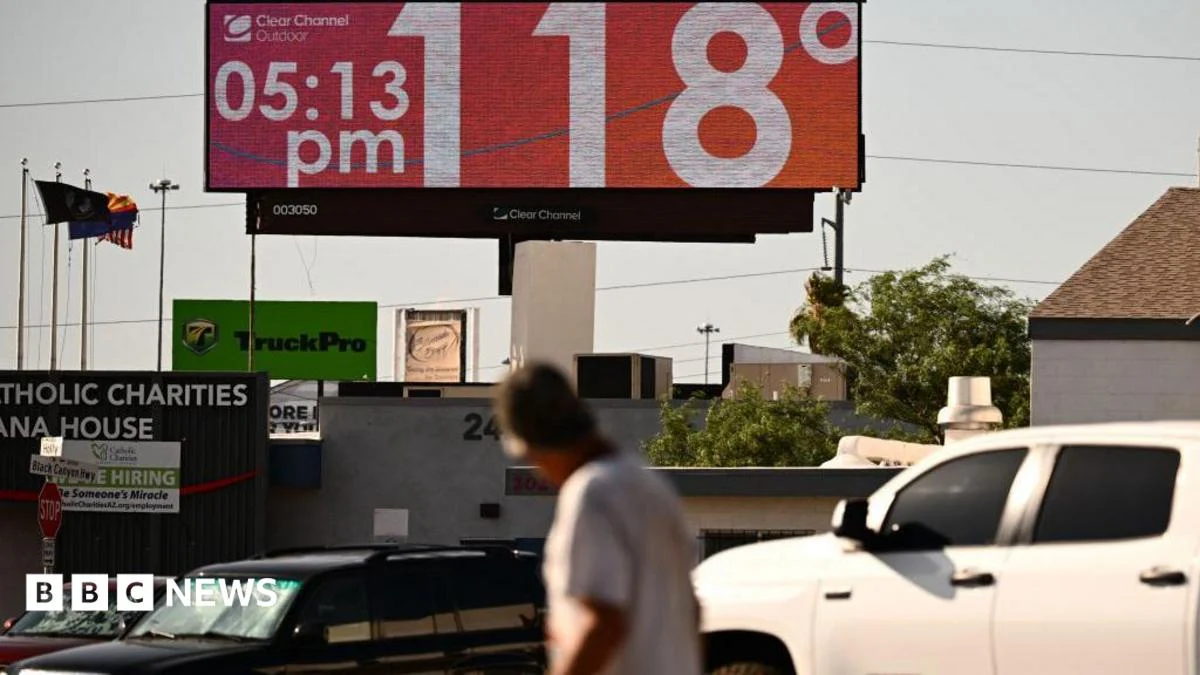
It has been a blisteringly hot summer for much of the US and Europe, pushing human endurance and infrastructure to their limits. Scientists have issued dire warnings that these extreme temperatures are not anomalies but rather the new, unforgiving normal for these communities, a direct consequence of a rapidly warming planet. The human cost of this escalating crisis is already staggering. France, for instance, reported a tragic increase of more than 2,000 deaths during a record-breaking heatwave in late June. Across England and Wales, expert analyses estimated that over 2,700 people may have succumbed to heat-related causes stemming from a series of intense heatwaves since May. In the United States, the vulnerability was starkly highlighted over the 4th of July holiday weekend, with at least 44 heat-related deaths reported amidst the extreme weather conditions. These figures underscore not only the immediate mortality but also the immense strain placed on healthcare systems, emergency services, and public health infrastructure.
For many, the relentless rise in temperatures has delivered a profound shock to the system, forcing a difficult adjustment to a new reality where extreme weather events become increasingly frequent, intense, and prolonged due to climate change. "People don’t realise this is not the same heat that we were experiencing 10 years ago, it is actually worse, because in many cases nighttime temperatures are not cooling off," Jennifer Marlon, a Yale University researcher who specializes in the impacts of extreme heat, explained to the BBC. This critical point about nighttime temperatures is often overlooked but physiologically vital. Our bodies depend on a significant drop in evening temperatures to recuperate from the day’s heat, allowing core body temperatures to normalize and preventing cumulative heat stress. Without this crucial respite, the risk of heatstroke, dehydration, and exacerbation of underlying health conditions skyrockets, especially for vulnerable populations. The urban heat island effect, where metropolitan areas are significantly warmer than surrounding rural areas due to human activities and materials, further compounds this problem, trapping heat and preventing effective cooling overnight.
Yet, amidst this global struggle, one city in the US stands out as a potential beacon of resilience: Phoenix, Arizona. For this desert metropolis, scorching temperatures are not a novel phenomenon but an inherent characteristic of its environment. Officials in Phoenix, and the broader Maricopa County, have dedicated years to developing and implementing comprehensive solutions aimed at mitigating heat deaths. Their sustained, multi-faceted effort appears to be yielding tangible results, offering a critical blueprint for cities worldwide grappling with an increasingly hot future.
Maricopa County, encompassing Phoenix, experiences some of the most extreme temperatures in the United States, regularly soaring past 110°F (43°C) for extended periods during the summer months. This extreme climate has thrust the county to the forefront of the battle over heat safety, compelling it to innovate and adapt. Their proactive approach involves a suite of programs designed to offer residents essential access to life-saving cooling resources, from readily available public cooling centers to crucial assistance with air conditioning systems.
The county’s dedicated efforts to reduce the number of heat-related deaths have demonstrated notable success in recent years. Following a tragic peak of 645 heat-related fatalities recorded in 2023, the numbers saw a significant decline to 405 deaths in 2025. Many experts attribute this positive shift, at least in part, to the strategic policy changes and enhanced intervention programs implemented during this period. However, the battle is far from over, and the downward trend is not guaranteed, underscoring the continuous nature of this challenge.
A significant portion of Maricopa County’s focus has been directed towards expanding access to reliable air conditioning, recognizing that many heat-related deaths disproportionately affect individuals with low incomes or those experiencing homelessness. These populations often lack adequate shelter, consistent access to cooling, or the financial means to maintain functional air conditioning units. To address this, the county provides consistent, open access to cool spaces, ranging from libraries and community centers to specially designated public buildings. Crucially, they have expanded the operational hours of these spaces, with some even remaining open 24 hours a day, providing continuous refuge from the streets and the relentless heat. These cooling centers often offer more than just cool air; they may provide water, basic medical checks, and information on other available social services, acting as vital lifelines during peak heat events. The locations are strategically chosen based on population density, vulnerability maps, and accessibility via public transport, ensuring they reach those most in need. Public awareness campaigns, utilizing various media and community outreach, play a vital role in informing residents about the availability and locations of these life-saving resources.
Another critical program offers eligible residents financial assistance for repairs or replacements of their air conditioning systems. This initiative directly tackles a root cause of vulnerability, ensuring that essential home cooling remains operational, particularly for elderly residents, families with young children, and individuals with chronic health conditions who are especially susceptible to heat stress. These programs are often administered through partnerships with non-profit organizations and utility companies, demonstrating a collaborative community-wide effort. "The world has a lot to learn from Maricopa County’s pragmatic and proactive approach to a problem that will only intensify globally," Marlon asserts, highlighting the universal applicability of Phoenix’s strategies.
Despite these successes, the challenge remains dynamic and ever-present. Already this year, as of July 11, Maricopa County has recorded 23 confirmed heat-related deaths, with another 282 cases currently under investigation. Should a significant portion of these investigations confirm heat as a contributing factor, the numbers for the current year would tragically outpace those of the previous year, serving as a stark reminder of the relentless nature of extreme heat and the constant need for vigilance and adaptation.
Ladd Keith, director of the Heat Resilience Initiative at the University of Arizona, emphasizes a crucial organizational lesson from Phoenix: the appointment of a dedicated heat officer. This individual is tasked with overseeing all heat-related initiatives, coordinating efforts across various government offices, and streamlining communication. "It’s incredibly important to make someone responsible for heat because the problem is, if it’s no one’s responsibility, then no one will address it," he told the BBC. A heat officer can bridge departmental silos—linking public health with urban planning, emergency services with housing, and community outreach—to create a cohesive and proactive strategy rather than a reactive one. This centralized leadership ensures that heat resilience is integrated into all aspects of city planning and governance, from infrastructure development to public awareness campaigns.
With such coordination and communication, facilities like cooling centers, along with other resilience measures, can be effectively established and managed in other parts of the US and the world that are not traditionally accustomed to scorching heat, Marlon suggests. This requires a fundamental shift in mindset: a widespread acknowledgement and deep understanding of how serious heat can be, and that it is not a temporary inconvenience but a persistent, escalating threat.
Experts unequivocally state that heatwaves have become more frequent, more intense, and longer-lasting directly because of human-induced climate change. The world has already warmed by more than 1.1°C (2°F) since the industrial era began, and temperatures are projected to continue rising for some time, even if governments globally implement drastic cuts to greenhouse gas emissions. This reality necessitates a dual approach: aggressive mitigation to slow warming, and robust adaptation strategies to cope with the heat that is already locked in.
Beyond the immediate health crisis, it is also essential that cities and jurisdictions globally grasp that heat is not only a profound health issue but also a significant infrastructure and economic challenge. As Marlon warns, the impacts are far-reaching: roads will continue to buckle, railway lines will deform, and flights will continue to be delayed or cancelled due to extreme heat, disrupting supply chains and commerce. Agriculture suffers from drought and crop stress, energy grids are strained by increased demand for cooling, and worker productivity plummets in outdoor industries. The economic cost of inaction will far outweigh the investment in resilience.
But most critically, Keith stresses, it is imperative that people across the globe understand that this oppressive heat is not a fleeting phenomenon but a continuing trend. "We have to shift away from planning for the historic heat we’ve experienced and start to plan for the heat we’re going to experience in the next five to 10 years," he urges. "If people think it’s bad now, it’s going to be hotter, and it’s going to be hotter longer. The records are going to be broken, you can almost guarantee, year after year across the world." Phoenix’s experience provides a crucial, albeit challenging, roadmap for a world learning to live with — and survive — an increasingly hot climate.

 George Anjay
 Nakalama John
 atisusanti
 Ramos Leo