Nana Banana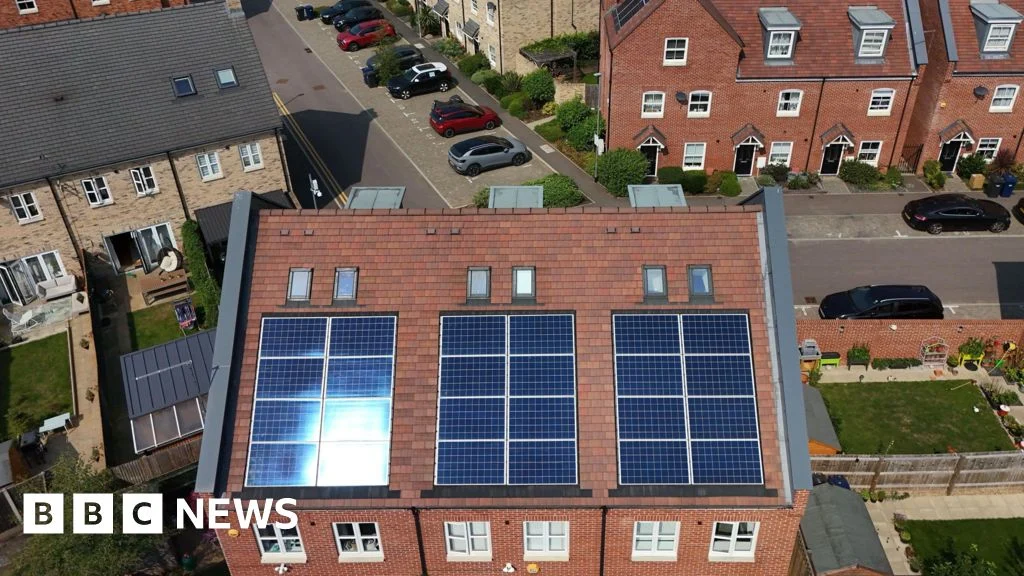
Announcing the raft of initiatives designed to accelerate solar energy adoption, Energy Secretary Ed Miliband underscored the critical role of clean power, stating that recent geopolitical events, specifically referencing the "Iran war" (likely a reference to broader global conflicts impacting energy markets, such as the war in Ukraine), had demonstrated its "essential" nature for national energy security. This drive aims to reduce the UK’s susceptibility to the volatility of fossil fuel markets, over which it has no control. The policy shift has been largely welcomed by key players in the energy industry and green technology sectors, who see it as providing much-needed clarity and certainty. However, the Home Builders Federation (HBF) has voiced concerns, particularly regarding the ambitious scale of solar panel installation mandated for new developments.
For the past decade, successive governments have been engaged in the iterative development of the Future Homes Standard, a crucial framework designed to modernize and elevate the design and environmental performance of new homes in England. The guidance formally published on Tuesday represents a pivotal moment in this ongoing effort. It stipulates that from 2028, new residential properties will be entirely disconnected from the traditional gas network, signaling a decisive move away from fossil fuel heating. Instead, these homes will be required to integrate renewable heating solutions, primarily heat pumps. Furthermore, a substantial commitment to on-site renewable electricity generation is introduced, with new homes mandated to feature solar panels on their roofs, covering an area equivalent to 40% of the ground floor space of the property. This extensive requirement aims to significantly reduce the carbon footprint of new housing stock and contribute to the UK’s broader climate change targets.
Heat pumps, a highly efficient and low-carbon heating technology, operate by extracting heat from the air, ground, or water, even in cold conditions, and transferring it into a home’s heating system. Their mandating marks a crucial step in decarbonizing domestic heating, which traditionally relies heavily on natural gas. These systems are considerably more energy-efficient than conventional boilers, contributing to lower carbon emissions and, potentially, reduced running costs for homeowners, especially when coupled with effective insulation. While the initial investment for heat pumps can be higher than traditional boilers, the long-term operational savings and environmental benefits are substantial. This government mandate is expected to stimulate investment in manufacturing and installation training, addressing existing supply chain and workforce challenges that have hindered their wider adoption.
The requirement for significant solar panel coverage on new builds is equally transformative. Photovoltaic (PV) solar panels convert sunlight directly into electricity, providing a clean, renewable power source for homes. The 40% ground floor space equivalent mandate suggests a substantial array of panels on most new properties, which will not only help offset household electricity consumption but also potentially feed excess power back into the national grid. This widespread deployment of rooftop solar is a direct move towards creating more self-sufficient and energy-resilient communities.
Ed Miliband’s statement, linking clean power to energy security in the context of global conflicts, highlights a critical strategic shift. By reducing reliance on imported fossil fuels, the UK aims to bolster its economic resilience and geopolitical independence. This policy serves as a dual solution, simultaneously addressing the climate crisis and strengthening national security.
The announced changes have been met with enthusiasm by the energy industry and organizations dedicated to green technology, who emphasize the policy’s role in providing long-term market certainty. Garry Felgate, CEO of MCS Foundation, an organization responsible for certifying installers of low carbon heating systems, articulated this sentiment clearly. He stated that the new standards would "give clarity to the UK market, installers, builders, manufacturers, that there’s a significant market that’s there." This clarity is expected to unlock investment in green technologies, encourage innovation, and foster the development of a skilled workforce capable of delivering these sustainable solutions.
Hannah McCarthy, Head of Partnerships for New Homes at Octopus Energy, echoed this positive outlook, telling the BBC that "Decarbonising the new housing stock is a fantastic step." However, she also pointed to a potential missed opportunity: the government’s decision not to include domestic battery storage as a mandatory requirement. While solar panels generate electricity, batteries allow homeowners to store surplus energy generated during the day for use at night or during periods of low sunlight. This capability significantly increases self-sufficiency, further reduces reliance on the grid at peak demand times, and maximizes the economic benefits of solar generation. McCarthy suggested that integrating batteries "would take that a step further," indicating a desire within the industry for even more ambitious steps towards energy independence. The government’s omission of batteries might be attributed to concerns over additional costs, technological maturity, or grid integration complexities at this stage.
Despite the broad welcome from the green sector, the Home Builders Federation (HBF) has raised significant concerns, primarily centered on the financial implications and practical feasibility of the new mandates. Neil Jefferson, CEO of HBF, acknowledged that while the industry had received "a lot of forewarning" regarding the Future Homes Standard, the "additional cost that developers now face from the changes was not welcome at any time." More specifically, Jefferson expressed surprise and alarm at the sheer scale of the solar panel requirement. He contended that "the government has really pushed the number of solar panels that are required on rooftops right to the limit," estimating that "60% of homes can’t actually reach that standard." This suggests that a substantial proportion of planned developments may struggle to comply with the new rules, potentially leading to design challenges, increased costs, and delays.
While exemptions to the solar panel requirement exist – for instance, when the architectural design genuinely does not provide sufficient space – Jefferson warned of potential "bottlenecks" in the compliance process. He stressed that "each home will have to be looked at individually," implying a more complex and time-consuming planning and approval process for developers. This friction could impede the government’s ambitious target to build 1.5 million homes by 2029, a goal that Housing Secretary Steve Reed had already indicated in December would require a "surge in building" after recent drops in construction rates. Balancing the imperative for sustainable homes with the urgent need for increased housing supply will be a critical challenge for policymakers and the construction industry alike.
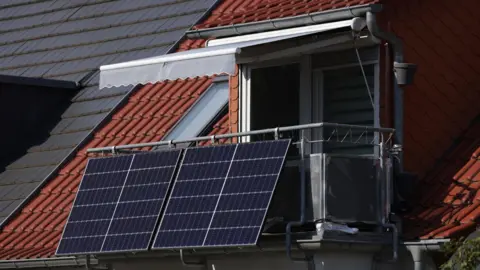
Beyond new builds, the government is also actively working to democratize access to solar energy for existing homes, particularly targeting residents of flats and those with limited space. A key initiative involves collaborating with major retailers, including Lidl and Amazon, to make "plug-in solar" panels readily available on the high street. These innovative DIY solar panels are designed for easy, self-installation on balconies or in small garden spaces, eliminating the need for expensive professional installation and significant upfront costs.
Plug-in solar has already demonstrated considerable success in Germany, where an estimated 1.5 million homes have adopted the technology. Its popularity stems from its simplicity, affordability, and accessibility, empowering a broader segment of the population to generate their own clean electricity. However, the widespread adoption of these panels in the UK has been hampered by existing safety regulations for electrical installations. The government has committed to reviewing and updating these regulations in the coming months, signaling a clear intent to remove this legislative barrier and facilitate the entry of plug-in solar into the UK market. This move has the potential to significantly boost distributed renewable energy generation and foster greater energy independence for individual households.
The comprehensive nature of these new measures underscores a significant policy pivot towards a greener, more energy-secure future for the UK. By addressing both new construction and existing homes, the government aims to accelerate the transition away from fossil fuels, reduce carbon emissions, and enhance national energy resilience. While challenges remain, particularly in terms of developer compliance and workforce development, the clarity provided by the Future Homes Standard and the push for accessible plug-in solar represent crucial steps in the UK’s ongoing green technology drive.




 George Anjay
 Nakalama John
 atisusanti
 Ramos Leo