
 Nana Banana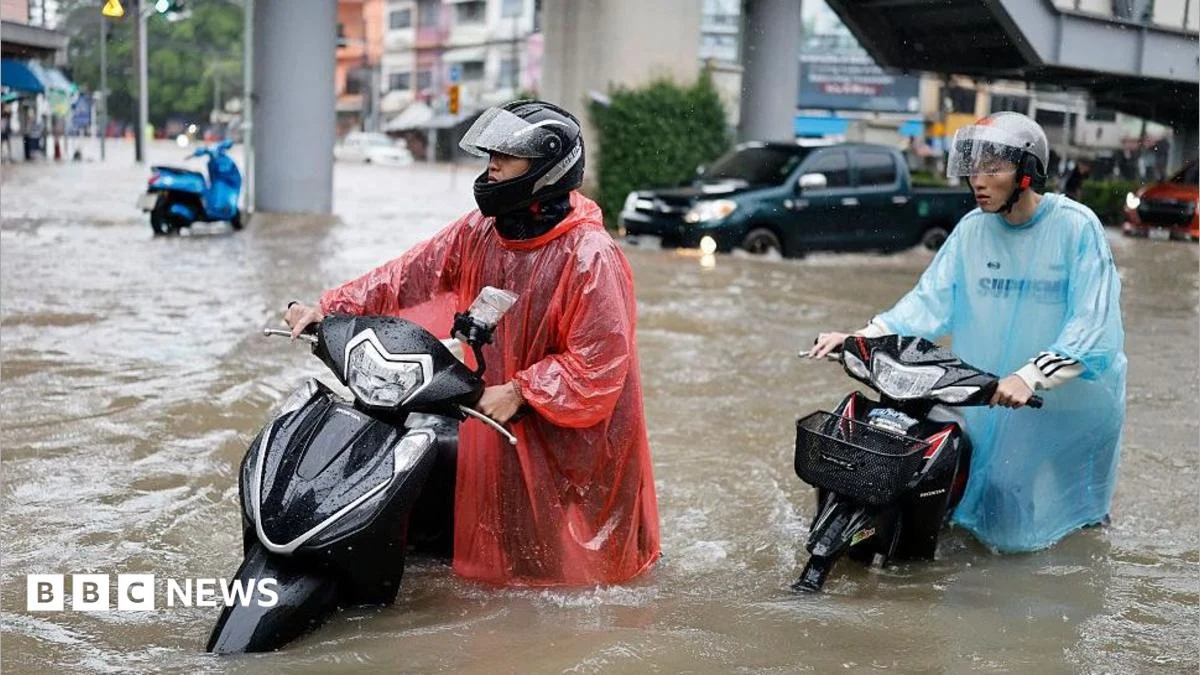
The declaration mandates an elevated level of governmental response and resource allocation to mitigate the crisis. Citizens have been strongly urged to remain indoors and avoid unnecessary travel, transforming the typically bustling metropolis into a landscape of quiet, waterlogged streets. For those residing in close proximity to the city’s extensive network of canals, a critical lifeline and drainage system that now threatens to become a liability, specific advisories have been issued to elevate belongings to higher floors, anticipating potential further rises in water levels.
While thunderstorms are a characteristic feature of Thailand’s annual monsoon season, the extreme weather experienced over the past two days has proven exceptional in its intensity and duration. The sheer volume of rainfall has utterly overwhelmed Bangkok’s intricate but often overstretched drainage infrastructure. This has resulted in widespread inundation, triggering unprecedented traffic chaos across roads already notorious for their daily congestion. Commuters have faced prolonged delays, abandoned vehicles, and treacherous conditions, with many attempting to wade through waist-deep waters to reach safety or essential services. Public transport, including buses and even elevated rail lines in some areas, has experienced significant disruptions, further isolating communities.
The grim forecast indicates that heavy rain is expected to persist into Sunday and potentially throughout the coming week, fueling acute anxieties among residents and emergency responders alike. There are growing fears that more of the city’s vital canals, already at capacity, could breach their banks, exacerbating the floodwaters and extending their reach into previously unaffected zones. This prospect raises the specter of deeper and more widespread damage, necessitating further evacuations and intensifying the humanitarian effort.

Somkid Pheuk-ngam, a 67-year-old resident whose home and shop are situated near a canal just north of central Bangkok, vividly recounted her harrowing experience to AFP news agency. "The water keeps coming in," she explained, her voice laden with the weariness of two days of battling the rising tide. "It’s hard to go out now. It’s like at my waist level now. I cannot go anywhere. I have been closing my shop for two days now." Her words paint a poignant picture of the immediate personal and economic toll exacted by the floods. For small business owners like Somkid, every day of closure represents lost income and mounting uncertainty, threatening their livelihoods in a city reliant on its vibrant street economy.
Pheuk-ngam further articulated her belief that current water levels in the city appear to be more severe than those witnessed during the devastating 2011 nationwide flooding. That particular event, remembered as one of Thailand’s worst natural disasters in modern history, saw extensive areas of the country submerged for nearly three months, claiming the lives of hundreds and causing billions of dollars in economic damage, particularly to key industrial estates. The comparison serves as a stark reminder of Bangkok’s inherent vulnerability to such climatic events, situated as it is on a low-lying delta just above sea level and crisscrossed by a network of canals that are both a blessing and a curse. Fortunately, in this latest crisis, no casualties have been reported in Bangkok thus far, a testament perhaps to earlier warnings and better preparedness, though the situation remains highly dynamic and precarious.
The Thai Meteorological Service’s projections for continued heavy rain throughout the week suggest that while the immediate low-pressure area responsible for the recent downpours may gradually shift towards central Thailand, the region as a whole remains susceptible to further extreme weather. This eastward movement could offer a brief reprieve to Bangkok but signals a potential new threat to agricultural heartlands and other provinces. The broader implications for the nation’s rice bowl and food security are a growing concern, as sustained flooding can devastate crops and disrupt supply chains.
In a sweeping administrative move, all 50 of Bangkok’s administrative districts have been officially designated as emergency zones. This comprehensive declaration facilitates a coordinated and robust response from various government agencies, allowing for streamlined resource deployment, emergency relief efforts, and public safety measures across the entire urban expanse.

Bangkok’s Governor, Chadchart Sittipunt, provided critical updates on the unfolding situation, confirming to AFP that the eastern districts of the city have borne the brunt of the flooding, experiencing the most severe inundation. These areas, often characterized by lower elevations and extensive canal networks, are particularly susceptible to rapid water accumulation. Governor Sittipunt acknowledged the immense challenge facing his administration: "The rain keeps falling and we are doing our best. We are trying to pump the water out, but the water in canals are full… The risk areas are those who live near canals. Every canal is now filled."
His statement highlights the fundamental struggle against nature’s overwhelming force. Bangkok’s flood management system relies heavily on a complex interplay of pumping stations, floodgates, and the natural drainage capacity of its canals and the Chao Phraya River. However, when rainfall intensity exceeds the designed capacity of this infrastructure, especially over prolonged periods, the system becomes saturated, and relief efforts are severely hampered. The fact that "every canal is now filled" underscores the critical nature of the situation, indicating that the city’s primary drainage arteries have reached their absolute limit, leaving little room for additional water.
The current flood crisis in Bangkok serves as a potent reminder of the escalating challenges posed by climate change, which is predicted to increase the frequency and intensity of extreme weather events globally, including monsoonal downpours. Urbanization, rapid land subsidence, and the ongoing struggle to upgrade aging infrastructure further compound Bangkok’s vulnerability. Long-term solutions, such as the construction of massive underground drainage tunnels, the improvement of flood barriers, and the relocation of communities from high-risk areas, are constantly debated and incrementally implemented, but the pace of development and environmental change often outstrips these efforts. As residents brace for more rain and the city’s authorities battle against the rising tide, the resilience of Bangkok and its people is once again being put to the ultimate test.



 Roy Suryo



 Nakalama John