Ramos Leo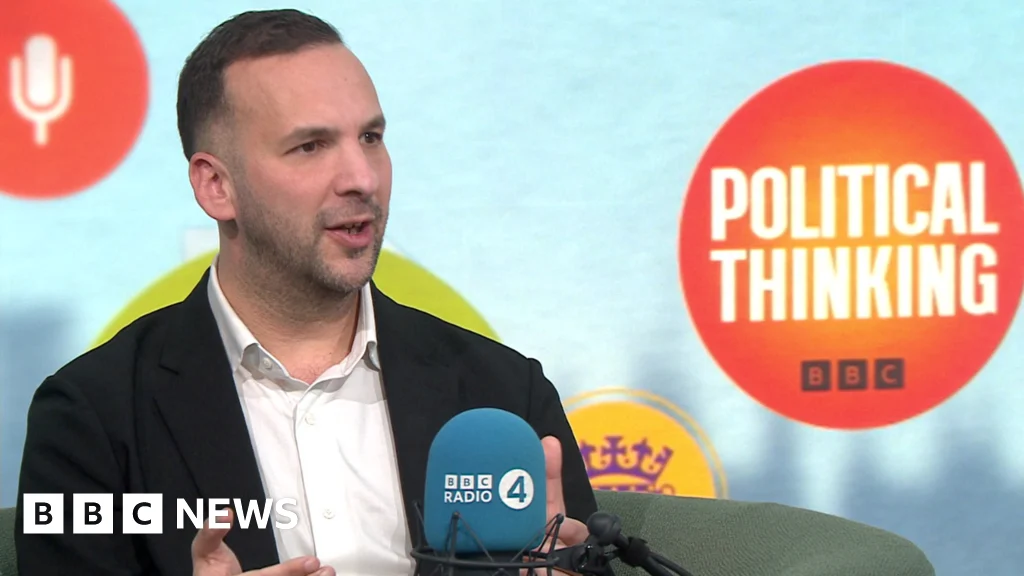
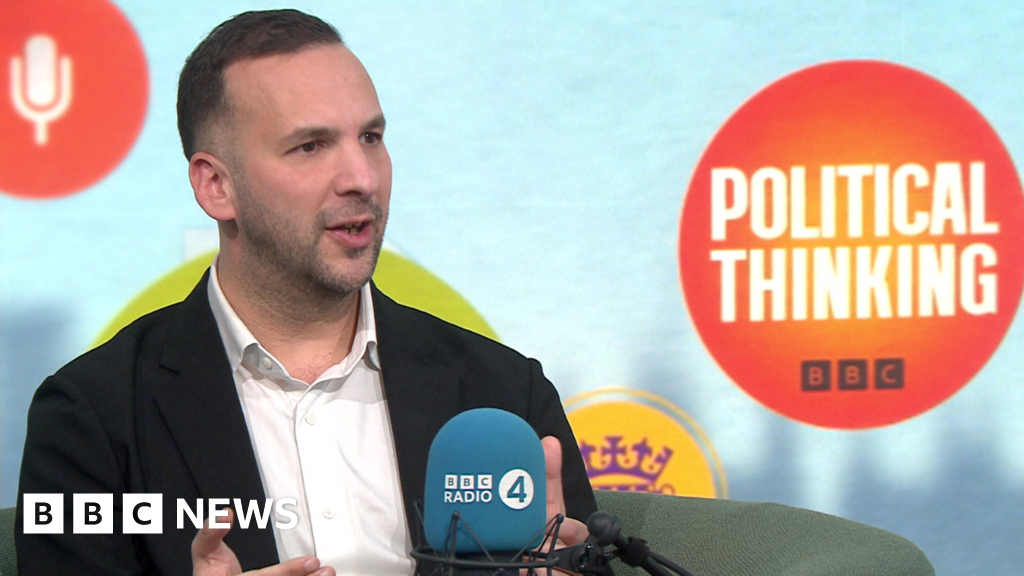
Zack Polanski, the co-leader of the Green Party of England and Wales, has articulated an ambitious vision for his party’s role in the UK’s political landscape, expressing a clear intent to become a pivotal force in a potential hung parliament following the upcoming general election. Speaking with Nick Robinson on the BBC’s Political Thinking podcast, Polanski revealed that his previously stated target of securing 30 to 40 Green Members of Parliament now feels "under ambitious," signaling a significant uplift in his party’s electoral aspirations. While he initially downplayed the prospect of becoming prime minister, a question he admits is frequently posed in media interviews, he conceded that the constant prompting has caused him to consider the possibility, albeit as a distant outcome to his immediate goals.
Polanski, who also serves as a London Assembly member, emphasised that his burning ambition revolves around concrete policy outcomes rather than personal office. He highlighted the implementation of a wealth tax, decisive action on climate change, and the adoption of proportional representation as his primary objectives. These core policies, he believes, are fundamental to addressing the systemic issues facing the country. The Green Party co-leader aims to cultivate a broader appeal, specifically targeting individuals who are "intrinsically political" but have historically been "turned off by the idea of party politics," offering his leadership as a conduit for their voices and concerns.
His ambition to "potentially hold the balance of power" in a hung parliament is a strategic calculation. In such a scenario, where no single party commands an outright majority, smaller parties like the Greens gain immense leverage. They can become ‘kingmakers’ or ‘queenmakers,’ essential for forming a government, whether through formal coalition agreements or ‘confidence and supply’ arrangements. This position would enable the Greens to demand significant concessions on their key policy priorities in exchange for their support, thus shaping national policy disproportionately to their numerical strength in Parliament. For a party historically underrepresented by the UK’s first-past-the-post electoral system, this prospect is particularly enticing, offering a realistic pathway to achieving long-sought reforms like proportional representation itself.
Last week, Polanski delivered a comprehensive speech outlining his economic vision, advocating for a radical overhaul of the UK’s "failing fiscal rules." He proposed establishing a new, independent panel of experts charged with assessing the long-term sustainability of the UK’s national debt, a measure he believes is crucial to breaking free from the "bond market doom loop" that has periodically plagued the British economy. Central to his economic philosophy is the conviction that the "hoarding of wealth" by a privileged few stifles economic dynamism, leading to chronic underfunding of public services and a general lack of circulating capital. This concentration of wealth, he argued, exacerbates the chasm between "the very, very rich and the poor," asserting that "almost any problem we could talk about could comes back to inequality."
His economic proposals extend to immediate and long-term measures aimed at alleviating the cost of living crisis and strengthening public services. Polanski called for billions of pounds to be ring-fenced to support households facing potential surges in energy bills, particularly in the wake of international conflicts such as the war in Iran. This is in addition to existing Green Party policies, which include the introduction of rent controls to make housing more affordable and the nationalisation of water companies to ensure public ownership and accountability over essential utilities.
Addressing concerns about the funding of these ambitious plans, particularly the potential for increased borrowing or money printing, Polanski assured listeners that a Green government would undertake "deep consideration" of the costs and benefits of any investment budget. He drew a sharp distinction between his party’s approach and that of previous administrations, specifically critiquing Liz Truss’s short-lived government. "Liz Truss was doing the exact opposite," he said, explaining, "She was borrowing for unfunded tax cuts, but I’m talking about borrowing to invest in infrastructure capital spending and day-to-day spending." He clarified that the Green Party advocates for borrowing to fund vital sectors like transport, education, and health, arguing that failing to invest in these areas ultimately incurs greater long-term costs due to systemic neglect and inefficiency. This approach, he contends, is not only economically sound but also morally imperative, representing an "opposite image" to past fiscal missteps.
Polanski further elaborated on his vision for bond market stability, arguing that the current problems often arise from the short-term nature of government planning, which typically extends only six months. This limited horizon, he believes, is "far too short" to inspire confidence. Instead, a Green government would commit to communicating its economic plans over decades, providing the market with the long-term stability and certainty it craves. "Bond markets aren’t ideological," he asserted. "They just want to know that there’s a plan, there’s stability and certainty." He contrasted this with what he perceives as a lack of consistent planning under "five Tory prime ministers and now Keir Starmer," suggesting a chaotic and unpredictable policy environment that undermines investor confidence.
Polanski’s political journey is marked by a notable evolution. He openly shared that he came to politics later in life, having initially been a member of the Liberal Democrats. During that period, he admits to having supported austerity measures, a stance he now attributes to a "commonly-held misunderstanding that a national budget is just like a household budget." He now unequivocally dismisses that analogy as "nonsense," reflecting a significant ideological shift. Before embarking on his political career, he confessed to being "dismissive" of party politics altogether. However, his perspective has profoundly changed, and he now views helping people discover and articulate their political voice as "the number one thing" for him as a leader. He believes there is a vast demographic of "inherently political" individuals who shy away from traditional political discourse, and his mission is to "reach out to them" and bring them into the fold of active political engagement.
However, Polanski’s past has not been without its controversies. He continues to face scrutiny over a 2013 Sun newspaper article detailing his participation in a hypnotherapy session with a journalist, ostensibly aimed at breast enlargement. He has repeatedly apologised for the incident, claiming he was misrepresented in the article. The issue resurfaced recently, leading to further questions. On Good Morning Britain, he stated he did not believe hypnotherapy could enlarge breasts and apologised a day later. This statement, however, appeared to contradict remarks made six days later in a BBC Radio Humberside interview, fueling further debate and calls for clarification.
When pressed once more about the incident, Polanski expressed clear discomfort, stating, "Yes, it does make me cringe. It’s embarrassing. I’ve apologised and I’ve repeatedly apologised." He then attempted to contextualise the renewed media focus, suggesting a disproportionate emphasis on the decade-old story compared to other significant current events. Pushing back against the line of questioning, Polanski highlighted, "This came out again last week on the same day the Peter Mandelson files were released, the same week there was a war in Iran." He further drew a parallel to the recent jailing of former Welsh Reform leader Nathan Gill for accepting Kremlin bribes, arguing, "It’s not about whataboutery, I think it’s about proportionality." This defence underscores his belief that while he regrets the incident, the media’s attention on it overshadows more pressing national and international issues, and other, more severe political scandals.
As the next general election approaches, Zack Polanski is positioning the Green Party not merely as an environmental pressure group, but as a serious contender for significant parliamentary influence. His ambition to hold the balance of power reflects a strategic pivot, aiming to leverage potential electoral fragmentation to drive fundamental changes in economic policy, climate action, and democratic reform. His personal journey, from political scepticism to co-leadership, coupled with his willingness to address past controversies, paints a portrait of a leader determined to carve out a distinct and impactful role for the Greens in shaping the future direction of the United Kingdom.


 Roy Suryo
 Nakalama John
 atisusanti