Nana Banana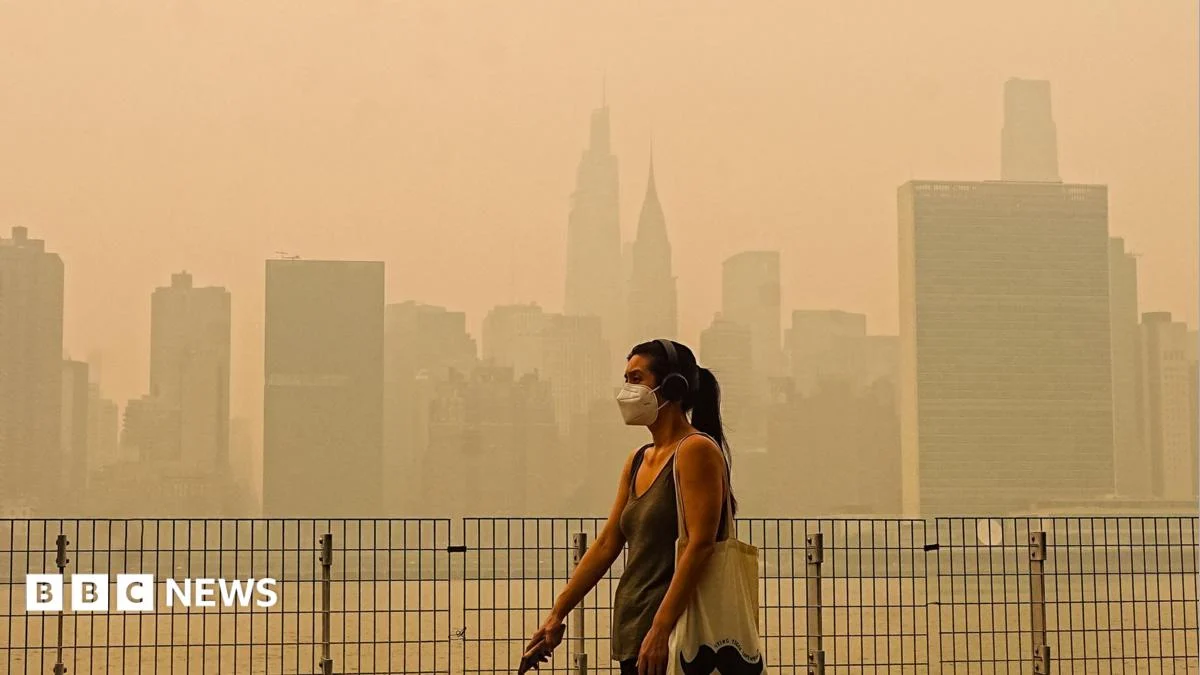
Four Republican members of Congress have launched a pointed accusation against Canada, claiming the nation has failed to implement sufficient measures to prevent pervasive wildfire smoke from drifting across the border into the United States. In a strongly worded joint letter addressed to Canadian Prime Minister Justin Trudeau, the Michigan lawmakers — Representatives John James, John Moolenaar, Jack Bergman, and Lisa McClain — declared Canada’s "continued inaction" on this critical issue to be "unacceptable."
The congressional delegation’s frustration was palpable, with their letter asserting that their "patience has run out." They conveyed a clear message: "We are done accepting apologies in place of action." The lawmakers warned that if Canada does not take more decisive steps, the United States could explore options for direct involvement in cross-border wildfire protection and firefighting efforts. They critically noted a perceived lack of follow-through from previous discussions, stating, "We were told last year that this would be treated with urgency. It was not." The consequence, they argued, is that "American lungs are paying the price for Canadian inaction, year after year." Their grievances specifically highlighted what they termed "chronic under-investment in forest thinning, fuel reduction, and prescribed burns, along with inadequate enforcement against arson," all of which they claimed had not been addressed "adequately enough."
As of Friday, the scale of the crisis in Canada was staggering, with more than 890 active wildfires raging across the country, according to the Canadian Wildland Fire Information System. A significant majority of these blazes were burning out of control, presenting an immense challenge to firefighters and emergency services. Ontario, a province bordering several US states, was particularly hard-hit, accounting for over 190 of these fires, many of which also remained uncontained. The sheer devastation was immense, with nearly 3 million hectares of land—an area roughly the size of Belgium—already consumed by the wildfires.
The impacts of this unprecedented wildfire season have been far-reaching, extending deeply into the United States. A thick, acrid blanket of smoke has spread across a vast swathe of US states, from the agricultural plains of Minnesota and the industrial heartland of Michigan to the densely populated corridors of Pennsylvania, Ohio, and New York. This widespread atmospheric pollution triggered "Hazardous" air quality alerts across much of the affected region, prompting widespread concern for public health. Numerous outdoor events, including sporting competitions, concerts, and school activities, were cancelled or postponed as authorities advised residents to remain indoors and limit exposure to the noxious air.
The severity of the air quality was starkly highlighted by Swiss air quality tracker IQAir. On the day of the accusations, Detroit, Michigan, registered the worst air quality in the world, a grim testament to the cross-border smoke plumes. The Midwestern metropolis of Chicago followed closely, with Washington D.C. also experiencing dangerously unhealthy conditions, and New York City ranking seventh globally. Such air quality poses significant health risks, including exacerbated respiratory conditions like asthma, increased risk of heart attacks and strokes, and general irritation of the eyes, nose, and throat. Vulnerable populations, including children, the elderly, and individuals with pre-existing health conditions, were particularly advised to take precautions.
In response to the accusations from US lawmakers, Canadian Prime Minister Justin Trudeau did not directly address the specific claims of inaction. Instead, speaking in French during a news conference in Ontario, he framed the issue within the broader context of global climate change. "Climate change is everyone’s responsibility — truly everyone’s — including the United States," Trudeau stated, emphasizing a shared international burden in tackling environmental challenges. He also assured that his government was "in close communication" with provincial governments and local communities, indicating ongoing efforts to coordinate the national response.
Ontario Premier Doug Ford offered a more direct and robust rebuttal to the US criticism. Ford highlighted Canada’s historical record of assisting the United States during its own times of crisis, citing Canadian support for battling wildfires in California and responding to hurricanes in North Carolina. "Maybe what you should do rather than complain is send support, send help, because we have done the exact same thing for our American friends," Ford asserted, suggesting a more collaborative approach rather than blame. He dismissed criticism of his government’s handling of the fires, detailing the significant resources deployed: over 150 fire crews on the ground, supported by more than 80 water bombers and helicopters. Ford also underscored the financial commitment, noting that his government has spent over a billion dollars on wildland fire management since 2018, routinely exceeding the base budget allocated annually for firefighting based on need. "We are throwing every single resource we can," he affirmed, indicating a maximum effort.
Scientists consulted by BBC Verify emphasized that the situation is far more complex than simple "inaction." Dr. Patrick James from the University of Toronto explained a fundamental meteorological reality: "Weather doesn’t care about international borders." Once smoke particles are released into the atmosphere, they are carried wherever prevailing winds dictate. He pointed out that smoke from major US wildfires has also impacted Canadian air quality in recent years, illustrating the reciprocal nature of cross-border atmospheric phenomena.
Experts further clarified that many of the current fires are burning in Canada’s vast, remote, and often inaccessible boreal forests. In such expansive wilderness areas, fires can be incredibly difficult to detect in their nascent stages or to contain effectively before they escalate into massive blazes. While improved forest management practices, such as thinning and prescribed burns, can certainly reduce wildfire risk in specific areas, particularly near communities, these measures cannot realistically prevent fires across an ecosystem of Canada’s immense scale.
Furthermore, scientists consistently link the increasingly severe wildfire seasons to the overarching phenomenon of climate change. Dr. Anabela Bonada from the University of Waterloo articulated this crucial point, stating, "Climate change is a global issue, and it would be inaccurate to suggest that Canada alone caused or could have prevented these wildfires." She explained that rising global temperatures are creating hotter, drier conditions across vast landscapes, making forests and wildlands far more susceptible to ignition and allowing fires to spread with unprecedented speed and intensity. This global warming trend exacerbates natural fire cycles, leading to more frequent, larger, and more destructive conflagrations.
Beyond the cross-border smoke impacts, the wildfires in northern Ontario have inflicted profound hardship on local First Nations communities. Dozens of residents from these remote areas have been forced to evacuate, with harrowing videos showing some fleeing their ancestral lands by boat to escape the advancing flames. Chief Helen Paavola of the Namaygoosisagagun First Nation shared a devastating account with local news outlet CityNews, describing an aerial flyover that revealed her community had been "burnt to ashes." Premier Ford confirmed that a total of 10 communities have had to evacuate, with many residents now seeking refuge and support in larger southern Ontario cities. Despite the immense destruction, Ford expressed relief, stating, "It’s a miracle that no one lost their lives."
Data from the National Forestry Database indicates that roughly half of Canada’s wildfires are sparked by lightning strikes, a natural occurrence. The remaining fires are attributed to human activity, ranging from campfires left unattended to discarded cigarettes or agricultural burns. Compounding these ignition sources, experts consistently warn that the escalating global temperatures are making the land progressively drier and more prone to ignition, creating a volatile environment where even small sparks can quickly erupt into uncontrollable infernos. The interplay of natural causes, human activity, and a rapidly changing climate thus presents an extraordinarily complex challenge for wildfire prevention and management.

 George Anjay
 Nakalama John
 atisusanti
 Ramos Leo