
 Roy Suryo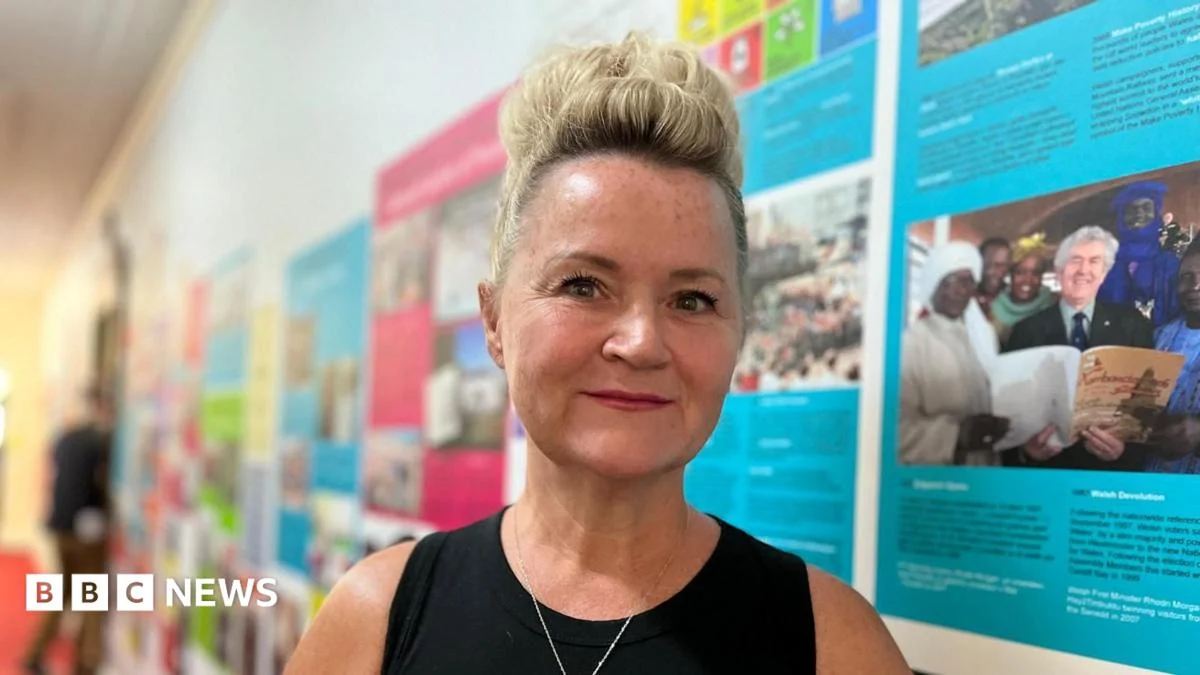
An operation nearly 20 years ago left Donna Davies in constant, debilitating pain, a torment that persisted until her husband’s advocacy finally made medics believe her experience. Davies, now 56, faces the eventual removal of her large bowel due to complications arising from a vaginal mesh medical device, a procedure that was ultimately halted by the NHS. The mesh was initially implanted to treat stress urinary incontinence, a condition Davies developed in her thirties. Her personal ordeal was a focal point at a recent women’s health summit in Wales, an event dedicated to addressing the pervasive issue of women’s pain being dismissed as "normal" within the healthcare system. Davies is one of an estimated 100,000 women in the UK who underwent this procedure for incontinence or prolapse, a number that underscores the scale of the problem.
"The mesh was leaving me in daily pain – the only way I can explain it was that I was being cut by glass every time I moved," Davies recounted, her voice heavy with the years of suffering. "I didn’t feel as if I was believed and I didn’t feel my pain was acknowledged until my husband spoke up about an incident we had and then I felt that the surgeon believed my husband." This profound lack of validation highlights a systemic issue where a woman’s own testimony is often secondary to external corroboration. The mesh was eventually removed, and a "sling" constructed from her own muscle tissue was created simultaneously with a total hysterectomy. "I’ve never recovered from this operation – I’m still in constant pain, neuropathic pain as well and sadly I’m about to lose my large bowel and have a permanent stoma," Davies stated, her future health outlook starkly altered by the complications. "I feel that women in Wales are being forgotten. There are no specialist services in Wales for women like myself, yet nine specialist centres in England – we do feel forgotten." This stark disparity in access to specialized care in Wales compared to England amplifies the sense of neglect.
In response to these deeply concerning testimonies, Delyth Jewell, the Senedd’s minister for women’s health, declared her commitment to strengthening regulations. She aims to mandate health boards to actively involve women in the design and development of healthcare services tailored to their needs. "I am determined to strengthen women’s voices so that women will be believed about their bodies," Jewell asserted at the summit, a powerful declaration aimed at fostering a culture of trust and validation. "I wonder how many women will have heard the words ‘this might hurt’ when they go to the doctor? That shouldn’t be normal. Too often women’s health services are considered a ‘should’ not a ‘must’," she continued, critiquing the historical under-prioritization of women’s specific health needs. "We need to make sure that in theatre space they are prioritised more, we need to be making sure that training is improved." This call for enhanced prioritization and training signals a recognition of the need for a fundamental shift in how women’s health is perceived and delivered.
Isabel Linton, representing the charity Fair Treatment for the Women of Wales, echoed the sentiment that securing a diagnosis is merely the first hurdle, with effective treatment remaining a significant challenge. "One of the big issues in Wales is that it’s hard to move across or between health boards," she observed, pointing to the fragmented nature of healthcare provision as a barrier to accessing appropriate care. Linton emphasized that women’s health encompasses far more than reproductive concerns. "But she added it was important for the minister and officials to remember that women’s health ‘is not just obstetrics and gynaecology, or just periods and having babies’," she stressed. "There are so many other things with a higher female prevalence, like auto immune disorders and cardiovascular health. Women are much more likely to die of a heart attack because symptoms are based on male symptoms." This critical point underscores the danger of a male-centric approach to medicine, which can lead to misdiagnosis and delayed treatment for conditions that present differently in women. "Having a women’s health plan is the starting point, not the end of it," Linton concluded, underscoring that the summit itself was a crucial step in maintaining momentum. The summit, held at the Temple of Peace in Cardiff, brought together a diverse group of stakeholders, including clinicians, researchers, and women with direct lived experience, with the ultimate goal of drafting minimum standards for women’s healthcare.
These minimum standards are intended to ensure that women’s voices continue to actively shape the delivery and future priorities of the Women’s Health Plan, a comprehensive initiative launched in December 2024 under the previous Labour government. While the initial design stages of the plan incorporated the feedback of thousands of women, the deputy minister acknowledged that further consultations would be undertaken later this year to gather women’s perspectives on areas requiring improvement. When questioned about the potential for these further consultations to delay progress, Jewell expressed a resolute determination to expedite action. "I’ve seen the stats about waiting lists and I am concerned that for gynaecological services these are some of the longest waits. We have to bring those waits down," she stated, highlighting the urgent need to address lengthy waiting times for essential gynecological treatments. "We cannot have more women waiting – languishing in pain for years. This is going to take the whole health service coming together." This plea for a cohesive, cross-sectoral approach underscores the complexity of the challenges and the need for a unified response. "There are pockets of fantastic practice in different health boards, but too many examples of things not being prioritised for women’s health, and that’s got to change." This final statement encapsulates the overarching sentiment of the summit: a call for a fundamental and urgent transformation in how women’s health is perceived, prioritized, and delivered within the NHS. The summit served as a crucial catalyst, moving beyond mere discussion to concrete action aimed at rectifying systemic inequalities and ensuring that women’s pain is finally acknowledged and treated with the seriousness it deserves.

 George Anjay
 Nakalama John
 atisusanti
 Ramos Leo
 Nana Banana