Ramos Leo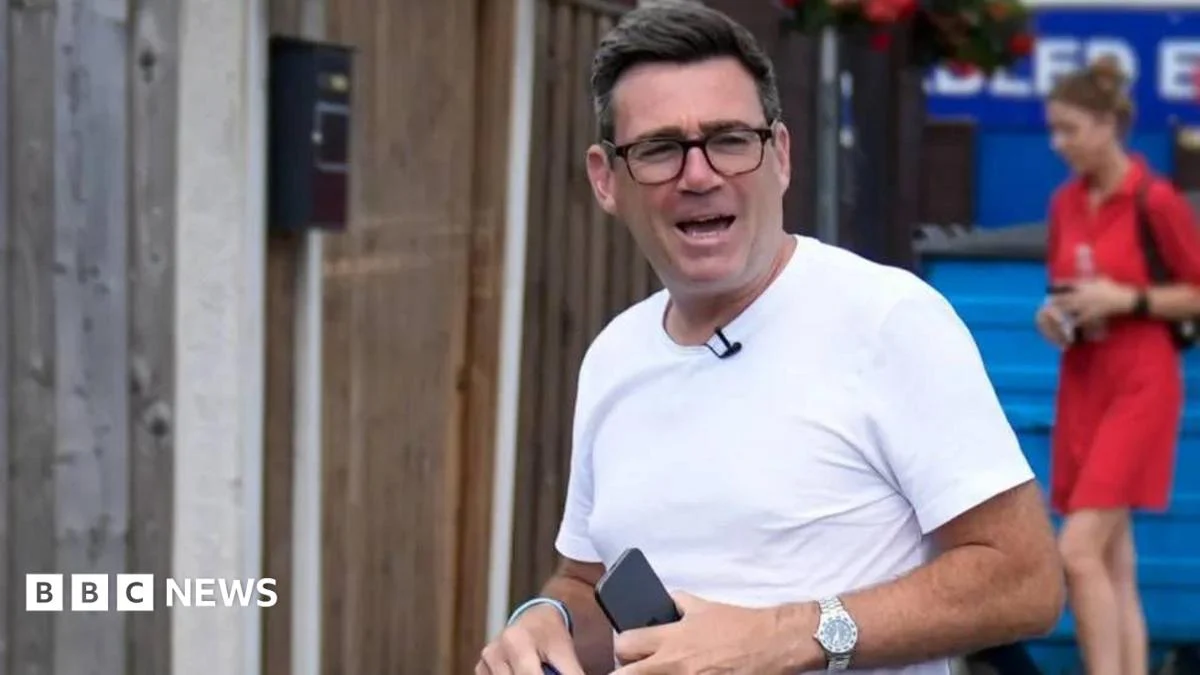
The journey from Manchester Piccadilly to London Euston offered a fleeting glimpse into this sartorial dilemma. Burnham, the newly confirmed Labour leader and presumptive Prime Minister, boarded the train in his familiar "Manchester clothes" – a dark T-shirt, trousers, and Adidas trainers, a uniform that has become synonymous with his Greater Manchester mayoralty. More than two hours later, he disembarked in London, transformed, now clad in a suit. Twenty minutes later, as he arrived at Parliament, a tie completed the ensemble. This striking wardrobe change immediately sparked debate: was it a deliberate signal, a symbolic shedding of his regional persona for the gravitas of national leadership? Or was it a pragmatic, perhaps even reluctant, concession to the expectations of Westminster, with a planned return to his preferred "casual king" aesthetic once the keys to No 10 were firmly in hand?
Burnham’s "Manchester clothes" have been variously categorised as "normcore," "centrist dad," and even "The Smiths meets Britpop." This aesthetic is a carefully curated blend of comfort and understated style, a deliberate departure from the traditional, often perceived as stuffy, suit-and-tie uniform of the SW1 postcode. Emma Finamore, features editor at Drapers Magazine, has aptly dubbed Burnham "the king of the casuals," noting his look is "smart" yet "less formal than other politicians." She observes its "aspirational but attainable" quality, highlighting that many of his preferred garments – Harrington jackets, high-street staples like Uniqlo polo shirts, and Clarks Wallabees – are within reach for the average person. This accessibility is a crucial part of its appeal, forging a visual connection with the electorate that traditional political attire often struggles to achieve. It speaks to a Northern identity, an unpretentious pragmatism, and a subtle defiance of metropolitan norms.
Yet, a return to suits and ties would, ironically, not be an entirely new look for Burnham. Prior to 2020, during his tenure as an MP and cabinet minister, he was more frequently seen in formal wear. Photographs from his second Labour leadership campaign in 2015 show him immaculately suited and booted, a stark contrast to his rival, the decidedly more casual Jeremy Corbyn, who often eschewed ties. Corbyn’s anti-establishment style, perceived as authentic and relatable, ultimately resonated more deeply with the party membership, leading to his landslide victory and leaving Burnham in second place. This historical context suggests that Burnham has experienced first-hand the power of sartorial messaging in a political contest.
After departing Westminster to become Greater Manchester Mayor, Burnham consciously shed the trappings of traditional political dress. Speaking to the Guardian in 2022, he recalled the liberating realisation: "I remember, when I left, slowly realising: ‘I don’t have to do this any more.’ What I would have worn to the match at weekends, I just started wearing. It was an evolution and I’m not going back." This declaration underscored his embrace of a distinct regional identity, reflected in his attire. His iconic Howick jacket, worn during his impassioned interventions in the Covid lockdown debates, has even become an exhibit in Manchester’s People’s History Museum – a testament to how certain garments can become potent symbols of political moments and popular sentiment. Finamore acknowledges Burnham as "a savvy enough politician to know when he can wear some things and when he can’t. He will have to abide by dress codes," she predicts, but believes "I don’t think he will go back fully. He has got that confidence. He seems to have found his political identity and also his style as mayor of Greater Manchester."
However, the "confidence" of his casual style will undoubtedly face rigorous tests. One immediate challenge will be the House of Commons. While the previous Speaker, John Bercow, famously relaxed dress codes, allowing MPs to forgo ties, his successor, Sir Lindsay Hoyle, has reinstated stricter protocols. Speaking at a Westminster journalists’ reception, Hoyle issued a clear warning: "King of the North or not, unless Andy Burnham swaps his dark T-shirt for a shirt and tie, in my Kingdom, he’s not going to get called." This blunt statement highlights the enduring importance of decorum and tradition within parliamentary institutions, where dress codes are seen to uphold the seriousness and respect accorded to the legislative process.
Beyond domestic politics, Burnham’s "Manchester clothes" are unlikely to be universally accepted on the global stage. International diplomacy often operates on unwritten but firmly understood sartorial rules. The White House, for instance, typically expects a high degree of formality from visiting dignitaries. The case of Ukrainian President Volodymyr Zelenskyy offers a potent illustration. His decision to wear military-style clothing rather than suits was a deliberate act of solidarity with his fighting forces, a powerful visual statement of wartime leadership. Yet, this unconventional attire reportedly annoyed some American officials and was even cited as a factor in an infamous, if vaguely defined, bust-up between Zelenskyy, then-President Trump, and his Vice President JD Vance in the Oval Office. Such incidents underscore how clothing choices can be interpreted not merely as personal preference, but as signals of respect, intent, or even defiance in the delicate dance of international relations.
While seemingly trivial, clothing in politics matters profoundly. Throughout history, British prime ministers have masterfully wielded fashion as a powerful political tool. Margaret Thatcher, with her signature wardrobe of high-shouldered suits, pussy-bow blouses, and her iconic handbag, meticulously cultivated an image of unyielding authority and purposeful resolve, embodying the "Iron Lady." In stark contrast, Harold Wilson, often anchored by his ever-present pipe and Gannex coat, embraced a pragmatic, utilitarian wardrobe that came to define the "cloth-cap socialism" of the 1960s and 70s, projecting an image of the common man and down-to-earth authenticity. These examples illustrate how dress can become an integral part of a leader’s brand, communicating values, ideology, and character to the public.
Professor Rob Ford, a political scientist at the University of Manchester, highlights the pervasive double standard in how politicians’ dress is scrutinised, particularly for women. "There’s an enormous double standard with this," Ford says. "It’s harder for a female politician because you’ve got to make choices all the time." While men can often fall back on the reliable suit, women face constant evaluation of their outfits, which can detract from their political message. This disparity underscores the complex semiotics of political attire, where every choice is potentially loaded with meaning and open to interpretation.
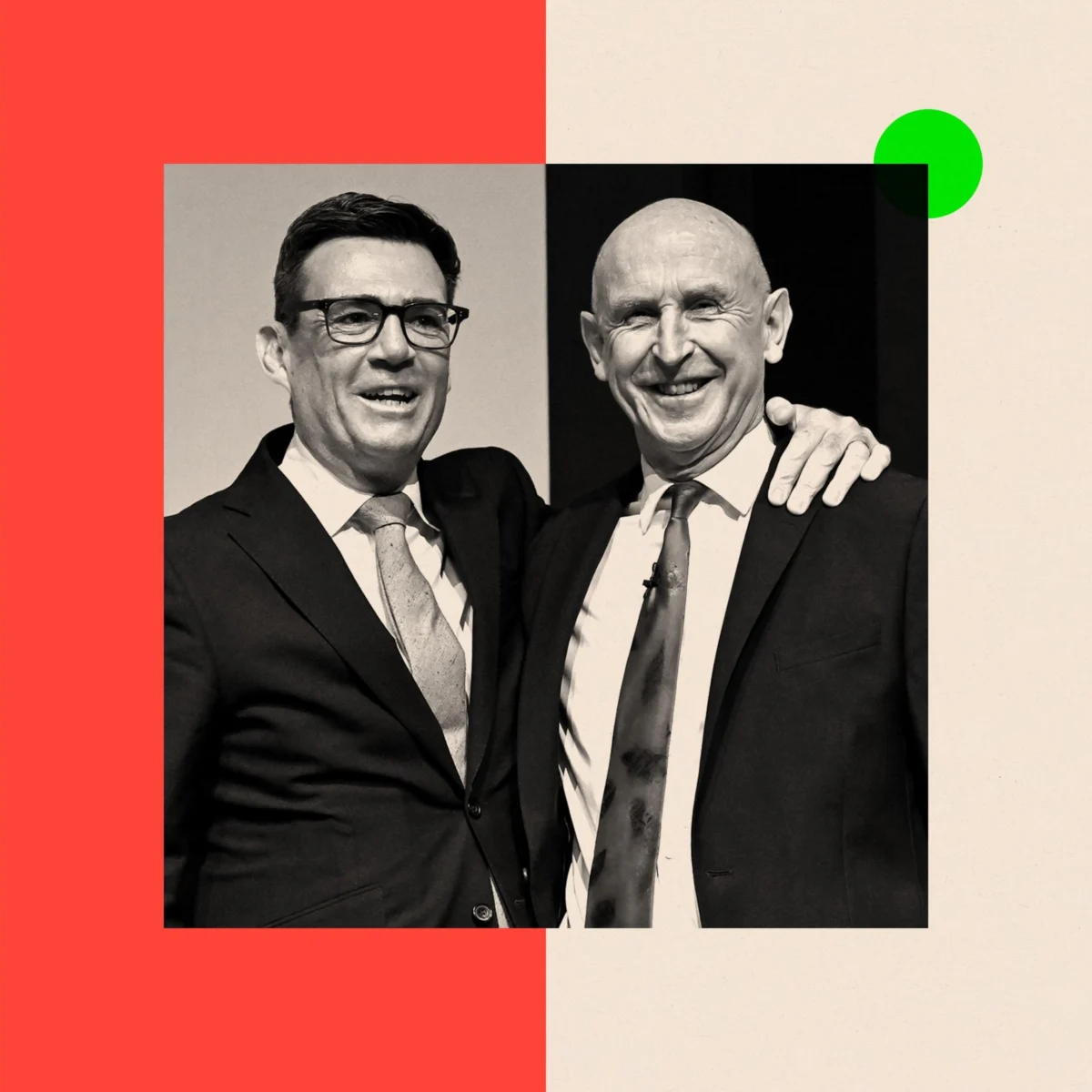
Yet, image isn’t everything. Conservative leader Kemi Badenoch recently attempted to dismiss Burnham with a cutting remark, calling him "a pair of eyelashes and a black T-shirt." Burnham, ever the astute communicator, deftly turned the dig on its head. In a video response, he looked down at his T-shirt before dryly correcting her: "It’s not black, it’s dark navy." Later, in his acceptance speech after being confirmed as the new Labour leader, dressed in a suit and tie, he couldn’t resist bringing up the clothes again. Labour, he declared, had worn "too many Tory clothes" in the past. "Let me tell you – I’m quite happy that Kemi doesn’t approve of my wardrobe choices – because I’m not keen on theirs either," Burnham asserted. "From here, we do it differently." This moment, delivered while wearing the very formality Badenoch might have approved of, underscored his commitment to a new direction, using his personal style as a metaphor for broader political change.
Ironically, the outgoing Prime Minister, Sir Keir Starmer, had also occasionally embraced a dress-down spirit, sometimes seen in tracksuits, a Stone Island polo shirt, and Adidas trainers. However, as Professor Ford points out, the crucial difference is that Burnham’s fashion choices have resonated more profoundly with the public. "The fact people have noticed he has a distinctive manner of dress is a victory for his branding efforts," Ford explains. Like Reform UK leader Nigel Farage, who also cultivates a "man of the people" image by being photographed swigging pints in pubs, Burnham’s sartorial strategy is deliberate. "The aim of his clothes is similar – to say I’m not a professional politician, I’m one of you," Ford concludes.
The challenge for Andy Burnham, therefore, is multifaceted: how to retain that approachable, homespun persona and connection with the electorate while simultaneously adhering to the demanding sartorial conventions and unspoken expectations of Westminster and the international stage. In an era where politics has become increasingly visual, every image is scrutinised, every outfit a potential statement. As he steps into the most powerful office in the land, Andy Burnham will need to dress not just for the job, but to impress, to project competence, and to convey his vision – whatever he ultimately decides to wear.

 George Anjay
 Nakalama John
 atisusanti