Nana Banana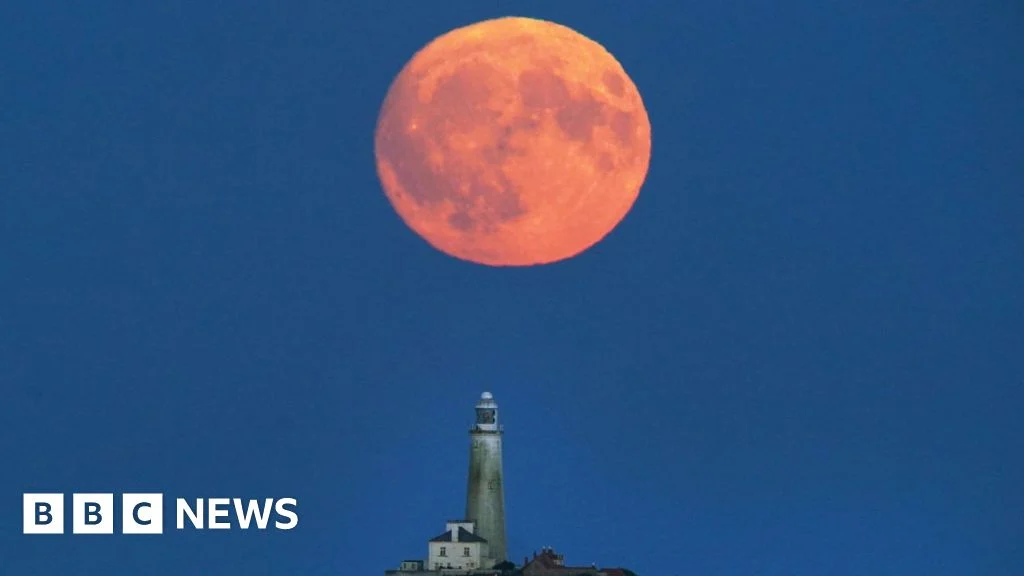
The celestial calendar often offers moments of profound beauty and wonder, and July’s full moon, affectionately known as the Buck Moon, is poised to deliver just such a spectacle. As the Earth, Moon, and Sun align in a delicate cosmic dance, observers across the globe will have the opportunity to witness our nearest celestial neighbor bathed in full illumination. This annual event, rich in folklore and astronomical significance, serves as a poignant reminder of humanity’s enduring connection to the rhythms of the natural world and the vastness of the cosmos. Its distinctive name, steeped in ancient traditions, evokes images of the natural world thriving in the peak of summer, a period marked by growth, abundance, and vibrant life.

The moniker "Buck Moon" traces its origins primarily to Native American traditions, specifically from the Algonquin tribes, who meticulously tracked the seasons by the phases of the moon. July was the month when male deer, known as bucks, would begin to grow new antlers, pushing forth velvet-covered protrusions that would harden over the coming months. This vivid natural phenomenon served as a clear indicator of the time of year, making the "Buck Moon" an easily recognizable and deeply symbolic marker of midsummer. The annual shedding and regrowth of antlers is a remarkable biological process, signifying vitality and renewal, perfectly mirroring the height of summer’s energy.

Beyond its most popular designation, this full moon has been known by various other names across different cultures and regions, each reflecting unique seasonal activities or natural occurrences. The "Thunder Moon," for instance, acknowledges the frequent thunderstorms that characterize the summer months in many parts of the Northern Hemisphere. The "Hay Moon" speaks to the season of hay harvesting, a crucial agricultural activity that ensures sustenance through the colder months. Other names include the "Salmon Moon," particularly among indigenous coastal communities who observed the salmon run, and the "Raspberry Moon," highlighting the ripening of wild berries. Each name is a testament to the intimate relationship between human societies and their environment, where lunar cycles guided everything from hunting and gathering to planting and harvesting. These varied nomenclatures underscore the universal human tendency to interpret and integrate celestial events into daily life and cultural narratives.

From an astronomical perspective, a full moon occurs when the Moon is positioned on the opposite side of Earth from the Sun. This alignment allows the Sun’s rays to illuminate the entire face of the Moon visible from our planet, presenting its full, radiant disc. The Moon itself does not produce light; rather, it reflects the sunlight, acting as a magnificent celestial mirror. The lunar cycle, or synodic month, spans approximately 29.5 days, moving through phases from new moon to crescent, quarter, gibbous, and finally to full moon before waning back to new. The Buck Moon is simply the full moon that falls within the month of July, irrespective of its specific timing within the month. While often visually striking, it is important to clarify that the Buck Moon is not inherently a "supermoon" unless its full phase coincides closely with its perigee – the point in its elliptical orbit when it is closest to Earth. A supermoon appears slightly larger and brighter than an average full moon, a phenomenon that captures significant public attention. However, even without the supermoon designation, the Buck Moon remains an impressive sight.

For those eager to observe the Buck Moon, several factors can enhance the viewing experience. The ideal time to witness its grandeur is typically just after sunset, as the moon rises above the eastern horizon, or just before sunrise, as it sets in the west. During these moments, atmospheric effects can make the moon appear larger and often imbued with a warm, golden or orange hue due to the scattering of shorter-wavelength blue light by Earth’s atmosphere. This optical phenomenon, known as the "moon illusion," is a fascinating trick of perception, where the moon appears significantly larger when near the horizon compared to when it is high in the sky, even though its angular size remains constant.

To fully appreciate the Buck Moon, finding a viewing location away from urban light pollution is highly recommended. City lights can obscure the subtler details of the lunar surface and diminish the overall brilliance of the sky. Open fields, mountaintops, or rural areas offer clearer, darker skies, allowing the Moon to shine with maximum intensity. No special equipment is required to enjoy the full moon; it is a magnificent naked-eye spectacle. However, binoculars or a small telescope can reveal fascinating surface features, such as craters, mountains, and the dark plains known as maria (Latin for "seas," mistakenly believed to be bodies of water by early astronomers). These instruments bring the Moon’s rugged topography into sharper focus, transforming a distant disc into a three-dimensional world.

For astrophotographers, the Buck Moon presents an excellent opportunity. Capturing the full moon requires specific techniques. A sturdy tripod is essential to prevent camera shake, especially when using longer exposures or telephoto lenses. A remote shutter release or self-timer can further minimize vibrations. Experimenting with different exposure settings, ISO levels, and aperture sizes will yield varying results, from a stark, bright orb to a more detailed image revealing surface textures. Paying attention to composition, perhaps including a silhouette of trees, buildings, or a landscape feature in the foreground, can add artistic depth to the photograph. The golden hour of moonrise or moonset often provides the most dramatic lighting for photography.

Beyond its visual appeal, the Moon plays a fundamental role in Earth’s systems. Its gravitational pull is the primary driver of ocean tides, creating the ebb and flow that has shaped coastal environments and influenced maritime activities for millennia. The Moon also acts as a stabilizer for Earth’s axial tilt, contributing to the relatively stable climate patterns that have allowed life to flourish. Without the Moon, our planet’s wobble would be far more pronounced, leading to extreme seasonal variations that would profoundly impact ecosystems.

Scientifically, the Moon remains an object of intense study. Its formation, believed to be the result of a colossal impact between Earth and a Mars-sized protoplanet early in the solar system’s history, continues to be refined through data from lunar missions. The Moon’s geological history, marked by volcanic activity and countless asteroid impacts, is etched onto its surface in the form of craters and vast lava plains. Current and future missions, such as NASA’s Artemis program and various international and private initiatives, aim to return humans to the lunar surface and establish a sustained presence. These endeavors seek to unlock more of the Moon’s secrets, exploit its resources, and use it as a stepping stone for deeper space exploration, potentially to Mars and beyond. The Buck Moon, therefore, is not just a transient spectacle but a constant reminder of humanity’s past and future aspirations among the stars.

As the Buck Moon ascends into the night sky, it offers a perfect opportunity for reflection and connection. It encourages us to pause, look up, and appreciate the celestial mechanics that orchestrate such predictable yet profound events. Whether viewed through a telescope, captured by a camera lens, or simply admired with the naked eye, the full moon stands as a beacon of natural beauty and a link to ancient traditions. It is a moment to ponder our place in the universe, to marvel at the intricate dance of celestial bodies, and to find a sense of calm under the silent, luminous gaze of our closest cosmic companion. The Buck Moon is more than just an illuminated orb; it is a shared experience, a touchstone between humanity and the enduring majesty of the night sky, inviting everyone to partake in its serene splendor.




 Roy Suryo

 Nakalama John
 atisusanti
 Ramos Leo