
 Ramos Leo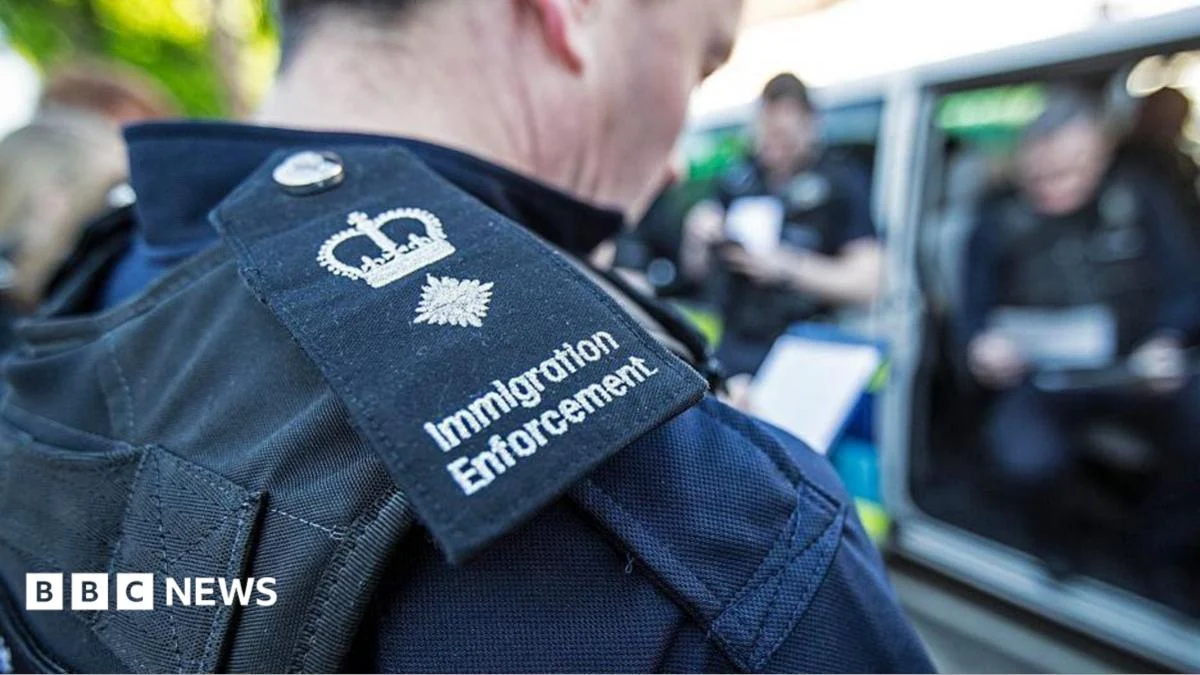
In a landmark decision reflecting a profound commitment to human rights and community welfare, the Green-led Lewisham Council has formally declared it will no longer assist the Home Office in immigration enforcement operations. This bold move positions Lewisham at the forefront of local authorities challenging the national government’s "hostile environment" policies, aiming to foster a true ‘Borough of Sanctuary’ for its diverse population. The council’s resolution underscores a growing tension between central government immigration strategies and local councils’ responsibilities to their residents, irrespective of immigration status.
The context for this decision is a significant escalation in immigration enforcement activities across London. According to data released by the Home Office, immigration enforcement teams conducted a staggering 2,715 illegal working visits and raids throughout London in 2025. These operations led to 2,172 arrests, marking a substantial increase from the 2,008 raids recorded in the preceding year. Such figures highlight a concerted national effort to intensify enforcement, prompting local authorities like Lewisham to re-evaluate their role and responsibilities. The Home Office has consistently defended these actions, with a spokesperson highlighting what they describe as a robust increase in enforcement, citing an 83% rise in illegal working arrests and a 77% rise in raids between July 1, 2024, and December 31, 2025, as evidence of their commitment to tackling illegal immigration.
The catalyst for Lewisham’s motion was a series of distressing local incidents, vividly recounted by Greens councillor Hau-Yu Tam. Councillor Tam, who serves as the Cabinet Member for Communities, Sanctuary and Healing, an office whose very title reflects the council’s humanitarian priorities, brought to light specific raids that occurred in January 2026. She detailed an incident at a nail bar in Catford and another at a car wash in Brockley. These were not routine operations; they were high-profile events, notably attended by the then immigration minister, Mike Tapp, and a Sky News film crew, transforming enforcement into public spectacle.
Councillor Tam sharply criticised the theatrical nature of these operations. "Despite the resources, despite the spectacle, only two people were arrested and both [were] later released on bail," she revealed. The inefficiency and performative aspect of the raids were further underscored by subsequent events. Just a few months later, the same nail bar was raided again, and then once more days after. These repeated visits, yielding minimal arrests, painted a picture of enforcement for show rather than substance.
Her account painted a harrowing picture of the human cost. "According to local accounts, Chinese women workers were filmed, handcuffed and intimidated by a large officer team. They were not arrested, but they were intimidated," she stated, her voice resonating with concern. This intimidation, she argued, was the primary outcome, leaving deep psychological scars on vulnerable individuals. "That is political theatre. That is a theatre of cruelty," Cllr Tam declared, condemning the raids as a dehumanising spectacle designed to project an image of toughness rather than genuinely address complex immigration issues. She passionately asserted that such operations do not foster safety within communities. "And if the purpose of race is simply enforcement… there’s no evidence these operations are making our community safer. Our immigration system is broken," she concluded, laying bare her conviction that the current approach is fundamentally flawed and counterproductive.
Lewisham’s stance is not entirely new; the borough has long cultivated an identity as a welcoming place. In 2021, under the previous Labour administration, Lewisham proudly declared itself a ‘Borough of Sanctuary’. This designation signified the borough’s active commitment to supporting those fleeing violence and persecution, providing a safe haven and integrating newcomers into the community. The recent motion, therefore, represents a strengthening and reassertion of these deeply held values, moving beyond a passive declaration to active non-cooperation with policies perceived as antithetical to sanctuary principles.
The council meeting where the motion was debated revealed the complexities of local politics. While the Green Party spearheaded the initiative, the Labour opposition on Lewisham Council, despite their shared commitment to the borough’s sanctuary status, attempted to introduce an amendment relating to modern slavery. Labour councillor Andre Bourne articulated their position: "We are in support of this motion; however, we are making amendments to strengthen it – we are here to support your motion." The amendment, while seemingly aligned with humanitarian concerns, was ultimately voted down. This suggests that while there was broad agreement on the principle of non-cooperation, the Green leadership felt the amendment might dilute the clear, unequivocal message of non-assistance to immigration raids, or perhaps they viewed the original motion as sufficiently encompassing the protection of all vulnerable migrants, including victims of modern slavery. The political dynamics highlighted both consensus on core values and strategic differences in approach.
Mayor of Lewisham, Liam Shrivastava, unequivocally endorsed the council’s decision, expressing immense pride. "I’m incredibly proud that Lewisham Council has made this historic decision to defend our migrant workers against the hostile environment," he stated. His remarks echoed Cllr Tam’s sentiment regarding the inefficacy and harmful impact of raids. "Immigration raids do not build safety in our communities, they spread fear and make it even harder for victims of modern slavery and trafficking to come forward and seek protection," Mayor Shrivastava added. This statement powerfully links the council’s decision to a broader concern for the most vulnerable, including those exploited through modern slavery – a point that resonates with Labour’s attempted amendment, even if their specific proposal was not adopted. The Mayor’s perspective underscores the argument that aggressive enforcement inadvertently creates a climate of fear, driving victims further underground and hindering efforts to combat serious crimes like trafficking.
Looking ahead, Lewisham Council is not acting in isolation. The borough plans to actively collaborate with Lambeth and other Green-led councils in London to establish what they envision as a ‘sanctuary corridor’. This innovative initiative aims to build a network of support across parts of London, fostering stronger alliances with migrant organisations, anti-raids networks, law centres, faith groups, and broader community organisations. The ‘sanctuary corridor’ concept signifies a proactive, multi-borough strategy to collectively resist the "hostile environment" and create a robust support system for all residents, regardless of their immigration status. This collaborative approach could potentially set a precedent for other local authorities across the UK, creating pockets of resistance to national immigration policies and championing a more compassionate, community-led approach to migrant welfare.
Lewisham’s decision reflects a growing national debate about the appropriate balance between immigration enforcement and human dignity. The "hostile environment" policy, introduced by the Conservative government in 2012, was designed to make life so difficult for undocumented immigrants that they would voluntarily leave the UK. However, critics argue that it has led to widespread injustice, discrimination, and fear, often impacting legal residents and citizens too. By refusing to assist in raids, Lewisham Council is taking a principled stand against a policy framework it views as detrimental to community cohesion and human rights. This action signifies a deepening divide between local authorities, often closer to the realities of diverse communities, and a central government determined to pursue stricter immigration controls. It challenges the conventional role of local councils as extensions of central government enforcement, instead asserting their autonomy and primary duty to protect and serve all residents within their jurisdiction. The implications of this stance could be far-reaching, potentially inspiring other councils to adopt similar policies and fostering a broader movement for sanctuary cities across the country, thereby reshaping the national conversation around immigration and local governance.




 Roy Suryo

 Nakalama John
 atisusanti
