
 Nana Banana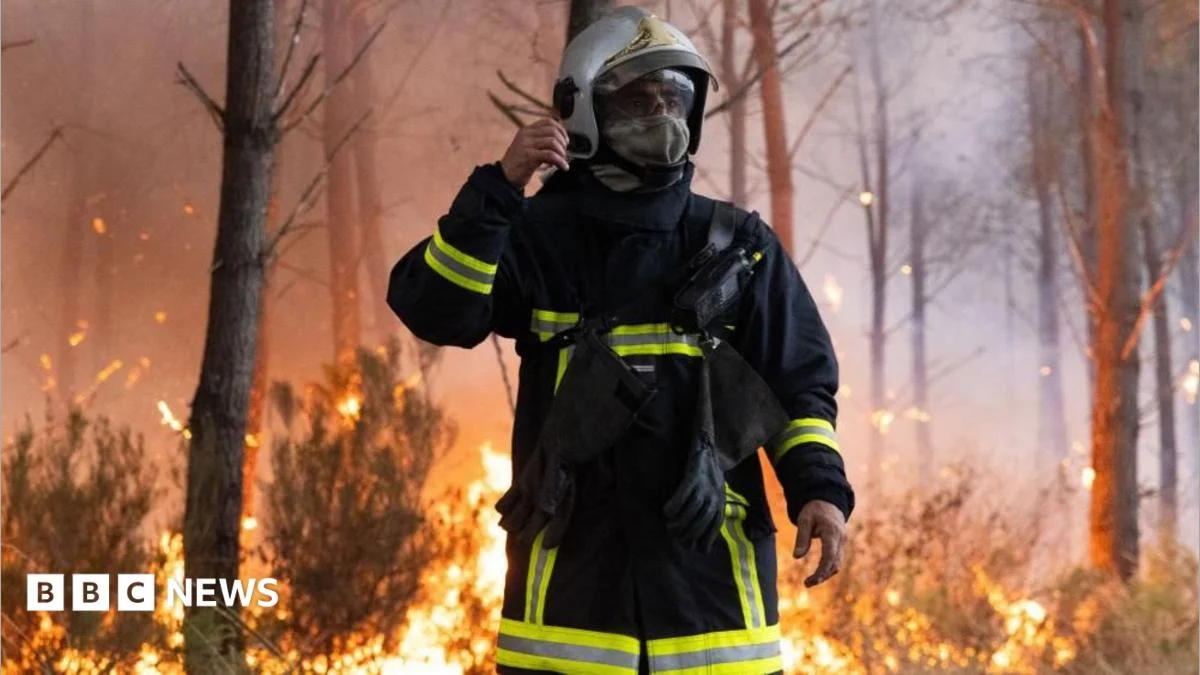
The preparations within Bordeaux are extensive, focusing primarily on humanitarian logistics. "We are preparing to accommodate a large number of people should further evacuations be ordered," Cazenave confirmed, indicating contingency plans for shelter, food, and medical assistance for potentially thousands of displaced residents. The specter of mass displacement looms large, a stark reminder of the wildfire’s potential to overwhelm even robust urban infrastructure. This involves coordinating with regional authorities, emergency services, and volunteer organizations to ensure a swift and organized response if the fire breaches current containment lines.
Meanwhile, the battle on the front lines in the Gironde region continues to be described in increasingly dire terms. Laurent Nuñez, France’s Interior Minister, characterized the situation as "unprecedented," noting that firefighters were confronting a blaze that "has a life of its own." This vivid description highlights the unpredictable and powerful nature of the fire, driven by fierce winds, exceptionally dry conditions, and scorching temperatures that have defied traditional firefighting tactics. Thousands of firefighters, supported by aerial assets like water-bombing planes and helicopters, are deployed across the region, working tirelessly in shifts, often under extreme duress, to create firebreaks, protect critical infrastructure, and evacuate at-risk communities. Their efforts, while heroic, are constantly challenged by the fire’s rapid progression and volatile behavior.
The scale of the crisis extends far beyond Bordeaux, with a staggering human toll across both France and neighboring Spain. In France alone, an estimated 220,000 people have been forced from their homes, leaving behind their livelihoods, memories, and often their entire possessions. Spain faces a similar ordeal, with more than 100,000 individuals evacuated as wildfires west of Madrid burn "uncontrolled," consuming vast tracts of land and threatening rural communities. The collective trauma of these evacuations, the uncertainty of return, and the profound sense of loss weigh heavily on the affected populations.
Further complicating the already monumental firefighting efforts is the ominous forecast of another intense heatwave expected to sweep across the region on Tuesday. Such conditions—characterized by soaring temperatures, low humidity, and potentially strong winds—are precisely what fuel these catastrophic blazes, making containment exponentially more difficult and increasing the risk to firefighters. This relentless heat acts as an accelerant, drying out vegetation further and creating an environment ripe for rapid fire spread and the generation of dangerous flying embers.
Jerome Steffe, the mayor of Cestas, a town located directly south of Bordeaux and one of the hardest-hit communities, offered a chilling assessment to the BBC: "This will be the fire of the century." His words underscore the extraordinary nature of the current conflagration, surpassing previous fire events in its intensity and destructive power. Steffe recounted the harrowing experience of evacuating 17,000 residents from Cestas during the night just two days prior, a testament to the sudden and overwhelming speed with which the fire advanced. The images of residents fleeing their homes under a smoke-choked sky, often with only minutes to gather essential belongings, paint a stark picture of the emergency.
The statistics from the region are devastating. So far, 42,000 hectares (103,000 acres) of land have been incinerated, transforming once-lush forests and agricultural fields into charred landscapes. More than 240 houses have been utterly destroyed, leaving hundreds of families without homes and entire communities facing the daunting task of rebuilding from scratch. "In my city the situation is really catastrophic," Mayor Steffe lamented, his voice reflecting the profound despair and exhaustion gripping the local leadership and populace.
Despite the relentless advance, Steffe noted that the fire’s movement had somewhat slowed, offering a glimmer of hope. However, he cautioned that his teams had "won only a small battle," emphasizing the persistent and grave risks. The threat from flying embers, carried by the wind far ahead of the main fire front, remains constant, capable of igniting new blazes miles away. A sudden change in wind direction could also reignite dormant sections or push the fire towards new, vulnerable areas. To counter this, extensive energy has been channeled into creating protective firebreaks – wide swaths of cleared land designed to starve the fire of fuel. Yet, even with these heroic efforts, Steffe admitted, "we are all scared in front of this situation," a sentiment echoed across the entire region.
French Prime Minister Sébastien Lecornu has issued a nationwide warning, stating unequivocally that the country "is going through an unprecedented fire season." In a post on X (formerly Twitter) on Monday, Lecornu provided sobering national statistics: "116,085 hectares [286,852 acres] have already burned and 13,566 fire starts have been recorded since January." These figures represent a dramatic increase compared to previous years, highlighting the escalating frequency and intensity of wildfires across the country.
The minister also shed light on the predominant causes of these destructive blazes. He revealed that a staggering nine out of 10 fires "are human-caused and most arise from carelessness: a cigarette butt, a barbecue, work carried out without precaution." This points to the critical need for public awareness campaigns and stricter enforcement of fire prevention measures, especially during periods of extreme drought and heat. However, Lecornu also acknowledged a more sinister element, stating that "not all these fires are accidents" and "some are deliberately set." This revelation of arson adds another layer of complexity and tragedy to the crisis, with 162 arrests having taken place since July 6 in connection with suspicious fire starts.
In a show of national solidarity and support, President Emmanuel Macron is currently visiting some of the fire-ravaged areas in Gironde. His presence is intended to boost the morale of the exhausted firefighters, emergency personnel, and local communities, offering a visible sign of the government’s commitment to addressing the crisis and aiding recovery efforts.
Beyond Gironde, wildfires continue to plague several other French regions, including Var and Landes in the mainland, and also Haute-Corse on the picturesque island of Corsica, each facing its own unique challenges in combating the widespread blazes. These multiple fronts strain national resources and personnel, underscoring the broad impact of this fire season.
Meanwhile, neighboring Spain has entered its fifth day of a national emergency due to raging wildfires situated west of its capital, Madrid. The severity of the Spanish situation has been vividly illustrated by analysis from BBC Verify, which has utilized satellite imagery to track the relentless spread of the wildfire. These images reveal a staggering burn scar now exceeding 27,000 hectares. Specifically, satellite images captured on July 24 and 26 graphically depict how multiple initial blazes in the Almorox, Villa del Prado, and San Martín de Valdeiglesias areas tragically merged into one massive, uncontrolled inferno within just two days. The rapid expansion visible from space underscores the immense power and speed of these fires, pushing local officials to warn that the region is confronting "the worst fires in its history." The environmental devastation, coupled with the profound impact on biodiversity and local ecosystems, represents a long-term challenge for restoration.
The scientific community offers a clear and stark explanation for the increasing frequency and intensity of such events. Climate change is driving an undeniable rise in global temperatures, and Europe, in particular, stands as the fastest warming continent. According to the Copernicus Climate Change Service, Europe is heating up at twice the global average rate. This accelerated warming directly translates into a cascade of environmental crises, including more frequent and intense summer heatwaves, which desiccate landscapes and create perfect conditions for wildfires. It also exacerbates pressure on Europe’s already strained water supplies, further stressing ecosystems and human communities. The feedback loop is perilous: wildfires release vast quantities of carbon dioxide, which in turn contributes to global warming, perpetuating the cycle of climate-driven disasters. Experts warn that without significant global action to mitigate climate change, the "fire of the century" may become a distressingly regular occurrence, forever altering landscapes, livelihoods, and the very fabric of life in vulnerable regions.



 Roy Suryo

 Nakalama John
 atisusanti
 Ramos Leo
