
 Nana Banana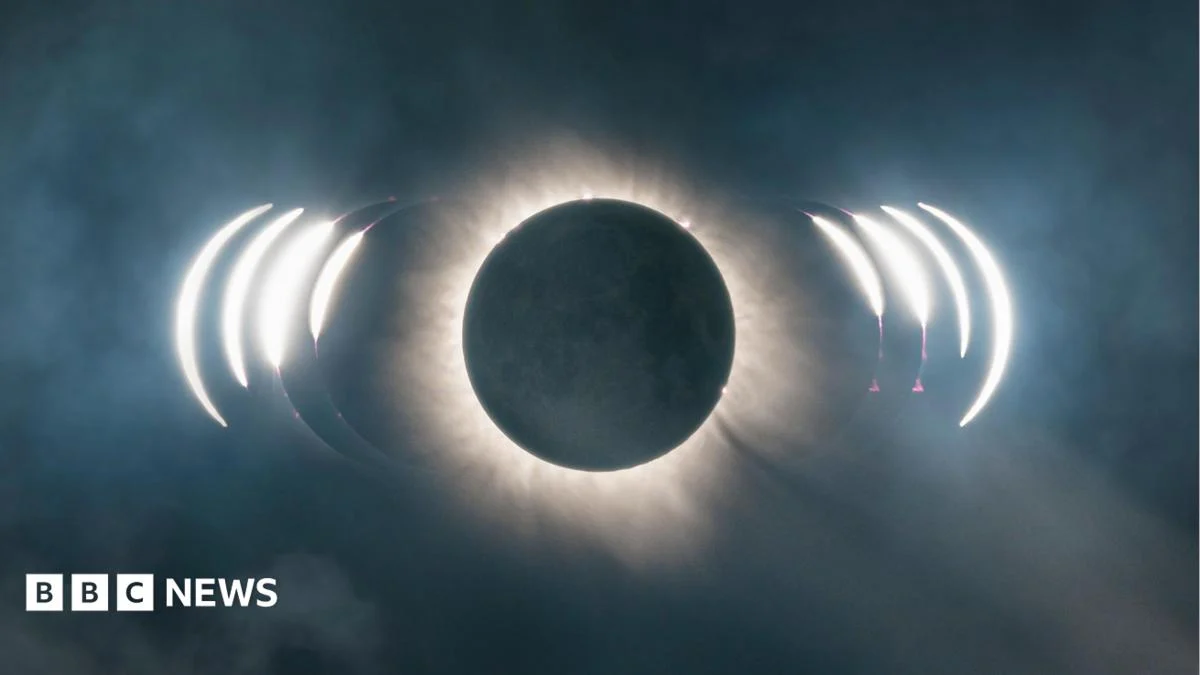
The West Country is poised for a celestial spectacle, as a significant partial solar eclipse, the largest visible in the region since 1999, is set to grace the evening sky. This rare astronomical event offers a unique opportunity for sky-gazers to witness the moon partially obscure the sun, creating a stunning visual display as the day draws to a close. According to Royal Museums Greenwich, the celestial dance will commence at 18:17 BST, when the moon first makes contact with the sun’s disc. The eclipse will then progress towards its peak, with the maximum obscuration occurring at 19:12 BST, before the event gracefully concludes at 20:06 BST, as the sun dips low on the horizon.
The timing of this eclipse, occurring in the evening hours, presents both a challenge and a spectacular opportunity. A crucial factor for optimal viewing will be a clear and unobstructed line of sight to the western horizon. As the sun and moon will be descending throughout the event, those hoping to catch the full progression, particularly the dramatic maximum eclipse and its conclusion, must ensure their viewing spot offers an unimpeded vista towards the west.
Simon Holbeche, chair of the Bath Astronomers, underscored this vital point, stating, "Other than the weather, the only other criteria is a good view all the way to the horizon looking West. This is because it’s an evening eclipse and the sun/moon will be dropping closer to the horizon during the eclipse." His advice highlights the importance of elevated positions or locations free from tall buildings, trees, or hills blocking the crucial western sky. "So, in terms of locations," Holbeche continued, "some might choose to pop upstairs if the house is westerly facing, or pop up the local treeless hills, [for example in Bath that could be] Roundhill, Twerton or Little Solsbury Hill." These elevated spots offer panoramic views, maximizing the chances of witnessing the entire event unfold against the backdrop of the setting sun.
Safe Viewing Practices: A Paramount Concern
Before embarking on an eclipse-viewing adventure, it is absolutely crucial to prioritise eye safety. Looking directly at the sun, even during a partial eclipse, can cause permanent eye damage, including blindness. Standard sunglasses are insufficient. Viewers must use certified solar eclipse glasses that meet the ISO 12312-2 international safety standard. Alternatively, indirect viewing methods such as a pinhole projector, which projects an image of the sun onto a surface, are safe and effective. Telescopes or binoculars should only be used with proper, certified solar filters attached to the front of the objective lens – never look through an unfiltered optical device at the sun. Many local astronomy clubs will host public viewing events where specialised equipment and expert guidance are available, ensuring a safe and educational experience for all.
Recommended Viewing Locations Across the West Country
Astronomers and local experts have compiled a list of prime locations across the West Country, specifically chosen for their elevated positions and clear westward views. These spots promise not only a great view of the eclipse but often also stunning natural beauty, making for an unforgettable evening.
Bristol
Bristol offers several excellent vantage points for eclipse enthusiasts. The iconic Clifton Downs Sea Walls Viewpoint provides expansive, unobstructed views across the Avon Gorge and towards the setting sun, often attracting local astronomy groups for public observation events. Victoria Park in Bedminster offers an open expanse ideal for casual viewing. For those seeking elevation, Brandon Hill and its crowning Cabot Tower offer panoramic vistas over the city and beyond, making it a prime spot to watch the sun dip. These locations are easily accessible and provide ample space for observers.
Wales (South)
While technically not in the West Country, parts of South Wales are often included in regional West Country discussions due to proximity and shared viewing opportunities. The capital city of Cardiff offers various open parks and waterfront locations along Cardiff Bay. The dramatic coastline of the Gower Peninsula, particularly its west-facing beaches, will provide stunning backdrops. Similarly, Swansea and its surrounding areas, including the expansive Rest Bay Beach in Porthcawl, offer wide, open coastal views essential for catching the evening eclipse over the Bristol Channel.
Wiltshire
Wiltshire’s rolling hills and ancient landscapes provide unique settings. Warminster Town Park, often a hub for the Starquest Astronomy Club, is an excellent community spot. The mysterious Cley Hill, near Warminster, offers a solitary, elevated position with clear sightlines. The ancient and mystical Avebury Stone Circle provides an evocative backdrop for sky-watching, with its open fields ideal for westward observation. Further north, Barbury Castle, an Iron Age hillfort on the Marlborough Downs, offers some of the highest and most expansive views in the county.
Gloucestershire
Gloucestershire boasts some magnificent natural high points. Cleeve Hill, the highest point in the Cotswolds near Cheltenham, provides truly breathtaking panoramic views across the Severn Vale and towards the Welsh mountains, making it an exceptional spot. Closer to Gloucester, Robinswood Hill offers elevated perspectives over the city and surrounding countryside. Chosen Hill, with its distinctive church tower, also provides excellent westward views for those in the heart of the county.
Somerset
Somerset’s diverse landscape provides numerous viewing opportunities. The historic Wells Cathedral Green, often a gathering point for the Wells & Mendip Astronomers, offers an open space within a beautiful setting. Beckford Tower, with the Bath Astronomers often in attendance, provides a unique architectural and elevated perspective. As mentioned by Simon Holbeche, Little Solsbury Hill near Bath is a classic choice, known for its superb views over the city and the surrounding countryside to the west.
Devon
Devon’s expansive natural beauty lends itself perfectly to sky-gazing. Exmoor National Park, renowned for its dark skies, offers numerous elevated spots with uninterrupted views, though care must be taken with accessibility as dusk falls. The Norman Lockyer Observatory in Sidmouth is a dedicated astronomical facility that may host public viewing events, offering expert guidance and equipment. For a more social viewing experience, The Poltimore Inn in North Molton, often associated with The Space Detectives astronomy group, combines community spirit with good viewing potential.
South West and Cornwall
Moving further into the South West, coastal and elevated positions become even more prevalent. Lowery Cross Car Park in Plymouth, a favourite spot for the Plymouth Astronomical Society, offers an accessible and open viewpoint. Further west, the rugged coastlines of Penzance and Sennen, near Land’s End, provide dramatic, wide-open vistas over the Atlantic, perfect for watching the sun dip into the sea during the eclipse. These locations offer a wilder, more elemental experience.
Isles of Scilly
For a truly unique perspective, the remote Isles of Scilly offer unparalleled dark skies and clear horizons. St Mary’s Island, particularly from Hugh Town, provides numerous west-facing vantage points. Any of the archipelago’s west-facing beaches would offer a pristine view. The Community Observatory on St Martins is a dedicated facility that could provide an exceptional and informative viewing experience for visitors to these beautiful islands.
Practical Advice for Eclipse Chasers
Beyond selecting a prime location, a few practical tips can enhance your eclipse viewing experience. Firstly, always check the local weather forecast in the days leading up to the event; clear skies are paramount. Arrive early at your chosen spot, especially if it’s a popular location, to secure a good viewing position and allow time to set up any equipment. Bring warm clothing, as evenings can get chilly, even in late spring/early summer. A flask of hot drink and some snacks will also be welcome. For those driving, consider parking options and potential traffic, especially near well-known beauty spots. Finally, check the websites or social media channels of local astronomy clubs and societies. They often organise public viewing events, providing telescopes with appropriate filters, expert commentary, and a safe, communal atmosphere to enjoy this rare celestial phenomenon. If local weather prevents direct viewing, many observatories and space agencies will offer live streams of the eclipse online, ensuring no one misses out on this spectacular event.
This partial solar eclipse is more than just an astronomical event; it’s a chance to connect with the cosmos, to witness the majestic ballet of celestial bodies, and to share a memorable experience with friends, family, and fellow sky-gazers. With careful planning and adherence to safety guidelines, the West Country is set to offer some of the most spectacular views of this "biggest solar eclipse since 1999."



 atisusanti
 George Anjay
 Nakalama John

 Ramos Leo