
 Nakalama John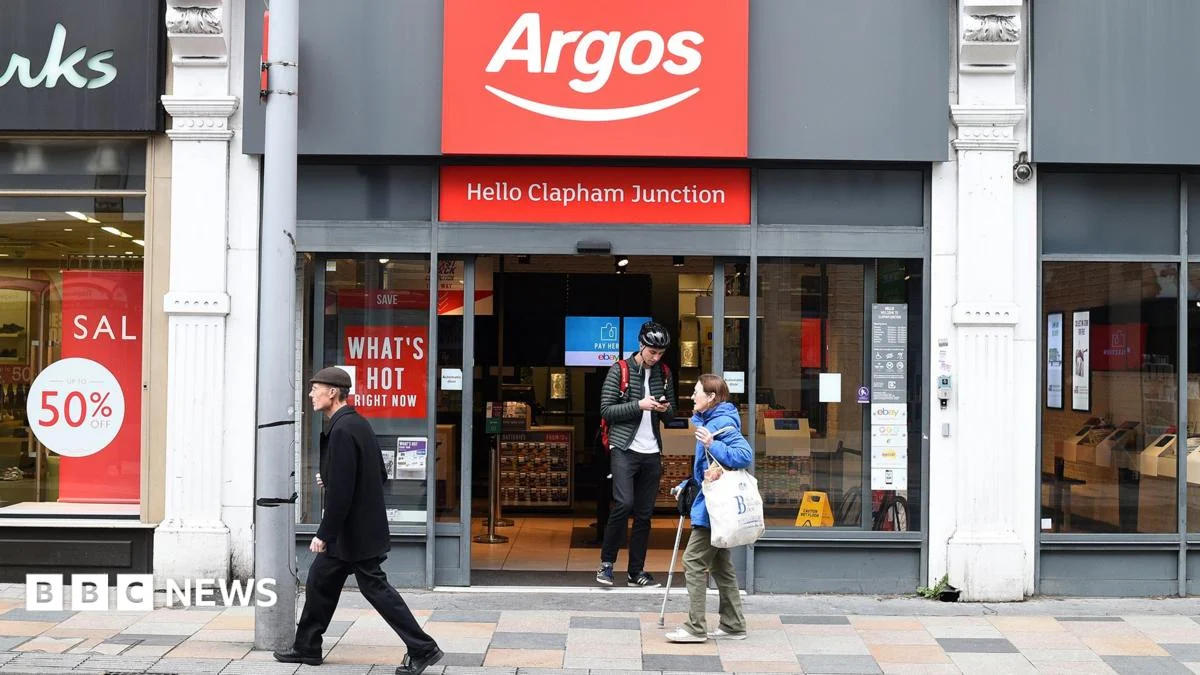
For Argos customers, staff, and suppliers, Sainsbury’s has sought to reassure stakeholders that it will be "business as usual." This commitment to continuity is crucial for maintaining customer loyalty and operational stability. Shoppers can expect to see no immediate changes: Argos will continue to operate its popular concessions within Sainsbury’s stores, Habitat products will still be sold through Argos channels, and the widely used Nectar loyalty points will remain applicable across both brands. This seamless transition aims to minimise disruption and leverage the established synergy where it proved beneficial.
Swift Partners, the buyer, is a company specifically created for the acquisition of Argos. Its formation highlights a dedicated approach to revitalising and growing the brand. A key figure in Swift Partners is Richard Pennycook, a retail veteran with a strong track record, notably as the former boss of the Co-operative Group. Pennycook’s involvement lends significant credibility to Swift Partners’ intentions and suggests a deep understanding of the UK retail sector’s nuances. His leadership could be instrumental in steering Argos through its next chapter.
Argos boasts a substantial physical presence across the UK, with a total of 667 shops. This includes 201 standalone stores, which represent the traditional Argos format, and a further 466 operating as store-in-store concessions within Sainsbury’s supermarkets. Beyond its physical retail footprint, Argos also maintains more than 450 collection points, underscoring its robust click-and-collect infrastructure, a feature that has become increasingly vital in modern retail.
The brand’s heritage is rich, having been founded in 1973. Argos pioneered a distinctive shopping experience where customers would browse its iconic catalogues, place orders, and then collect products from tills, often delivered from connected in-store warehouses. This innovative model, which bypassed traditional shop aisles, captured the imagination of generations. The Argos catalogue itself, affectionately dubbed the "laminated book of dreams" by comedian Bill Bailey, became a cultural touchstone, a staple in many British homes, sparking wish lists and anticipation.
While the physical catalogue was once a hefty tome, Argos has fully embraced digital transformation. The company no longer prints the voluminous book, with its comprehensive product range now readily available online. In-store, customers browse the extensive collection on tablet computers, reflecting a necessary adaptation to contemporary consumer behaviour and technological advancements. This digital pivot has positioned Argos to be a "digital-first business," as noted by retail expert Catherine Shuttleworth.
Sainsbury’s journey with Argos has been a complex one. The supermarket group acquired Argos, along with Habitat and other retail brands owned by Home Retail Group, in 2016 for a substantial £1.4 billion. At the time, the acquisition was seen as a bold strategic move to diversify Sainsbury’s revenue streams, leverage Argos’s strong online capabilities and popular click-and-collect service, and create a multi-faceted retail powerhouse capable of competing with pure-play online retailers and other diversified grocers. The vision was to integrate Argos’s general merchandise expertise with Sainsbury’s food business, offering a broader range of products and services to customers under one umbrella.
However, the integration proved challenging, and Argos eventually came to be seen as an underperforming brand and a "distraction" from Sainsbury’s core food business. The different operational models, supply chains, and customer expectations of a grocery business versus a general merchandise retailer created complexities. This led to a gradual unwinding of the initial strategy. A significant step in this divestment process occurred in 2024 when Sainsbury’s sold Argos Financial Services, which manages the Argos credit card, for approximately £720 million. This move indicated a clear intention to streamline its portfolio and divest non-core assets. Further highlighting the challenging nature of the sale, talks to offload the rest of Argos to Chinese online retailer JD.com fell through in September of the previous year, underscoring the difficulties Sainsbury’s faced in finding a suitable buyer.
Sainsbury’s chief executive, Simon Roberts, affirmed that all of Argos’s nearly 14,000 staff would be transferred over to Swift Partners as part of the deal. This commitment to employee welfare is a critical component of the transaction, providing stability for a significant workforce. Roberts also reiterated the continuation of Argos operations within Sainsbury’s shops, the ongoing use of Nectar points, and the sale of Habitat products, ensuring the customer-facing aspects of the partnership remain intact.
Richard Pennycook of Swift Partners expressed strong belief in Argos’s future, stating he sees "real opportunities to invest and build on its progress." This optimistic outlook from the new ownership suggests a strategic plan to revitalise the brand. The deal is projected to reach completion in February of next year, allowing for a structured transition period. Intriguingly, Pennycook also hinted at the potential to open new standalone Argos shops, a move that would signal a renewed focus on the traditional Argos retail experience. Furthermore, he did not rule out the possibility of the return of its iconic print catalogue, a concept that could tap into nostalgia and offer a unique marketing channel in an increasingly digital world.
Retail expert Catherine Shuttleworth elaborated on Argos being a "distraction" for Sainsbury’s, suggesting that new owners with a singular focus on Argos could unlock its full potential as a "really digital-first business." She lauded the user-friendliness of its app and highlighted its robust click-and-collect model. Shuttleworth believes this combination allows Argos to "give a bloody nose" to online retail giants like Amazon, by leveraging its extensive physical footprint for same-day collection, an advantage pure-play online retailers struggle to match. This strategic advantage in last-mile fulfilment could be a cornerstone of Argos’s future success.
Retail analyst Clive Black echoed these sentiments, questioning whether Argos was ever "wholly aligned" with Sainsbury’s grocery business. He described the supermarket group’s attempt to sell Argos as "challenging and prolonged," reinforcing the narrative of a difficult divestment. Black also pointed to Argos’s financial performance, describing it as a "suboptimal performer from a financial perspective." This assessment is supported by Sainsbury’s latest results for the first three months of the year, which showed group-wide sales up 3.1%, while sales for Argos specifically dipped by 0.5%. This divergence underscores the financial rationale behind Sainsbury’s decision to divest.
Bally Auluk, national officer at Usdaw, a union representing Argos workers, acknowledged that the announcement would naturally create uncertainty among employees. However, he welcomed Swift Partners’ commitment to "keeping the model of store in stores, standalone stores and local fulfilment centres." This assurance from the new owners regarding the existing operational framework is vital for alleviating anxieties and maintaining employee confidence during the transition.
In conclusion, the sale of Argos to Swift Partners for £120 million marks a pivotal moment for both Sainsbury’s and Argos. For Sainsbury’s, it represents a decisive step towards streamlining its business model, allowing it to concentrate resources and strategic efforts on its competitive core grocery market. For Argos, under the dedicated ownership of Swift Partners and the experienced leadership of Richard Pennycook, it signals an opportunity for renewed investment, strategic clarity, and a potential resurgence, leveraging its unique history, robust digital capabilities, and extensive physical presence to carve out a strong future in the evolving retail landscape. The deal, expected to complete in February next year, sets the stage for a new chapter for the "laminated book of dreams."


 atisusanti
 Nana Banana
 George Anjay
 Ramos Leo