
 Nana Banana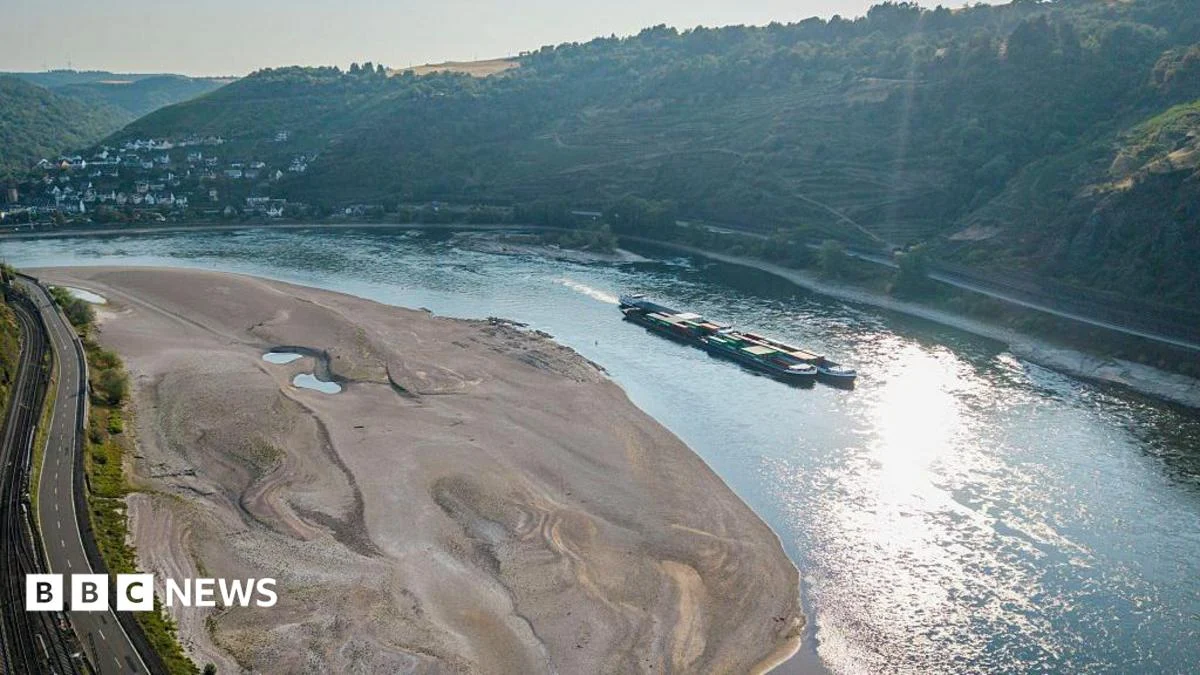
Last week, water levels recorded in Cologne, a major city in western Germany, and at Lobith, the pivotal point where the Rhine transitions from Germany into the Netherlands, fell to depths lower than any point since systematic record-keeping began. These measurements serve as a dire indicator of the severity of the ongoing drought, highlighting a vulnerability in Europe’s vital inland waterways system.
The crisis is not confined to the Rhine alone. Other major European rivers, integral to transport, industrial operations, and agricultural sustenance, are also experiencing historic lows. The Danube, a colossal waterway that snakes through ten countries from Germany to the Black Sea, and Italy’s Po River, the nation’s longest and a lifeline for its agricultural heartland, have likewise reached record minimums, exacerbating concerns across the continent.
According to the EU’s Drought Observatories, drought conditions remained stable and critically severe across most of Europe throughout mid-July, with a notable worsening trend observed in central-western Europe. The grim forecast offers little respite, as renewed heatwave conditions are projected to persist for at least another week, pushing ambient temperatures above a scorching 40 degrees Celsius in numerous central and southern European nations. This relentless heat accelerates evaporation and diminishes rainfall, further intensifying the drought.
The German Low Water Information System (NIWIS) reported at the close of July that an astounding 44 percent of the Rhine’s measuring stations and an even higher 78 percent of those on the Danube had registered extremely low water levels. These statistics paint a stark picture of widespread hydrological stress impacting the very foundations of Europe’s natural and economic infrastructure.
The Rhine, which originates in the majestic Swiss Alps and empties into the North Sea, is renowned as one of Europe’s busiest and most economically significant waterways. Its decreasing water levels have triggered profound concerns regarding the potential economic fallout, particularly the necessity to limit navigation and shipping. The ripple effects of such restrictions are expected to be substantial, impacting supply chains, industrial output, and consumer prices across the continent.
A critical choke point for Rhine navigability is the Kaub gauging station, situated near Koblenz in western Germany. On Friday, the navigable water depth at Kaub hit a concerning 25 centimeters, mirroring the previous record low set in 2018, before experiencing a marginal recovery on Monday. The Kaub station is a vital benchmark because its readings dictate the maximum cargo capacity for vessels. Severely low water levels here can drastically curtail inland shipping operations, forcing barges to reduce their loads significantly.
Martin Wolters, representing the Rhine Waterways and Shipping Authority, conveyed to the German broadcaster WDR that while a complete suspension of shipping on the Rhine was deemed unlikely, stringent precautions would become unavoidable. These measures include the necessity for shipping companies to distribute cargo across a greater number of vessels, thereby reducing the individual load of each barge. This operational adjustment, while preventing immediate halts, inevitably leads to higher transport costs and, in due course, can precipitate widespread supply bottlenecks across various industries reliant on Rhine transport.
The economic implications extend beyond mere logistics. One commodity trader, speaking to Reuters, articulated the growing apprehension among businesses: "There comes a time when loads are too small to be worthwhile or vessel owners are worried about damaging their ships." This sentiment highlights the delicate balance between operational feasibility and economic viability, with potential long-term impacts on the pricing and availability of essential goods, from raw materials to finished products. Industries such as chemicals, steel, and energy, which depend heavily on the Rhine for transporting bulk goods like coal, oil, and grain, are particularly vulnerable.
The Danube River has also been at the epicenter of a severe crisis. Last week, its waters in several countries, including Serbia and Romania, plunged to their lowest levels in 30 years. This unprecedented decline has had immediate and critical consequences, notably forcing Hungary to shut down its sole nuclear power plant, the Paks Nuclear Power Plant, due to insufficient water for its cooling systems. Hungarian Prime Minister Peter Magyar expressed the gravity of the situation, stating on Monday, "We don’t know when we will be able to restart [the plant]. We hope that it will happen as soon as possible and we hope that the cooling, liberating rain that the forecasters do not yet see coming will arrive."
The drought impacting the Danube is also creating significant disruptions to power supplies in other nations in Southeastern Europe. Serbia has been compelled to cut output at its coal-fired power plants because the lack of water is hindering their crucial cooling systems. In a more dramatic intervention, Romania resorted to a controlled explosion on a large rock formation on the banks of the Danube. This drastic measure was undertaken in an attempt to increase water flow to its Cernavoda nuclear power plant, underscoring the desperate efforts being made to maintain energy security amidst the escalating crisis.
Italy’s longest river, the Po, a vital artery for the country’s agricultural and industrial north, reached a historic low near the northern city of Cremona in late July. In response, authorities elevated the drought alert level to "high" across the entire Po Valley, a region renowned for its agricultural productivity. Experts have concurrently issued stern warnings about the potential for widespread disruption to the drinking water supply, posing a direct threat to public health and daily life.
The lower river flows at the mouth of the Po have also triggered an environmental disaster: saltwater from the Adriatic Sea has intruded deeply into the riverbed. This phenomenon is severely disrupting the delicate freshwater ecosystem, endangering local biodiversity, and creating acute problems for farmers. Those who rely on the Po’s waters for irrigating their crops are now facing the devastating prospect of saltwater contamination, which can render agricultural land unusable and destroy harvests.
A recent comprehensive study conducted by scientists at the World Weather Attribution group offered crucial insights into the underlying causes of these extreme conditions. The research indicated that there has been no clear long-term trend towards significantly lower rainfall across much of Europe. However, the scientists unequivocally concluded that human-caused climate change is playing a pivotal role by increasing the evaporation of moisture from land and water bodies through higher temperatures. This accelerated evaporation, even with stable rainfall, makes drought conditions far more likely and intensifies their severity and duration.
The hot, dry weather not only reduces available water but also simultaneously escalates the demand for water across all sectors: household consumption, agricultural irrigation, and industrial processes. This creates a dangerous feedback loop, where scarcity is compounded by increased need. Prolonged periods of drought also have a cascading effect on other freshwater resources, severely impacting the water levels of lakes and reservoirs, which are critical for storing and supplying potable water.
The EU’s Copernicus climate service further highlighted the broader environmental repercussions, noting that the 2022 drought in Europe contributed significantly to an increase in wildfire activity. These wildfires, in turn, drove higher than average carbon emissions, creating a concerning cycle where climate change exacerbates droughts, which then contribute to more climate-altering emissions.
The ongoing crisis across Europe’s major rivers is a potent reminder of the interconnectedness of climate, economy, and society. As these vital waterways continue to recede, the strain on Europe’s infrastructure, energy systems, food security, and environmental resilience grows ever more acute, demanding urgent and coordinated responses to adapt to a rapidly changing climate.


 atisusanti
 George Anjay
 Nakalama John

 Ramos Leo