
 Nana Banana
At the heart of these newly observed phenomena lies the complex interplay of the Sun’s magnetic field and the relentless motion of its superheated gases. These gases, constantly churning and boiling, twist and manipulate the magnetic field lines, creating the swirling patterns now visible. This ceaseless convective motion and its magnetic interactions are the fundamental driving force behind what scientists term "space weather." These energetic bursts from the Sun, ranging from solar flares to coronal mass ejections, can have profound effects on Earth, posing significant threats to our technological infrastructure. They are capable of disrupting power grids, interfering with satellite operations and communication systems, degrading GPS accuracy, and even presenting radiation hazards to astronauts in orbit.
Dr. David Boboltz, an esteemed researcher from the U.S. National Solar Observatory (NSO), emphasized the critical importance of these new observations. "The Sun is the ultimate source of that energy and of all of that space weather," he explained. He underscored that acquiring more detailed images of our solar system’s colossal star is an essential step towards developing more accurate predictions and effective responses to space weather events. "To figure out and eventually predict space weather, we want to understand the physics of the Sun, all the way down to the smallest scales." This deep dive into the micro-physics of the Sun’s surface is crucial for forecasting events that can impact life and technology on Earth.
The findings, which represent a significant leap forward in solar astronomy, were rigorously peer-reviewed and published in the prestigious journal Nature. These breakthroughs were made possible by the Daniel K. Inouye Solar Telescope (DKIST), an engineering marvel situated on the summit of Haleakalā, a dormant volcano on Maui, Hawaii. This elevated location provides unparalleled viewing conditions, with crystal-clear blue skies largely free of atmospheric dust and turbulence, allowing the telescope to achieve its extraordinary resolution. The telescope’s 4-meter primary mirror, the largest for a solar telescope, combined with state-of-the-art adaptive optics technology, compensates for atmospheric distortions, delivering images with a resolution fine enough to discern features as small as 30 kilometers on the Sun’s surface—an astonishing level of detail for an object 150 million kilometers away.
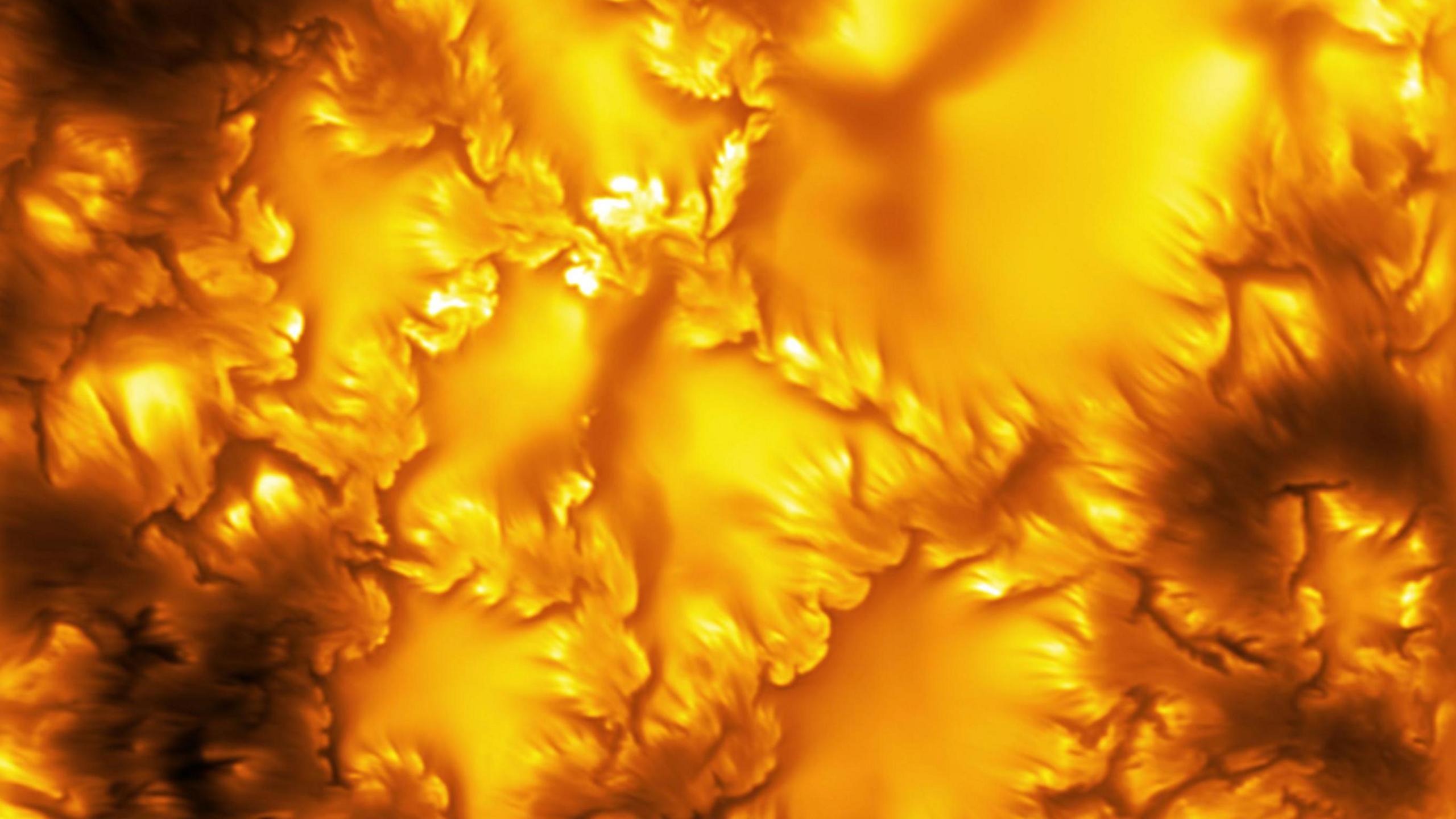
By zooming in on the Sun’s incandescent surface, the team successfully captured these detailed views of swirling vortices, revealing the granular structure of the photosphere where hot plasma rises from below, cools, and then sinks back down. NSO astronomer Dr. David Kuridze elaborated on the significance of these observations. "These twisting motions are creating magnetic energy, which can build up to produce those large-scale explosions." The observed phenomena are critical for understanding how magnetic energy is generated, stored, and ultimately released in the form of powerful solar eruptions.
These dynamic "whirlpools" on the Sun’s surface are scientifically termed "Kelvin-Helmholtz instability." This fascinating phenomenon occurs in fluid dynamics when two layers of fluid—or in this case, superheated plasma—moving at different speeds slide past each other. This differential motion causes small disturbances at the interface to grow into spiraling vortices. On Earth, Kelvin-Helmholtz instabilities are observed in various contexts, from the formation of dramatic cloud patterns in the atmosphere to the generation of ripples that evolve into giant, powerful waves in the ocean. Discovering and clearly resolving these instabilities on the Sun’s surface offers profound insights into the fundamental processes governing solar activity.
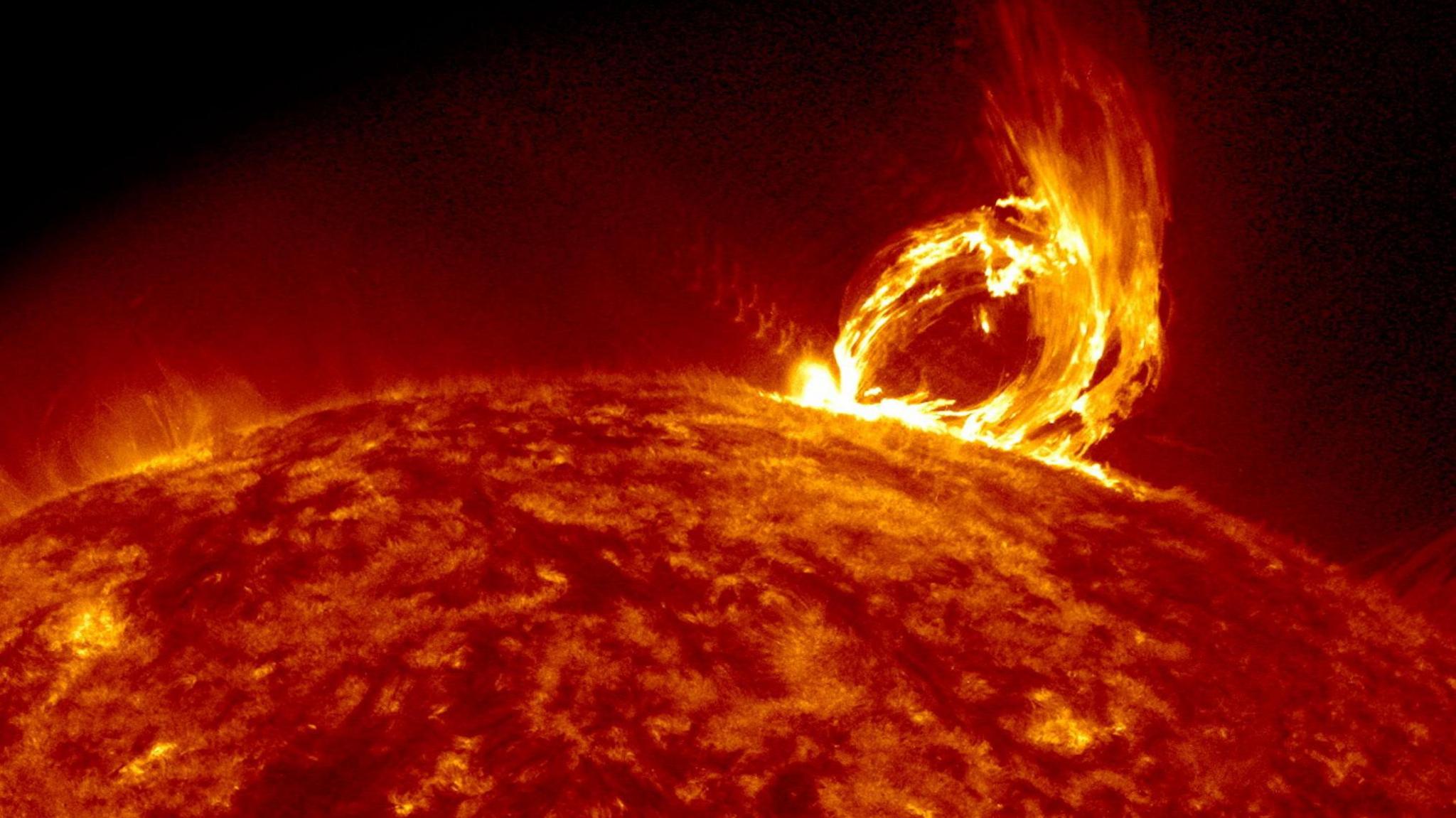
Dr. Friedrich Woeger, also from the NSO, explained that identifying Kelvin-Helmholtz instability on the Sun’s surface not only sheds light on the precise dynamics behind space weather but also contributes to solving one of solar physics’ long-standing mysteries: why the Sun’s outer atmosphere, the corona, is dramatically hotter than its surface. This phenomenon demonstrates how energy is efficiently transported upwards from the Sun’s interior to its outer layers. "Once there’s enough energy wound up in the higher layers, it can then be released, as a flare or what’s known as a coronal mass ejection," he stated, highlighting the direct link between these small-scale instabilities and the Sun’s most explosive events. The continuous shuffling and twisting of magnetic field lines by these turbulent plasma flows contribute to the heating of the corona, a puzzle that has challenged scientists for decades.
Beyond the practical necessity of understanding and safeguarding our planet from the impacts of space weather, Dr. Boboltz underscored that these new findings serve as a powerful reminder of the Sun’s role as a "unique laboratory" for fundamental physics. "It’s our closest star," he reiterated, "and it can help us understand some very basic laws of physics." The Sun’s extreme conditions—immense temperatures, pressures, and magnetic fields—provide an unparalleled natural environment for studying plasma physics, magnetohydrodynamics, and turbulent processes in ways that are impossible to replicate in terrestrial laboratories.
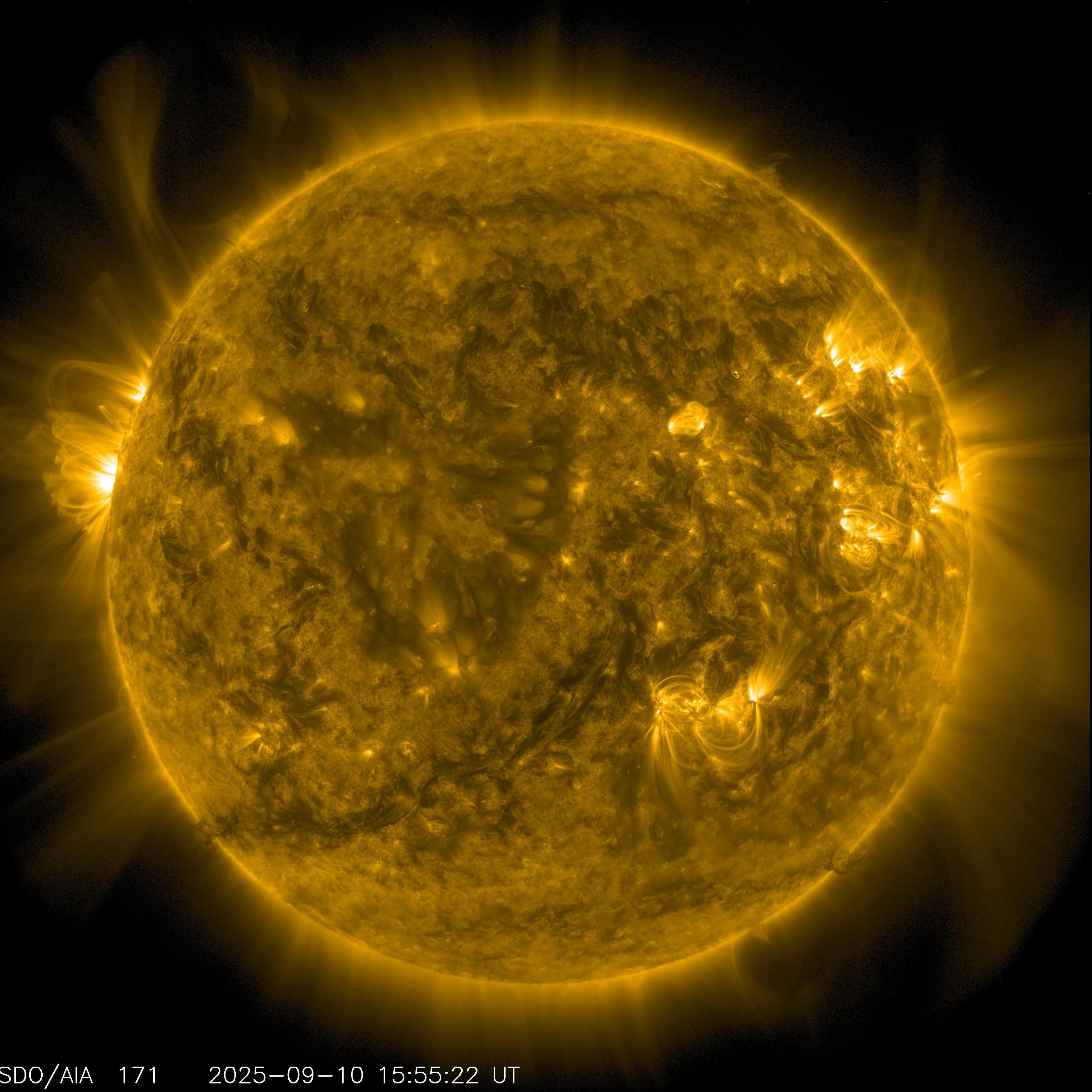
He cited historical precedents, noting, "The first experimental proof of Einstein’s general relativity came from solar eclipse observations." This historical context emphasizes how our understanding of the Sun has consistently pushed the boundaries of human knowledge and led to breakthroughs in fundamental science. "So simply for human knowledge," he added, "we need to have experiments like this." The data gathered by the Inouye Solar Telescope will not only enhance our space weather prediction capabilities but also provide crucial insights into stellar evolution, the behavior of other stars, and the very fabric of the universe. Future research will involve integrating these high-resolution surface observations with data from other solar missions, such as NASA’s Parker Solar Probe and the ESA/NASA Solar Orbiter, which explore the Sun’s outer corona and heliosphere. This multi-messenger approach promises an even more comprehensive understanding of our star, allowing scientists to connect the smallest surface dynamics to large-scale heliospheric phenomena. The quest to fully comprehend the Sun, its intricate mechanisms, and its profound influence on Earth and the solar system continues, with these images marking a spectacular new chapter.




 atisusanti
 George Anjay
 Nakalama John

 Ramos Leo