George Anjay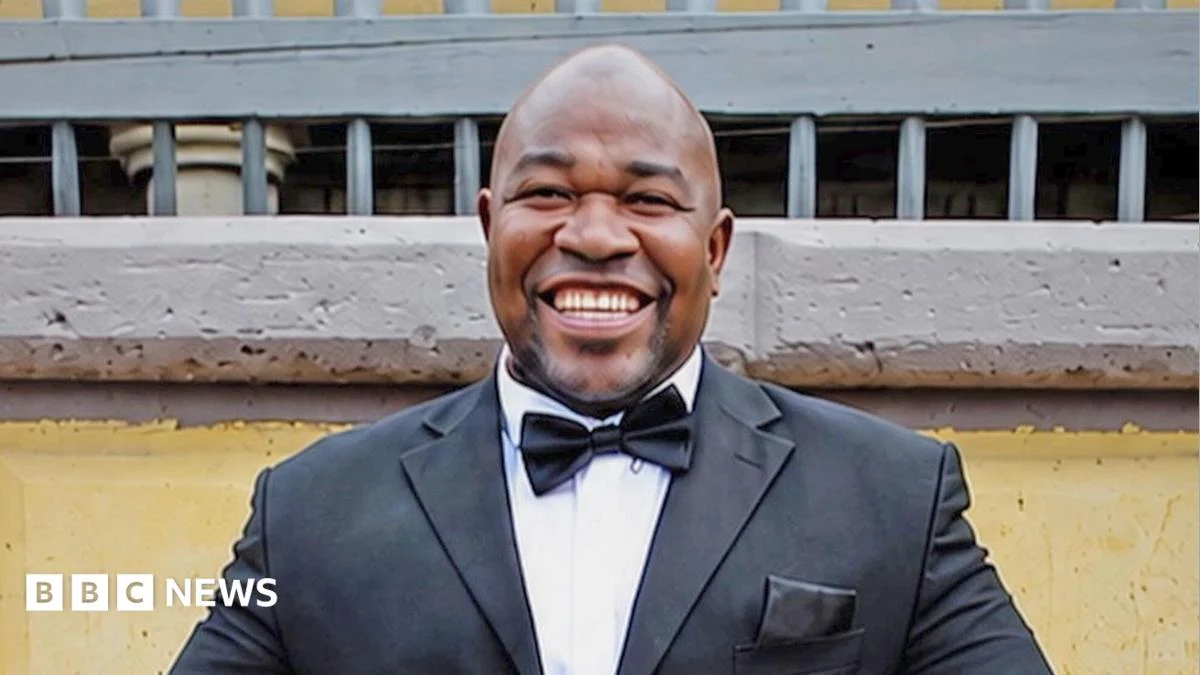
Senior police detective Frans Mathipa had been fighting for four months to gain access to a crucial piece of information in the case he was working on. Finally, he was told, it was going to come his way. But he feared his pursuit of it could cost him his life. Two days later, his car was found overturned – he had been shot dead while driving. Now, seven members of South Africa’s elite special forces, and one military police officer, have been charged with the murder of Lieutenant Colonel Frans Mathipa, a highly respected officer, in August 2023. They vehemently deny the charges. However, there has been no date scheduled for their trial, and significant concerns linger that it may never proceed. This is compounded by the fact that three of the men charged with his murder have refused to comply with a court order revoking their bail. Astonishingly, they remain actively employed within the army’s special forces, with one of them even receiving a promotion.
The BBC World Service has been granted exclusive access to the prosecution’s case against all the accused. This unfolding saga has caused widespread consternation within one of Africa’s most robust democracies, fueling fears that the country’s military is significantly overreaching its constitutional mandate. When approached for comment regarding the allegations of Mathipa’s killing, the South African army declined to respond.
A comprehensive review of several hundred pages of secret police and court documents, shared exclusively with the BBC, lays bare the compelling evidence suggesting that South Africa’s special forces were responsible for the death of Mathipa, who served as a detective in an elite police unit known as "The Hawks." To construct the most thorough public account of the events leading up to the detective’s tragic demise, the BBC has also conducted interviews with key sources integral to the police investigation. These include South Africa’s former head of counter-terrorism within The Hawks, Mathipa’s commanding officer, and members of Mathipa’s grieving family. The accumulated evidence presents a powerful and disturbing case that South Africa’s special forces are indeed responsible for his murder.
Crucially, police documents reveal that the vehicle that shadowed Mathipa in the moments preceding his shooting was registered to a front company utilized by the special forces. Furthermore, tracking data recovered from this vehicle places it definitively at the scene of the crime. One of the individuals present in the car, Major Sunnybooi Wambi, is also identified in the documents as having been observed at the scene of an alleged abduction, an incident that Mathipa had been actively investigating. In the aftermath of Mathipa’s death, chilling threats were allegedly issued by special forces to The Hawks, as detailed in police documents. According to the police, the warning unequivocally stated: "You can appoint 10 investigating officers; we will kill all of them."
The case that Lt Col Mathipa had been meticulously investigating was of a particularly sensitive nature. It centred on an Ethiopian national named Abdella Abadigga, who was identified as an alleged member of the so-called Islamic State (IS). Abadigga had been granted temporary asylum in South Africa in 2008 but was subsequently arrested abroad in 2017. In a highly irregular sequence of events, Abadigga was then reportedly smuggled back into South Africa by elements of the South African military and the Department of Home Affairs, with the intention of utilizing him as an intelligence asset. However, according to Colonel Tollie Vreugdenburg, the former head of counter-terrorism in The Hawks, Abadigga had subsequently "gone rogue." This led to Abadigga allegedly extorting members of Johannesburg’s Ethiopian community, with the illicitly acquired funds reportedly being used to finance IS activities, as stated by the United States government.
In response to inquiries about whether the South African army had facilitated Abadigga’s return to South Africa, and whether the Department of Home Affairs had misrepresented a planned deportation to Ethiopia by instead smuggling him back into the country using an expired passport and refugee permit, neither department provided a response.
Specifically, Mathipa was investigating the grave allegation that special forces had subsequently abducted and murdered Abadigga in December 2022. Earlier that same year, the United States had imposed sanctions on Abadigga, designating him as an IS recruiter and fundraiser, and a trusted supporter of Bilal al-Sudani, a prominent IS figure in Somalia. Court documents indicate that following Abadigga’s abduction, his mobile phone connected to a cell tower located near a military base. Police sources suggest that this phone was subsequently used to make a call to a number in Somalia. The Pentagon did not respond to the BBC’s query regarding whether Abadigga’s phone activity aided in the location of al-Sudani, who was ultimately killed by US special forces in Somalia in January 2023, mere weeks after Abadigga’s alleged abduction. When questioned about whether Abadigga had been kidnapped at the behest of the US, South Africa’s President Cyril Ramaphosa declined to comment.
Upon being assigned to the case, approximately four months prior to his own death, Mathipa was already aware that special forces were implicated. His primary objective was to secure further corroborating evidence. He was building upon information that had already been gathered by Abadigga’s brother, Ameen. Ameen had filed a missing person’s report shortly after his brother’s disappearance and had been assigned an investigating officer (IO) from the local police. Together, Ameen and the IO had successfully obtained CCTV footage capturing the last known movements of Abadigga and his bodyguard, Kadir Abotese, at the Mall of Africa, a large shopping centre situated on the outskirts of Johannesburg. Clips of this footage, which the BBC has reviewed, clearly show an individual, dressed in a blue top, following Abadigga and his bodyguard as they depart the food court and head towards the car park. This same individual is seen paying for parking a mere three seconds after Abadigga and Abotese complete their transaction. The mall’s CCTV footage provides another critical piece of evidence: the license plates of the vehicles suspected of being used by the kidnappers are clearly visible.
These vehicles were all registered to a company named Peters Communications Trust (PCT), which Ameen and the IO eventually discovered was a front company for South African special forces. At the time of Abadigga’s disappearance, the directors of PCT included Major General Herbert Mashego, who was then the commanding officer of the 5 Special Forces Regiment. Police documents state that a meeting was arranged between the IO and high-ranking military officials, including Brigadier General Yalo, who was then the head of special forces. During this meeting, the IO was reportedly instructed to inform Ameen that there was no connection between PCT and the military. Consequently, with the investigation seemingly at an impasse, Abadigga’s brother initiated legal action by approaching the Johannesburg High Court. In their response to Ameen’s legal proceedings, the special forces denied any knowledge of Abadigga or his whereabouts. They did, however, concede that their soldiers had been present at the Mall of Africa on the date in question, asserting that they were there for a training exercise. They identified the individual seen wearing blue on the CCTV footage as Major Sunnybooi Wambi, stating he had been the exercise commander. They also admitted that all the suspect vehicles observed at the mall belonged to them.
Domestic military operations undertaken by South Africa’s armed forces require authorization from both the government and the presidency. When questioned about whether they had authorized a training exercise at the Mall of Africa, former South African Defence Minister Thandi Modise did not respond, and President Ramaphosa declined to comment.
When Mathipa was assigned to the case a month later, he promptly issued a subpoena to the special forces, compelling them to surrender full details of this alleged training exercise and the identities of all personnel involved. When access to these critical documents was finally promised, three months later, Mathipa reportedly experienced a premonition of his impending death, according to Brigadier Paulina Sekgobela, his commanding officer. "When [Mathipa] left my office he said: ‘Brigadier, you know, these people – they are going to kill me. I’m going to die’," she recounted to the BBC.
On the very day Mathipa was killed, he received a phone call from a man identifying himself as Tebogo, who claimed to possess information pertinent to the case. This is according to Mathipa’s daughter, Basetsana, who was at home with him at the time. Mathipa and Tebogo arranged to meet at a petrol station in Pretoria. When Tebogo failed to appear, Mathipa drove away, continuing along the highway. He was tragically killed while driving, succumbing to high-velocity rounds fired from weapons that, according to South African police, would have been accessible to special forces. Furthermore, footage from motorway toll gantries, police state, shows that one of the occupants of the black BMW, which tailed Mathipa moments before his murder, was indeed Major Sunnybooi Wambi. This vehicle, like the three vehicles linked to Abadigga’s disappearance at the mall, was registered to PCT, the police added.
Following Mathipa’s death, new detectives were assigned to the case. This development reportedly triggered a chilling message that made its way to the police’s Criminal Intelligence division, allegedly originating from special forces. Police assert that the warning stated that regardless of the number of investigating officers assigned to the case, "we will kill all of them." In total, twelve members of the South African military have been arrested in connection with these investigations, including Lieutenant Colonel Sunnybooi Wambi and the current head of South Africa’s special forces, Brigadier General Solomon Lechoenyo. Both individuals have been promoted to these respective positions since the police initially began scrutinizing their involvement in the case. The twelve individuals have been variously charged with the abduction and murder of Abadigga and Abotese, the murder of Mathipa, fraud, and obstruction of justice. All defendants deny all charges and were initially released on bail. However, the bail for six of them was subsequently revoked, and they were ordered to surrender themselves into custody. Three of these six, including Major Wambi, are facing charges related to both Mathipa’s murder and the abduction and murder of Abotese.

 Nakalama John
 Ramos Leo
 Nana Banana