George Anjay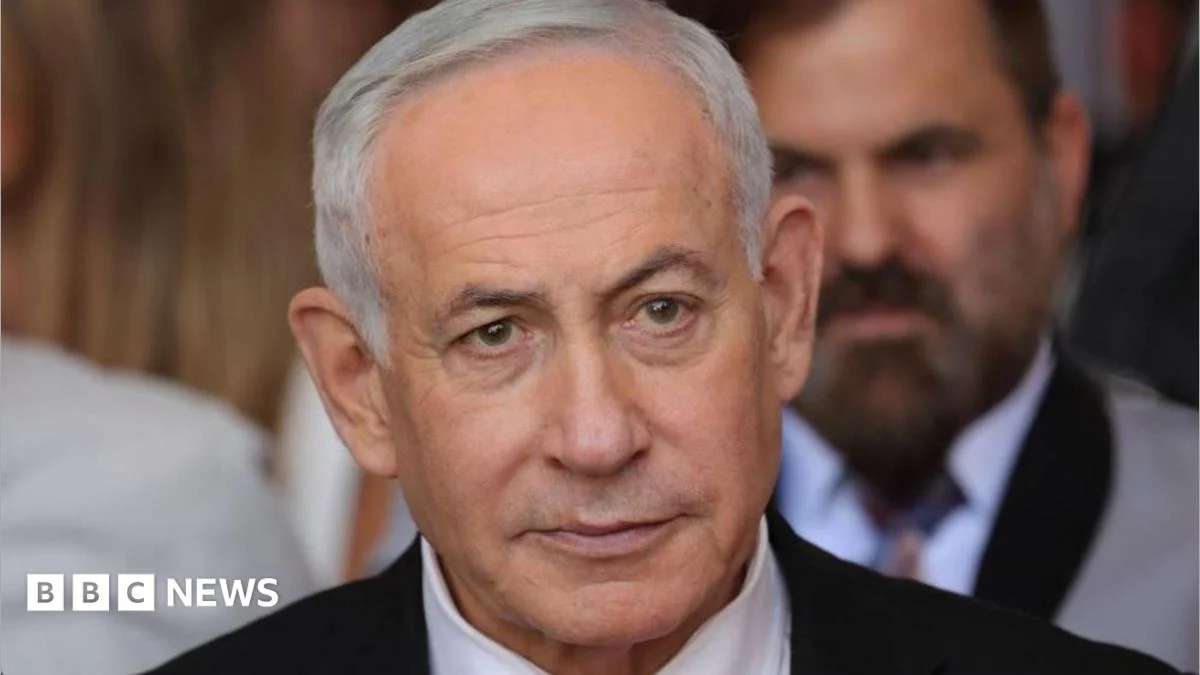
Israel’s Prime Minister Benjamin Netanyahu may have categorically rejected the new Board of Peace roadmap to disarm Hamas in Gaza, but that is unlikely to be the final word, given the complex political landscape and the significant international backing for the proposal. The White House, while not officially commenting, is reportedly "not bothered" by Netanyahu’s statement, viewing it as strategic campaign rhetoric in the run-up to a heated general election. "We understand Bibi’s political needs," a senior US official, quoted by Israeli journalist Barak Ravid, was reported to have said, using a familiar nickname for the Israeli leader. "We have no problem with it as long as he continues to do what we ask – especially regarding restraining attacks in Gaza."
This assessment from Washington is underscored by recent events. In the days preceding Netanyahu’s formal rejection, there was an apparent pause in Israel’s strikes on Gaza, a concession that Hamas had demanded when signing on to the US-backed, 15-point roadmap. Furthermore, there are indications that Israel remains open to advancing former US President Donald Trump’s peace plan for Gaza, including preparations for the deployment of an International Stabilization Force (ISF). This force, comprised of international troops, is intended to collaborate with a new Palestinian police force to secure the territory. The expected construction of the first ISF base is still scheduled to commence amidst the ruins of Rafah in southern Gaza at the end of the current month, according to Israeli public radio, Kan News. This development could pave the way for much-needed reconstruction efforts in the war-torn enclave.
The roadmap, announced by President Trump in July after months of delicate negotiations, was hailed as a "major milestone" in efforts to end Israel’s war in Gaza. Trump, writing on his Truth Social platform, declared that the Board of Peace had reached an agreement for the complete disarmament of Hamas and other Palestinian armed groups in the territory. The deal is designed to be implemented in phases, with all weapons to be decommissioned and stored by a new Palestinian administration in Gaza, which would report to the Board of Peace. Concurrently, Israeli forces would withdraw from the more than 60% of Gaza they currently control. Senior Hamas officials confirmed their agreement to this new framework, conditioning their commitment on mutual compliance by Israel. This development was widely perceived as a significant potential breakthrough in the protracted conflict, receiving welcome from the UK and being hailed as a "crucial step" by the European Union.
However, Israel’s formal response was delayed for over a week. An Israeli spokesman offered only a brief statement that the roadmap did not "reflect Israel’s positions." Far-right member of the Israeli government, Itamar Ben-Gvir, expressed strong opposition on X, calling the deal "unacceptable." Mainstream Israeli opposition politicians also began to voice doubts, questioning the specifics of the decommissioning of small arms and the sequencing of the plan’s various stages. Finally, on Sunday, Netanyahu informed his cabinet, "I wish to be precise here: Israel does not accept the 15-point document." He elaborated, "The IDF [Israel Defense Forces] will not carry out any withdrawal until Hamas is disarmed. And when I say the disarming of Hamas, it means heavy weaponry, lighter weaponry, all weaponry. And we are talking about genuine disarmament, not fictitious disarmament."
In the same statement, Netanyahu acknowledged President Trump as "the greatest of our friends in the White House" but asserted that Israel "knows how to stand firm" against unacceptable ideas. The skepticism regarding Hamas’s adherence to its commitments is widespread within Israel. The Islamist movement has historically viewed "armed struggle" as a core tenet and a legitimate response to Israeli occupation. In recent months, there had been observable signs of Hamas reasserting its authority in Gaza. Fleur Hassan-Nahoum, an Israeli commentator and former deputy mayor of Jerusalem, articulated this sentiment to the BBC: "Israel can certainly never agree to retreating anywhere where the terrorist group that caused the worst massacres since the Holocaust is still there and is still ruling the Strip." She emphasized the profound "trauma of the Israeli people" stemming from the deadly Hamas-led attacks on October 7, 2023, which ignited the devastating Gaza war, and stressed that this trauma should not be underestimated.
Any potential concessions from Netanyahu in this matter would come at a politically precarious moment. He faces a challenging re-election campaign in the upcoming general election, scheduled for October 27. This election is Israel’s first since the October 7 assault, and three years into his premiership, Netanyahu has yet to achieve what he vowed: "absolute victory" over Hamas. Veteran Middle East negotiator and former American diplomat Aaron David Miller described the Israeli leader as navigating "the most consequential election" of his political career. "He’s navigating a very fine line between keeping his constituents happy and not angering or alienating President Trump," Miller told the BBC. For now, Miller believes the White House understands Netanyahu’s predicament and is affording him "a pass." He added, "It’s hard to believe that you’re going to see any serious movement before you have another Israeli government."
In the interim, the Board of Peace has been actively working to reassure the Israeli public about the roadmap’s viability. Nickolay Mladenov, the High Commissioner for Gaza and a key figure in the months-long negotiations with Hamas, gave an interview to Israel’s Channel 12 just hours after Netanyahu’s formal rejection. "Its goal is to make sure that Gaza is never again a threat to Israeli security and that what happened before, [on] October 7, never happens again," Mladenov stated. He explained that the deal employs a "step-by-step approach," meaning, "If there is verified decommissioning of weapons, that they are taken away from the factions and stored and ultimately rendered unusable, Israel then withdraws from Gaza." Mladenov underscored that the plan’s success relies on "verification" rather than "trust." Hamas, for its part, has indicated its continued commitment to the roadmap and has urged mediators and the Board of Peace to pressure Israel into adhering to the agreed-upon terms. Prime Minister Netanyahu has confirmed that discussions with the Americans are ongoing, suggesting that the prospect of continued engagement remains.
Meanwhile, substantial pressure from Washington is likely to intensify. Former President Trump is also keenly aware of his own electoral prospects in the upcoming November midterm elections for the US Congress. His Republican party faces the possibility of significant losses, exacerbated by factors such as rising petrol and grocery prices, partly attributed to the ongoing five-month-long war in Iran which has been unpopular. Trump’s own approval rating has seen a decline, making him inclined to seek positive developments in his Gaza peace plan as a much-needed foreign policy win. This confluence of domestic political considerations in both Israel and the United States suggests that while Netanyahu may have issued a firm rejection for now, the path towards a potential resolution, however complex and protracted, is far from closed. The international community, including key players like the US, EU, and UK, has invested considerable diplomatic capital in this roadmap, making a complete abandonment of the initiative unlikely. The future trajectory of the plan will hinge on the evolving political dynamics within Israel, the continued pressure from the US, and the persistent engagement of international mediators.



 Nakalama John
 Ramos Leo
 Nana Banana