George Anjay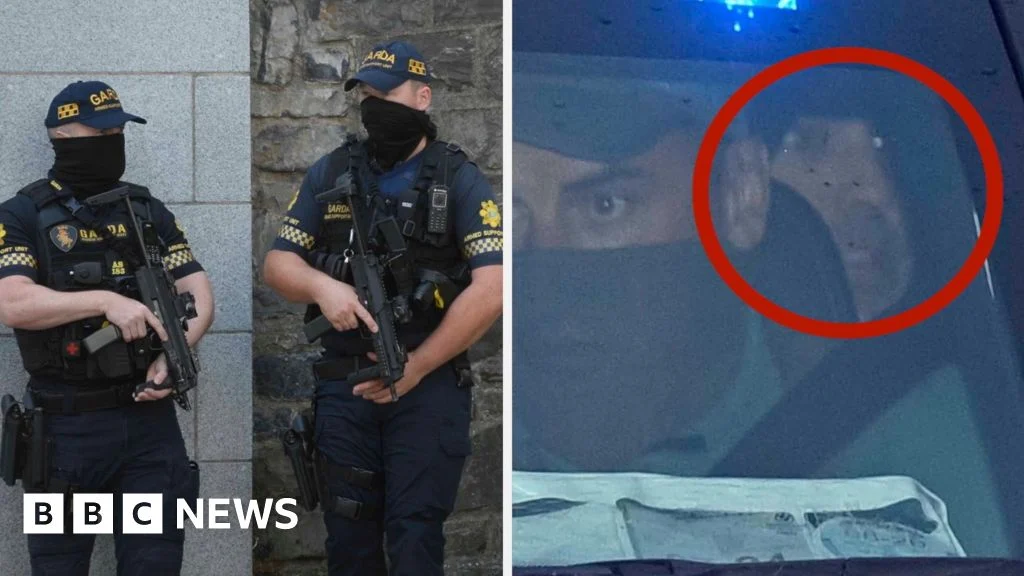
The Kinahan cartel, often referred to as the Kinahan Organised Crime Group (KOCG), has emerged as a formidable force in international drug trafficking and organized crime. Its roots can be traced back to Dublin, Ireland, where Christy Kinahan Sr. initially established the group in the 1980s. Daniel Kinahan, his son, is widely believed to have ascended to a position of paramount leadership within the organization, effectively taking the reins and expanding its global reach. The cartel’s operations are multifaceted, encompassing the importation and distribution of vast quantities of cocaine, cannabis, and other illicit substances across Europe, the Middle East, and beyond. Beyond drug trafficking, the KOCG is also implicated in money laundering, extortion, and even murder, with a history of brutal violence and turf wars, most notably the infamous Kinahan-Hutch feud in Dublin, which claimed numerous lives.
Daniel Kinahan’s ascent to power within the cartel is a subject of intense scrutiny. While his father laid the foundation, Daniel is credited with transforming the organization into a sophisticated international syndicate. His alleged strategic acumen and ability to forge alliances with other criminal networks are believed to have been instrumental in the cartel’s expansion. Reports suggest that Kinahan has cultivated relationships with Colombian drug cartels, enabling him to secure a steady supply of cocaine, and has also established distribution channels throughout Europe. His alleged involvement in the illicit arms trade has also been a point of concern for international law enforcement agencies. The sheer scale of the Kinahan cartel’s operations, with estimated annual revenues running into the billions of euros, underscores the gravity of the charges against Daniel Kinahan.
The cartel’s financial power is a testament to its success in illicit enterprises. Investigations by law enforcement agencies in Ireland, the UK, the US, and Europe have consistently pointed to the Kinahan cartel’s vast wealth, generated through its extensive drug trafficking network. This wealth has allegedly been used to finance further criminal activities, corrupt officials, and maintain a lavish lifestyle for its key figures. The United States Department of the Treasury, in 2017, designated Daniel Kinahan, his father Christy Kinahan Sr., and his brother Christopher Kinahan as significant foreign narcotics traffickers, imposing sanctions that aimed to disrupt their financial operations. These sanctions included asset freezes and a ban on U.S. citizens doing business with them. This international pressure, coupled with ongoing law enforcement investigations, has undoubtedly contributed to the fugitive status that Daniel Kinahan maintained for many years.
Daniel Kinahan’s decade-long sojourn in Dubai presented a significant challenge for law enforcement. The UAE, while a global hub for business and finance, has historically been perceived as a haven for those seeking to evade international justice. Kinahan reportedly lived a life of relative freedom, engaging in business ventures and maintaining a public profile, at least within certain circles. His presence in Dubai was a constant source of frustration for authorities in Ireland and other countries, who struggled to secure his extradition. The challenges included complex legal hurdles and the perceived reluctance of some jurisdictions to cooperate fully with international requests for evidence and extradition. However, the recent extradition signals a shift in this dynamic, suggesting that international cooperation has reached a critical juncture.
The Kinahan-Hutch feud, a brutal and protracted gangland conflict that erupted in Dublin in 2015, brought the Kinahan cartel into sharp public focus. The feud, which is believed to have originated from a dispute over a drug shipment, resulted in a series of violent attacks, including assassinations, bombings, and shootings. The scale of the violence and the brazenness of the attacks shocked Ireland and highlighted the devastating impact of organized crime on communities. Daniel Kinahan was widely identified as a key figure in orchestrating the cartel’s response during the feud, further cementing his reputation as a ruthless and influential leader. The ongoing threat posed by the feud and its spillover effects into other criminal activities have remained a significant concern for Irish law enforcement.
The legal proceedings against Daniel Kinahan in Dublin are expected to be complex and protracted. The use of a special non-jury court, often employed in cases involving organized crime or national security where jury intimidation is a concern, suggests the high stakes involved. The evidence presented against Kinahan will likely draw from years of intelligence gathering, surveillance, and testimony from informants and law enforcement agencies across multiple jurisdictions. The prosecution will need to meticulously build a case demonstrating his direct involvement in directing the criminal organization’s activities during the specified period. The defense, on the other hand, will undoubtedly challenge the evidence and seek to prove his innocence, as he has maintained.
The implications of Daniel Kinahan’s extradition and potential prosecution extend far beyond Ireland. The Kinahan cartel’s operations have a global footprint, impacting drug supply chains and criminal markets in numerous countries. His removal from the leadership, if convicted, could significantly disrupt the cartel’s operations, potentially leading to internal power struggles and a weakening of its influence. However, organized crime groups are often resilient, and the vacuum left by a key leader can be filled by others. The focus for law enforcement will likely remain on dismantling the entire network, targeting not just its leadership but also its financial infrastructure and key operatives.
The international community has long viewed Daniel Kinahan as a significant threat. His alleged role in facilitating the flow of illicit drugs into Europe and beyond has had devastating consequences for public health and safety. The cartel’s involvement in organized crime fuels corruption, violence, and instability. The efforts to bring him to justice are a testament to the persistent commitment of international law enforcement agencies to combatting transnational organized crime. The charges he faces are serious and carry substantial penalties, reflecting the gravity of his alleged offenses.
Daniel Kinahan’s past is steeped in a world of crime, with reports detailing his early involvement in petty crime before graduating to more serious offenses. He is believed to have learned the intricacies of the criminal underworld from his father, Christy Kinahan Sr., who himself has a long history of criminal activity. The family’s involvement in organized crime has been a subject of extensive media coverage and law enforcement investigation for decades. Daniel’s alleged rise to the top of the cartel is seen by many as a culmination of this criminal legacy, a testament to his purported ruthlessness and ambition.
The precise details of the extradition process remain confidential, but it is understood to have involved extensive diplomatic engagement and legal coordination between Ireland and the UAE. The successful extradition marks a significant victory for international law enforcement and sends a clear message that individuals involved in serious organized crime will not be able to find permanent sanctuary, regardless of their wealth or influence. The coming weeks and months will be critical as the legal proceedings unfold, offering further insights into the extent of Daniel Kinahan’s alleged involvement in the Kinahan cartel and the future of this notorious criminal organization. The world will be watching to see the outcome of this landmark case, which has the potential to reshape the landscape of international organized crime.

 Nakalama John
 Ramos Leo
 Nana Banana