
 Nakalama John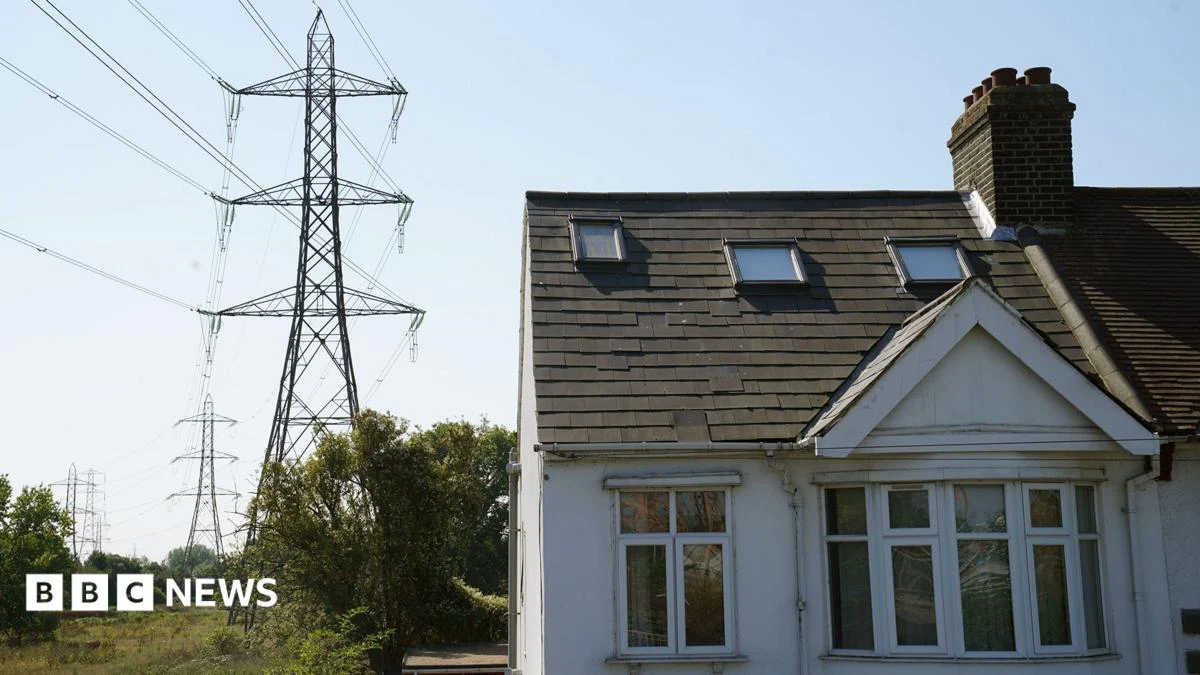
The UK government has unveiled the initial locations where households situated in close proximity to new, upgraded electricity pylons and substations will become eligible for an annual £250 discount on their energy bills. This landmark scheme, colloquially dubbed "pounds for pylons," aims to mitigate the local impact of critical infrastructure development essential for the nation’s transition to renewable energy and enhanced energy security. Customers residing within a 1,600ft (500m) radius of 43 identified transmission projects across Britain are set to benefit from these payments for a duration of up to 10 years.
This initiative comes amidst a nationwide drive to modernise Britain’s aging electricity grid, a system largely conceived for a bygone era dominated by coal and gas-fired power stations. Ministers assert that these extensive upgrades are not merely desirable but vital for effectively integrating the rapidly expanding volumes of renewable power generated across the country and ensuring a robust, resilient energy supply for future generations. Without this foundational infrastructure, the ambitious targets for net-zero emissions by 2050, coupled with the imperative for cheaper, homegrown power, would remain out of reach.
However, the scheme has not been universally welcomed. Critics argue that the offered discounts represent meagre compensation for the profound and often irreversible impact on local landscapes, community aesthetics, property values, and the overall quality of life for those directly affected. Rural campaign groups, in particular, highlight the impossibility of truly quantifying the loss of pristine environments and the long-term visual intrusion posed by towering new pylons.
Geographically, the lion’s share of the initial 43 projects, approximately two-thirds, are concentrated in Scotland. This reflects Scotland’s pivotal role in the UK’s renewable energy landscape, particularly its burgeoning offshore and onshore wind energy sector. The vast potential for wind power generation in Scotland necessitates a significantly enhanced transmission network to transport this green electricity south to major population centres. Beyond Scotland, significant upgrades are also slated for other strategic regions across Britain, including areas north of London, East Anglia, the Midlands, and North Wales, all critical zones for either renewable generation or high energy demand.
UK Energy Minister Michael Shanks, speaking to BBC Radio Scotland Breakfast, underscored the historical context of the grid’s current state, attributing it to decades of "woeful underinvestment." He acknowledged the legitimate objections and concerns raised by residents living close to proposed development sites but stressed the "crucial" nature of these pylons for maintaining the National Grid’s future resilience. "I totally accept that people might not like that, but it is critical national infrastructure and it has to be built somewhere," Shanks stated, articulating the difficult balance between national strategic needs and local disruption. He lamented a historical tendency in the UK to shy away from necessary infrastructure projects, a stance he believes has held the country back. "Either we go through decades of not upgrading the grid and take the risk that the grid will actually fail, but we also lose the opportunity of cheaper bills, homegrown power connecting," he warned, asserting, "We’re not prepared to take that risk."
The Department for Energy Security and Net Zero further elaborated on the critical need for these upgrades, explaining that the existing grid lacks the capacity to effectively handle the surge in renewable energy. This deficiency often leads to the paradoxical and costly scenario where wind farms, particularly in windy conditions, are sometimes paid to switch off and curtail their generation. This occurs because there isn’t sufficient network infrastructure available to transmit the generated electricity to homes and businesses that urgently need it.
Greg Jackson, chief executive of Octopus Energy, the UK’s largest domestic energy supplier, echoed these concerns, describing the current electricity system as "inefficient, brittle and expensive." Speaking on BBC Radio 4’s Today programme, Jackson cautiously welcomed the discount scheme as a "positive first step." He revealed the staggering cost incurred last year, with the UK spending over £1 billion compensating wind farms to cease operation on windy days due to grid constraints. "We should just be giving that electricity more cheaply to the people and businesses who live in the areas where we’re generating it," he argued. "By doing that, you’d be able to stop wasting that money and instead put the electricity to use cutting bills for those people. But crucially cutting bills for everybody else as well because it’s less wasteful." This sentiment highlights the broader economic benefits of an upgraded grid, where reduced curtailment costs could translate into savings for all consumers, not just those receiving the direct discount.
To fund the "pounds for pylons" discount scheme, an additional charge of approximately 80p per year will be levied across all energy bills nationwide. While a relatively modest sum for individual households, it underscores the collective responsibility for infrastructure investment. Most eligible households will receive their discount automatically on their electricity bill every six months. However, some categories, such as those on commercial meters, may need to proactively apply to receive the benefit. The initial payments are anticipated to commence early next year, with eligible customers expected to receive further details from their energy supplier or the energy regulator Ofgem in due course. An assessment conducted earlier this year estimated that, as more projects are progressively rolled out across the country, between 120,000 and 160,000 households could eventually qualify for these discounts, illustrating the widespread nature of the grid expansion programme.
Despite the government’s efforts to provide financial recompense, rural campaign groups remain staunchly opposed, reiterating their stance that it is impossible to attach a monetary value to the irreplaceable loss of natural landscapes and the erosion of local amenity. For many residents living in the immediate vicinity of proposed projects, the offered money is perceived as an insult, failing to acknowledge the true scale of disruption and long-term impact. Kate Matthews of the Save Our Mearns campaign group, actively contesting plans for upgraded pylons in north-east Scotland, including the contentious Kintore to Tealing project, articulated this frustration forcefully. She described the discount scheme as a "slap in the face" for residents who anticipate ruined businesses and unsellable homes as a direct consequence of the development. "£2,500 off electricity bills over 10 years is a slap in the face for residents facing ruined businesses and unsellable homes," Matthews asserted. "This government is either massively out of touch or is showing their contempt for affected residents and energy consumers."
Matthews further elaborated on the profound toll these plans have already taken, describing the "mental anguish" inflicted upon residents. They face the prospect of a decade of intensive development, bringing with it incessant noise, disruptive road closures, and heavy traffic. Following this prolonged construction period, communities will then contend with a lifetime of gargantuan pylons permanently impacting their environment, agriculture, tourism potential, property values, and both the physical and visual amenity of their surroundings.
The physical scale of these new pylons varies considerably depending on their specific location and purpose. However, in north-east Scotland, some of the proposed latticed structures are expected to reach heights of approximately 187ft (57m). To contextualise this, these would be similar in appearance and scale to the already upgraded line running from Beauly to Denny, where existing pylons range from 138ft (42m) to an imposing 213ft (65m). Many of the projects comprise a complex mix of infrastructure, incorporating both underground and pylon-supported cables, alongside the construction of new substations, converter stations, and other essential equipment integral to modern electricity transmission.
Campaigners consistently advocate for greater sections of the network to be "undergrounded," arguing that this would significantly mitigate the visual and environmental impact. However, National Grid and the various transmission companies tasked with these developments counter that undergrounding would be substantially more expensive than overhead lines. They also highlight the practical challenges, asserting that underground cables are considerably harder and more time-consuming to repair in the event of faults, potentially leading to longer power outages and increased operational costs. This ongoing debate underscores the complex trade-offs inherent in building the energy infrastructure necessary for the future, balancing cost-effectiveness and operational efficiency with environmental protection and community acceptance. The "pounds for pylons" scheme represents the government’s attempt to bridge this divide, offering a tangible benefit to those most directly affected by the nation’s critical energy transition.




 atisusanti
 Nana Banana
 George Anjay

 Ramos Leo