George Anjay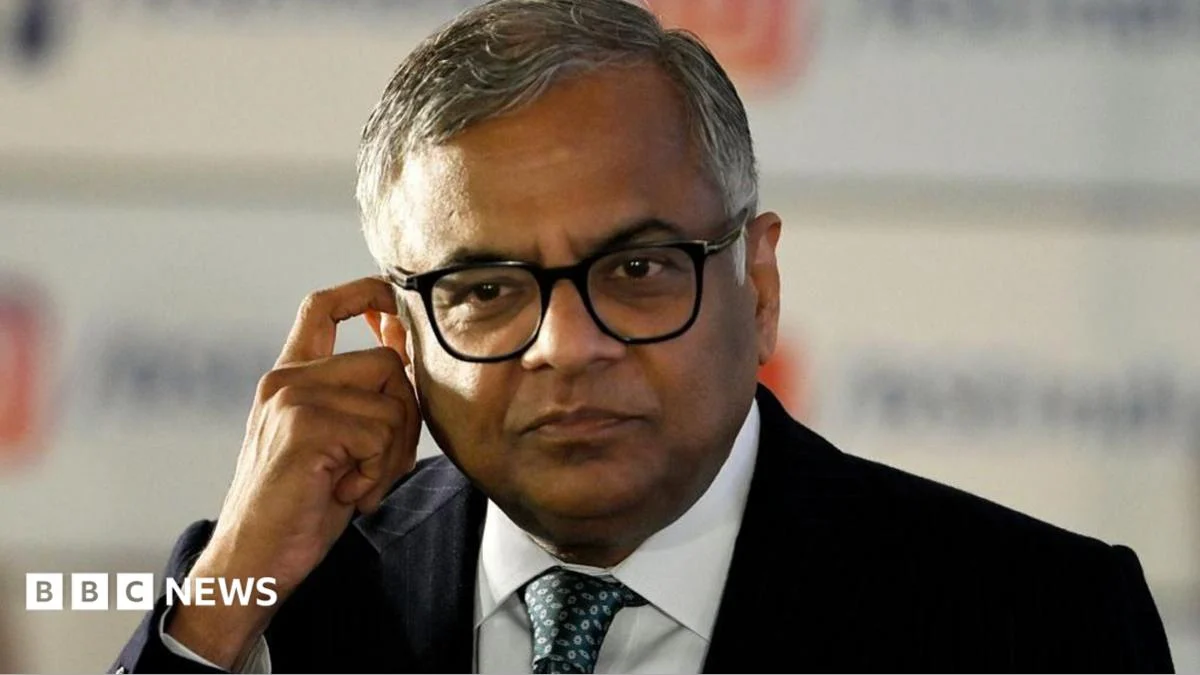
N Chandrasekaran, the influential chairman of the sprawling Tata Group, has announced his decision not to seek reappointment when his current term concludes in February, a move that has sent ripples through India’s corporate landscape and raised significant questions about the future leadership of one of the nation’s most storied conglomerates. The 63-year-old leader, widely respected for his strategic acumen and decade-long stewardship, revealed that the decision stemmed from the Tata Sons board’s inability to reach a unanimous consensus on a proposed five-year extension of his tenure, a matter that has been under deliberation for several months.
This unexpected development has already triggered a sharp downturn in the stock prices of publicly listed Tata companies, underscoring investor confidence in Chandrasekaran’s leadership. The uncertainty now shrouds the future direction of the colossal salt-to-steel conglomerate, a diverse entity that encompasses prominent businesses such as the recently acquired Air India, the industrial giant Tata Steel, and the iconic luxury automotive brands Jaguar and Land Rover. Chandrasekaran’s impending departure, which precedes Tata Sons’ annual general meeting by mere days, is seen as a culmination of underlying tensions and a potential boardroom power struggle that has been simmering for months among the trustees of the Tata Trusts, the principal shareholders of the group.
The unique governance structure of the Tata Group, where the charitable arm Tata Trusts holds a commanding 66% stake in the group’s holding company, Tata Sons, has long been a subject of discussion. While this structure has historically provided significant tax and regulatory advantages, enabling the group to pursue its philanthropic endeavors, it has also, according to some experts, occasionally presented governance challenges due to the inherent duality of its non-profit and commercial objectives. The Tata Trusts appoints three nominees to the Tata Sons board, and recent reports have indicated disagreements among these board members on critical issues, including board nominations, the approval of funding for ambitious projects, and the long-debated public listing of Tata Sons. The group has maintained a public silence on these internal disagreements.
These internal rifts have the potential to distract the conglomerate at a time when it is navigating considerable business headwinds. A prime example is the ambitious and complex revival of Air India, a national carrier that the Tata Group took over from the Indian government in 2022. The airline’s turnaround requires substantial investment, strategic planning, and unwavering focus, making leadership stability paramount.
Chandrasekaran, in his statement, elaborated on the circumstances surrounding the stalled extension. He revealed that when the proposal for his reappointment was brought before the board in February, one board member withheld their support, a detail he disclosed without naming the individual. "In the absence of unanimous support, I chose to defer the decision," he stated, adding that even after six months, a resolution remained elusive. He emphasized the critical need for leadership continuity and clarity within Tata Sons, a "very large institution" engaged in numerous strategic projects currently at crucial stages of execution. "It is not only necessary to have a leader in place to lead the Group beyond Feb 2027, but also clarity on leadership is important for employees, investors, partners and other stakeholders," he articulated, highlighting the far-reaching implications of his departure.
N Chandrasekaran’s ascent to the chairmanship in 2017 marked a significant chapter in the Tata Group’s history. He succeeded the late Cyrus Mistry, whose sudden and acrimonious removal from the position earlier that year had ignited a prolonged and public legal battle. Prior to assuming the leadership of the entire conglomerate, Chandrasekaran held the esteemed positions of CEO and managing director of Tata Consultancy Services (TCS), the group’s flagship global IT services powerhouse. His association with the Tata Group dates back to 1987, and a press release announcing his appointment as chairman in 2017 aptly described him as a "Tata lifer," a testament to his deep-rooted connection and dedication to the organization.
The market’s reaction to Chandrasekaran’s announcement has been swift and telling. Ambareesh Baliga, an independent market analyst, observed that the departure of a leader of Chandrasekaran’s caliber and stature was inherently likely to elicit a negative market response. "However," Baliga added, "they have six months to find a good successor. I think it is likely that the next leader would be chosen from within the group." This sentiment suggests that while the immediate future might be marked by investor caution, the Tata Group’s established internal talent pool offers a potential pathway to a smooth leadership transition. The coming months will undoubtedly be crucial as the group navigates this period of change and selects a leader to steer it through its next phase of growth and transformation.
The legacy Chandrasekaran leaves behind is one of consolidation, strategic acquisitions, and a renewed focus on operational efficiency. Under his chairmanship, the Tata Group embarked on a significant restructuring, divesting non-core assets and strengthening its presence in key sectors. The ambitious revival of Air India, though fraught with challenges, represents a bold bet on India’s aviation potential and a testament to the group’s willingness to undertake complex turnaround projects. His tenure also saw a push towards digital transformation and innovation across various group companies, aligning the conglomerate with the evolving demands of the global economy.
The complexities of the Tata Trusts’ ownership structure and the potential for governance friction have been a recurring theme in discussions about the group’s leadership. The Trustees, acting as guardians of the group’s philanthropic ethos and long-term vision, play a pivotal role in shaping its strategic direction. Any disagreements among them, especially concerning leadership appointments, can have a profound impact on the group’s stability and investor confidence. The current situation highlights the delicate balance required to manage a conglomerate with dual charitable and commercial objectives, where decisions must satisfy both the philanthropic mandate of the Trusts and the commercial imperatives of Tata Sons.
The search for Chandrasekaran’s successor will undoubtedly be a closely watched affair. The Tata Group has a strong tradition of nurturing talent from within, and it is widely anticipated that the next chairman will emerge from the ranks of its senior leadership. Potential candidates could include leaders from its various operating companies, individuals with a deep understanding of the group’s diverse businesses and a proven track record of execution. The selection process will be critical in determining the future trajectory of the Tata Group, ensuring continuity of its values while embracing new strategies to navigate the evolving global business landscape.
The market’s immediate reaction, while understandable, may be tempered by the Tata Group’s inherent strengths and its robust portfolio of businesses. Companies like Tata Steel, TCS, and Titan have demonstrated resilience and strong financial performance, providing a solid foundation for future growth. The challenge for the next chairman will be to build upon this foundation, driving innovation, fostering sustainable growth, and continuing the group’s legacy of contributing to nation-building. The six-month transition period offers a valuable window for a well-thought-out succession plan, one that reassures stakeholders and sets a clear path forward for this iconic Indian conglomerate. The coming months will be a test of the Tata Group’s institutional strength and its ability to manage change effectively, upholding its commitment to excellence and its unique blend of commercial success and social responsibility.



 Nakalama John
 Ramos Leo
 Nana Banana