
 Nana Banana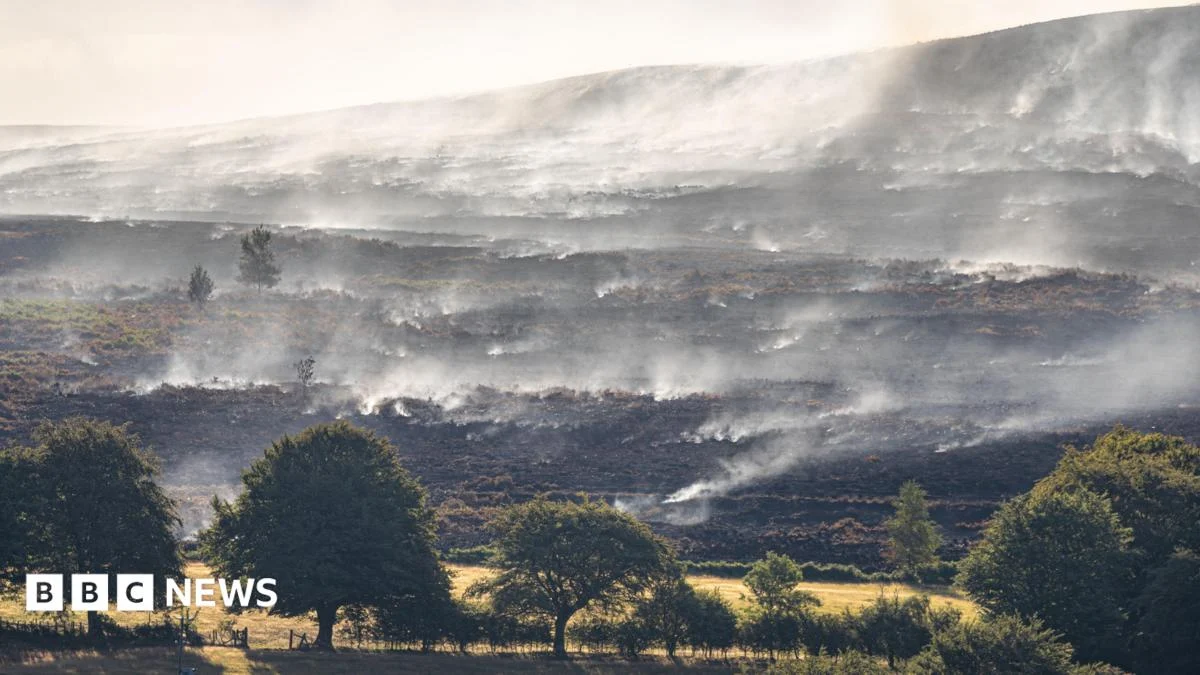
A small county in Wales, Torfaen, surprisingly registered among the world’s highest carbon emissions per square kilometre in July, a shocking consequence of severe wildfires, according to a prominent charity, Save the Children. This unexpected designation places the Welsh county in the company of regions typically associated with large-scale fires in much hotter, drier climates, underscoring the escalating impact of climate change even in traditionally temperate zones. The data, published by the European Union’s sophisticated earth observation programme, Copernicus, highlighted an "extremely unusual" spike in emissions from wildfires in the area, particularly stemming from a major blaze above Blaenavon.
The fire that engulfed the landscape above Blaenavon was not merely a local incident; it was described by the fire service as "one of the largest and most challenging" faced in south Wales in recent years. Spanning an area equivalent to approximately 300 football pitches on Mynydd Garnclochdy, between the communities of Abersychan and Blaenavon, the sheer scale of the inferno and the duration of its burn led to significant environmental and public health concerns. The widespread impact was palpable, with reports of smoke being smelled as far as Cardiff, nearly 30 miles (48km) away, illustrating the extensive reach of the atmospheric pollution generated.
The severity of the situation escalated to the point where a major incident was declared across the region, necessitating a multi-agency response. The immense resources required to bring the fire under control eventually included unprecedented assistance from the military, a clear indication of the extraordinary challenge posed by the conflagration. Even weeks after its initial ignition, the smoke continued to plague local residents. Blaenavon councillor Janet Jones specifically recalled 13 August, about three weeks after the fire first broke out, as a day when the smoke was "particularly bad." This prolonged exposure raised significant alarm bells regarding air quality and its potential impact on vulnerable populations within the community.
Save the Children expressed profound concern over the potential health consequences, drawing attention to the Copernicus data which ranked Torfaen’s wildfire emissions in July behind only Malanje in Angola, Spain’s Ávila, and Annaba in Algeria. This ranking is particularly startling for a relatively small, industrialized county in Wales, a region not typically prone to such intense and widespread wildfires. The charity’s statement underscored the global nature of this crisis, with Melanie Simmonds, head of Save the Children Wales, observing: "In Wales and across the world, children are breathing in smoke from wildfires, coping with extreme heat and losing the freedom to play outdoors because the air is no longer safe." She emphasized that "These conditions are not only frightening – they carry serious health consequences for children whose bodies and lungs are still developing."
Wildfire smoke is a complex mixture of gases and fine particulate matter, including PM2.5, which can penetrate deep into the lungs and even enter the bloodstream. Exposure to these pollutants can exacerbate existing respiratory conditions such as asthma, emphysema, and Chronic Obstructive Pulmonary Disease (COPD), and can also lead to new onset respiratory problems. For children, whose respiratory systems are still maturing, the risks are particularly acute, potentially leading to long-term health issues. The elderly and those with pre-existing cardiovascular conditions are also highly susceptible to the adverse effects of prolonged smoke inhalation. Councillor Jones highlighted the "great concern about air quality and the impact on elderly people and those suffering with respiratory issues." While she noted that two weeks prior, GP practice nurses were not aware of any immediate increase in patients complaining about respiratory problems, she prudently added that this "could change in the months ahead," acknowledging the potential for delayed or chronic health impacts.
Torfaen council, initially unaware of the specific EU data from Copernicus, acknowledged the seriousness of prolonged wildfire incidents on local air quality. They stated that their own air quality monitoring, conducted via a station in Croesyceiliog Cwmbran, did indeed show "elevated particulate concentrations" during the wildfire period. However, the council also clarified that their monitoring station is primarily intended to provide information on "general background air quality" rather than highly localized conditions immediately adjacent to the fires. This distinction is crucial, as air quality can vary significantly over short distances, meaning that while the general background levels were elevated, residents living directly downwind of the blaze likely experienced far more severe and dangerous levels of smoke and particulate matter. The council reiterated its commitment to continuous monitoring, recognizing the potential for adverse effects, but also expressed uncertainty about the specific data and evidence used by Copernicus to arrive at its reported conclusion.
The Copernicus Atmosphere Monitoring Service (CAMS), a key component of the European Union’s Space programme, provides vital global information related to air pollution and health. Its data, derived from satellite observations and sophisticated atmospheric models, offers an independent and comprehensive assessment of emission sources worldwide. The CAMS website’s unequivocal statement that emissions in Torfaen were "extremely unusual" serves as a stark warning. This advanced monitoring capability allows for the quantification of emissions from various sources, including wildfires, providing an objective measure of their environmental impact. The method involves analyzing thermal anomalies and smoke plumes detected by satellites, combined with models of fire intensity and fuel types, to estimate the amount of carbon and other pollutants released into the atmosphere.
The carbon emissions from wildfires are a significant contributor to climate change. When vegetation burns, it releases stored carbon dioxide, methane, and other greenhouse gases directly into the atmosphere. In areas like the Welsh uplands, which can feature peat soils, the combustion of organic matter beneath the surface can release ancient, highly concentrated carbon stores that have accumulated over millennia. These peat fires are notoriously difficult to extinguish and can smoulder for weeks or even months, releasing a continuous stream of potent greenhouse gases. The loss of vegetation also reduces the land’s capacity to absorb carbon dioxide in the future, creating a double impact on the climate. The "per square kilometre" metric used by Copernicus is particularly telling, as it highlights the intensity of emissions from a relatively confined area, indicating a highly concentrated release of carbon.
The occurrence of such a significant wildfire in Wales, a region typically known for its damp climate, is increasingly seen as a symptom of broader global climate patterns. Hotter, drier summers, coupled with periods of drought and stronger winds, create ideal conditions for fires to ignite and spread rapidly, even in areas historically less prone to them. These changing weather patterns are predicted to make such events more frequent and intense in the future, posing significant challenges for land management, emergency services, and public health. Beyond the immediate carbon emissions, wildfires have a devastating ecological impact, destroying habitats, reducing biodiversity, and leading to soil erosion and degradation of water quality. The long-term recovery of these ecosystems can take decades, if not centuries.
The economic costs associated with such events are also substantial, encompassing not only the direct expenses of firefighting and emergency response but also the indirect costs of damage to infrastructure, loss of agricultural productivity, and potential impacts on tourism. The disruption to daily life, the stress on communities, and the ongoing health concerns contribute to a complex web of challenges.
The incident in Torfaen serves as a powerful local illustration of a global problem, emphasizing the interconnectedness of climate change, environmental degradation, and public health. It underscores the urgent need for enhanced climate action, improved wildfire prevention and management strategies, and greater community resilience. This includes better public education on wildfire risks, more effective land management practices to reduce fuel loads, and continued investment in early detection and rapid response capabilities. For a small Welsh county to become a global hotspot for carbon emissions, even temporarily, is a stark reminder that no region is immune to the far-reaching consequences of a changing climate, and that local actions and impacts contribute to the global environmental ledger.



 atisusanti
 George Anjay
 Nakalama John

 Ramos Leo