
 Nana Banana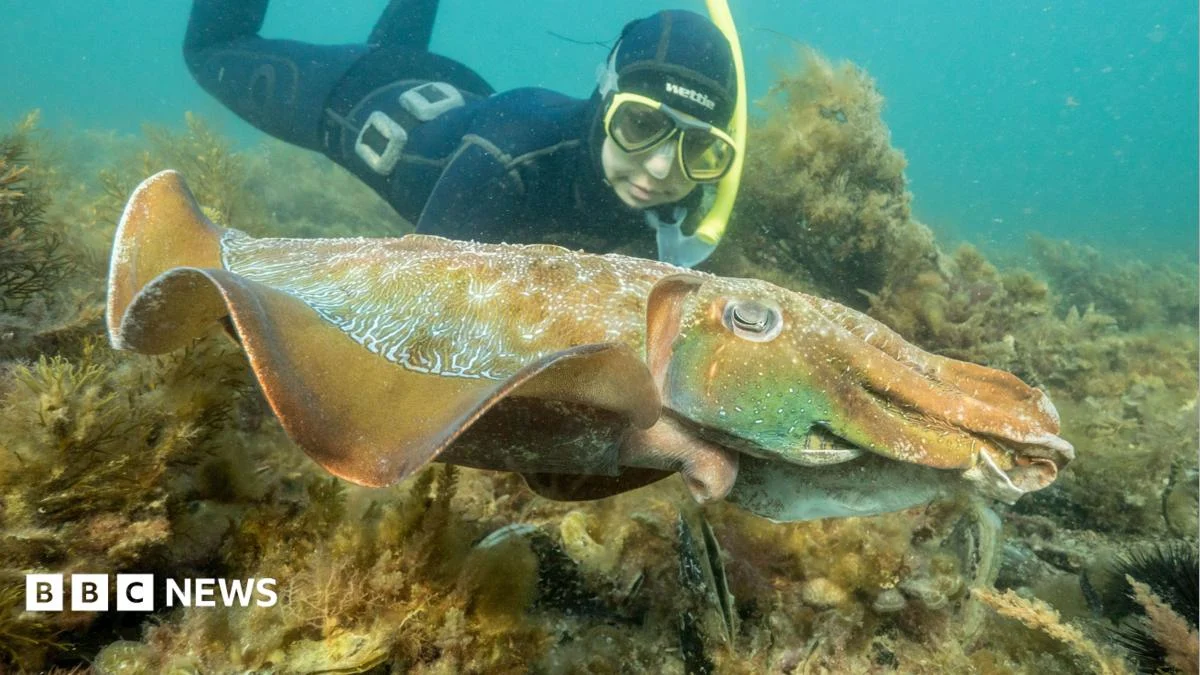
Every winter, a sliver of the South Australian coast transforms into one of nature’s most extraordinary spectacles, hosting the world’s largest known mating event for giant cuttlefish (Sepia apama). These unique marine cephalopods, endemic to Australia, typically converge by the hundreds of thousands along the Cuttlefish Coast, particularly around Whyalla in the Upper Spencer Gulf. Their arrival heralds a vibrant, mesmerising display of colour, texture, and shape-shifting as males compete fiercely for females, changing their skin patterns in dazzling, hypnotic pulses of iridescent blue, green, and red. This natural phenomenon, renowned globally, draws thousands of keen divers, underwater photographers, and eco-tourists annually, eager to witness the intricate courtship rituals and dramatic battles for dominance. The sheer density of these intelligent creatures in the shallow waters creates an unparalleled underwater ballet, a testament to the ocean’s boundless biodiversity.
However, the winter of 2024 brought a chilling silence to this normally bustling marine arena. The highly anticipated annual gathering saw the lowest turnout on record, igniting widespread alarm and sparking urgent concerns of a "catastrophic decline" for the species. Official figures, meticulously compiled and released this month, paint a grim picture: a mere 1,811 cuttlefish were estimated to have arrived to mate this year. This figure represents a staggering 97% drop from the 63,000 individuals recorded just last year, an unprecedented decline that has left scientists, conservationists, and local communities reeling.
The South Australian state government has pointed to a severe and persistent toxic algal bloom, which has ravaged the state’s extensive coastline for more than 18 months, as a leading plausible explanation for this sharp and sudden reduction. The low numbers have intensified calls for the giant Australian cuttlefish to be formally listed as an endangered species, a classification that would unlock critical conservation efforts and provide much-needed legal protection. The life cycle of these magnificent creatures makes each mating season critically important; adult cuttlefish typically die shortly after breeding, making successful reproduction paramount for the species’ perpetuation. This year, the devastating impact is further underscored by the count of just 440 eggs, a miniscule fraction compared to the millions typically laid during a healthy breeding season.
Manny Katz, a 28-year-old diver with extensive experience observing this annual event, was one of four individuals tasked by South Australia’s Department of Environment and Water (DEW) to conduct a vital assessment. For days last month, Katz and his team spent hours submerged along the coast, not to marvel at the usual throngs, but to meticulously count the few eggs that remained. "Because there have been so few cuttlefish," Katz explained, "DEW thought it would be worth going out and trying to do an assessment of how many eggs there currently are around the coastline to understand what the population is going to be next year." Over two days in July, his team undertook eight one-hour dives, painstakingly exploring the undersides of rocky reefs – the preferred nesting sites for cuttlefish eggs. "Along the eight kilometres (five miles) of coastline, there would normally be millions of eggs," Katz lamented, noting that each female can lay dozens of eggs, and tens of thousands of females usually participate in the breeding aggregation. The reality of their survey was stark: "[We] pretty much looked under every single rock that we could have and we only found about 440 eggs." This profound scarcity of eggs represents a direct and immediate threat to the next generation, casting a long shadow over the species’ future.
While it remains too early to definitively predict the ultimate fate of the species, Katz expressed serious apprehension. "We will know that answer probably in the next year or two, whether or not this year has been a catastrophic decline," he stated, highlighting the critical window for understanding the long-term repercussions. His team also observed the behaviour of the dozen or so adult cuttlefish they encountered – a stark contrast to the tens of thousands usually present. "This year, they were all really skittish… hiding under rocks," Katz noted. "Because there’s so few cuttlefish hanging out at the moment, they don’t have strength in numbers." This lack of collective defence makes individual cuttlefish more vulnerable to predators and likely impacts their ability to engage in successful breeding rituals.
Katz admitted he wasn’t entirely surprised by the alarmingly low numbers this winter, given the devastating impact of the toxic algal bloom that has plagued South Australia since its initial detection in March of last year. An algal bloom, scientifically known as a harmful algal bloom (HAB), is a rapid and often uncontrolled increase in the population of algae or phytoplankton in aquatic systems. While naturally occurring, their proliferation is significantly exacerbated by a confluence of environmental factors, notably ocean warming, marine heatwaves, and nutrient pollution – all intensified by human-induced climate change. These blooms can deplete oxygen in the water (hypoxia), block sunlight from reaching other marine plants, and, critically, produce potent toxins harmful to marine life and humans alike.
"Our marine habitats have been getting wiped out for the past year and a half now… this is an indicator that our marine ecosystems are in real big trouble – the canary in the coal mine, so to speak," Katz warned, underscoring the broader ecological implications. Last year’s cuttlefish mating season was largely unaffected, as the most severe effects of the algal bloom had not yet reached the Cuttlefish Coast. However, since late last year, small but significant concentrations of the toxic algae have been consistently detected in the area, directly coinciding with the onset of this year’s breeding season. This timing is particularly worrying because cuttlefish, along with other cephalopods like octopus and squid, possess sensitive respiratory systems and are known to be particularly vulnerable to the toxins produced by harmful algal blooms. The toxins can impair their nervous systems, reduce their ability to forage, and ultimately lead to mass mortalities.
Stefan Andrews, co-founder of the Great Southern Reef Foundation, has taken a proactive stance, spearheading the effort to have the giant Australian cuttlefish listed as a threatened species. He argues that the "catastrophic decline," directly attributable to the algal bloom and its profound impact on the next generation, warrants immediate action. "The harmful algal bloom is a leading plausible explanation and appears likely to have contributed, but the available evidence does not yet allow us to say definitively that it caused the entire decline," Andrews acknowledged, maintaining scientific caution while highlighting the overwhelming correlation. He further emphasised that with so few adults and such minimal breeding activity observed, the number of young entering the population in the coming years is highly likely to be critically low. "That will make the next breeding season especially challenging," he predicted, hinting at a potential multi-year recovery period, if recovery is even possible without intervention.
In response to the alarming figures, a spokesperson for South Australia’s Department of Primary Industries and Regions (PIRSA) offered a more tempered perspective, noting that cuttlefish populations "naturally fluctuate" depending on environmental conditions. Previous surveys have indeed shown significant variability, reporting record lows of 13,500 individuals in 2013, followed by impressive highs of 247,000 in 2020. "The cuttlefish population estimate rebounded to more than 100,000 just two years following the low numbers in 2013," the spokesperson highlighted, attempting to contextualise the current decline within historical trends. "While it appears likely the algal bloom has impacted cuttlefish numbers, researchers are working to determine whether this contributed to the reduced population or was just one of the potential impacts." This cautious approach underscores the complexity of marine ecosystems and the need for comprehensive scientific investigation.
Prof. Mike Steer, executive director of the South Australian Research and Development Institute (SARDI), which played a crucial role in carrying out the underwater surveys, acknowledged the unprecedented nature of this year’s low estimate, describing it as "disheartening." However, he expressed a degree of cautious optimism, drawing parallels with past recovery efforts. "We know from the past that this population has the capacity to recover when conditions are favourable," he stated, referencing the species’ resilience. He also pointed to what he termed "positive signs," indicating that adult cuttlefish were still observed continuing to lay eggs, suggesting that the population may recover "over coming years." While such statements offer a glimmer of hope, the stark figures from the egg count and the ongoing threat of environmental stressors present a formidable challenge to any swift recovery. The silent waters of the Cuttlefish Coast serve as a potent warning, urging immediate and sustained efforts to understand and mitigate the threats facing one of Australia’s most spectacular marine treasures.

 George Anjay
 Nakalama John
 atisusanti
 Ramos Leo
 Roy Suryo