Nana Banana
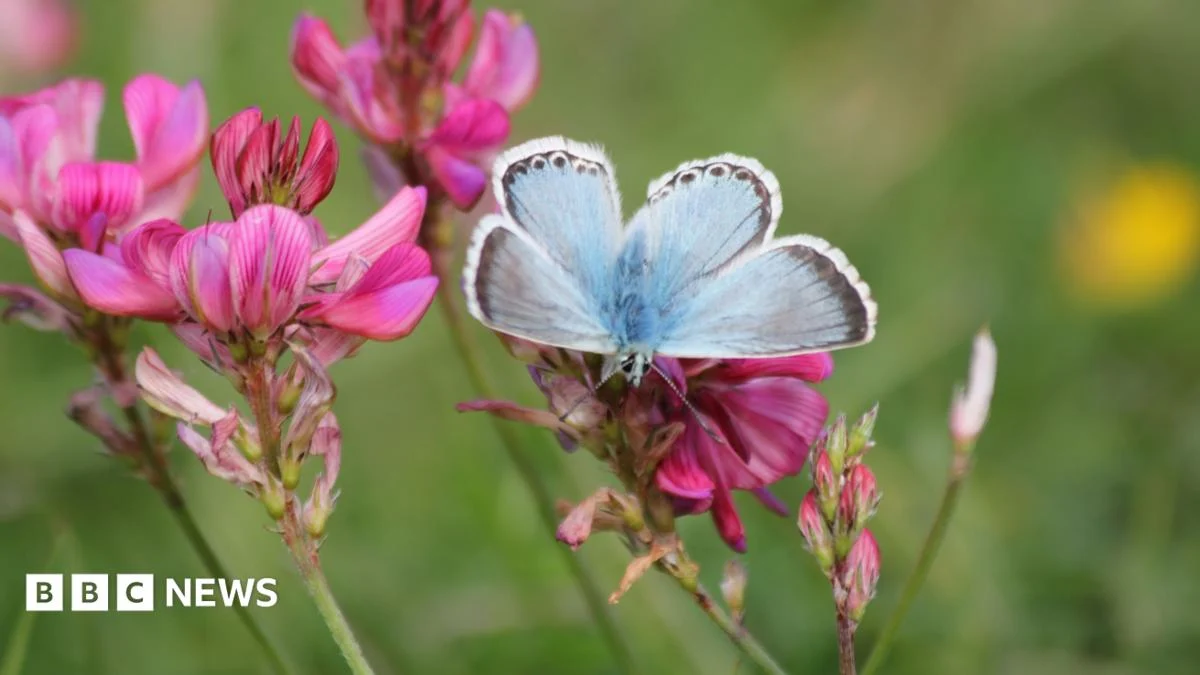
One of the most striking findings came from Fir & Pond Woods, a cherished woodland habitat near Potters Bar, where experts recorded Euides basilinea, a species of planthopper. This inconspicuous but ecologically important insect, typically associated with reedbeds and other wetland vegetation, had no prior documented presence within Hertfordshire. Its sudden appearance suggests a potential range expansion, possibly driven by warmer temperatures enabling it to colonize new areas, or it may have been an overlooked resident whose population has recently become more detectable. Fir & Pond Woods, managed for its diverse habitats including ancient woodland and wetland areas, provides an ideal environment for such species to establish themselves, emphasizing the success of careful habitat management in fostering ecological resilience. The discovery prompts further investigation into the precise conditions that allowed Euides basilinea to thrive in this specific location and whether its presence indicates broader changes in the county’s aquatic and semi-aquatic ecosystems.
Further north, at Aldbury Nowers near Tring, another significant rediscovery thrilled conservationists. Here, the leafhopper Zygina hyperici was recorded for the first time in Hertfordshire since a solitary record dating back to 1916. This century-long absence makes its reappearance particularly noteworthy. Zygina hyperici is typically found on St. John’s wort plants, and its resurgence at Aldbury Nowers, a site celebrated for its chalk grassland and woodland edge habitats, points to the health and specific management of its host plant populations. The site’s rich flora, including various species of St. John’s wort, likely provides the necessary resources for this specialist leafhopper. The long interval between records suggests either a highly localized and previously undetected population, or a successful recolonization event, perhaps facilitated by suitable microclimates or enhanced habitat connectivity. Such rediscoveries are vital indicators of ecological recovery and the potential for dormant populations to re-emerge under favorable conditions.
Adding to the list of long-lost species making a comeback, Arboridia parvula, another type of leafhopper, was also documented at Aldbury Nowers. This species, closely associated with Common Rockrose (Helianthemum nummularium), had not been seen in Hertfordshire since 1976. The Common Rockrose is a characteristic plant of dry, calcareous grasslands, making Aldbury Nowers, with its pristine chalk grassland, an ideal stronghold for Arboridia parvula. Its rediscovery after nearly five decades underscores the importance of maintaining and restoring these specific grassland ecosystems, which are often threatened by development and agricultural intensification. The presence of Arboridia parvula serves as a bio-indicator for the health of its host plant and the broader chalk grassland community, signaling that the conservation efforts at Aldbury Nowers are successfully preserving these valuable habitats.
Beyond these rare leafhoppers and planthoppers, the comprehensive survey also brought to light Agyneta mollis, a tiny, nationally rare money spider. Money spiders, part of the Linyphiidae family, are often overlooked due to their minute size but play crucial roles in ecosystems as predators of small insects. The identification of Agyneta mollis adds a nationally important species to Hertfordshire’s faunal list, emphasizing the value of meticulous and expert-led surveys that delve into less charismatic but equally significant invertebrate groups. Its rarity suggests specific habitat requirements, and its discovery will inform future management strategies to ensure the continued presence of this delicate arachnid within the reserves.
The findings extend beyond minute invertebrates, offering insights into broader trends in insect migration and range expansion. Jersey Tiger moths (Euplagia quadripunctaria), once predominantly associated with the warmer climes of the Channel Islands and coastal southern England, are now increasingly being recorded further north, with regular sightings in Hertfordshire. These distinctive moths, with their striking black, white, and red patterns, are a charismatic symbol of climate change-driven range shifts. Warmer summers and milder winters are believed to be enabling these moths to successfully breed and establish populations in areas previously too cool. Their increasing presence in Hertfordshire’s gardens and green spaces reflects a wider pattern of species adapting to and benefiting from changing climatic conditions, transforming the traditional geographical distribution of many UK invertebrates.
Similarly, Hummingbird Hawk-moths (Macroglossum stellatarum), known for their remarkable resemblance to hummingbirds as they hover to feed on nectar, are also becoming a regular sight across Hertfordshire. These impressive insects are strong migrants, typically arriving in the UK from southern Europe. However, with successive warm summers and extended mild periods, more individuals are successfully breeding in the UK, leading to increased sightings and a greater chance of overwintering. Their presence in Hertfordshire is a clear indicator of warmer average temperatures and provides a tangible link between global climate patterns and local biodiversity observations. Both the Jersey Tiger and Hummingbird Hawk-moth exemplify how climate change is reshaping the natural world, bringing new species to areas where they were once rare or absent.
The project responsible for these crucial surveys, likely a collaborative effort involving local wildlife trusts, expert entomologists, and dedicated volunteers, plays a pivotal role in understanding and responding to these environmental changes. These discoveries, as articulated by a project spokesperson (presumably Townsend, mentioned in the original text), are fundamental to conservation. Townsend stated: "These discoveries help us understand which species are present, where they are found and how they are responding to changes in their environment." This statement encapsulates the scientific imperative behind such surveys. Knowing the precise distribution and status of species allows conservationists to identify areas of particular ecological importance, pinpoint emerging threats, and track the impacts of climate change in real-time. For instance, the northward expansion of species like the Jersey Tiger moth provides empirical evidence of global warming’s effects on biodiversity, while the rediscovery of long-lost species suggests the potential for ecological recovery under targeted management.
Townsend further elaborated on the practical application of this knowledge: "That knowledge is essential for informing the management of our nature reserves effectively and giving wildlife the opportunity to thrive." This underscores the direct link between scientific research and conservation action. For Fir & Pond Woods, the discovery of Euides basilinea might lead to a review of wetland management practices, ensuring that reedbeds and associated habitats are maintained or expanded to support this newly recorded species. At Aldbury Nowers, the reappearance of Zygina hyperici and Arboridia parvula reinforces the value of current chalk grassland management, which likely includes controlled grazing or cutting regimes that promote the health of St. John’s wort and Common Rockrose. For the nationally rare money spider Agyneta mollis, its specific microhabitat requirements will now be a key consideration in future management plans, potentially involving minimal disturbance in certain areas or targeted habitat creation.
These findings collectively paint a dynamic picture of Hertfordshire’s biodiversity, one that is constantly evolving in response to both global climate patterns and localized conservation efforts. The nature reserves in Hertfordshire serve as vital refuges and living laboratories, providing invaluable data on how ecosystems are adapting. They are not merely static pockets of nature but active sites of ecological change and resilience. The dedicated work of monitoring projects ensures that conservation strategies are evidence-based, adaptive, and effective in a rapidly changing world. By meticulously documenting the presence and shifts of these species, conservationists can develop targeted interventions, protect critical habitats, and foster environments where a wider array of wildlife can flourish.
The continued success of these monitoring programmes relies heavily on ongoing support and engagement, both from expert naturalists and the wider public. Citizen science initiatives, where members of the community contribute their sightings and observations, are increasingly valuable in building a comprehensive picture of biodiversity trends. Every recorded sighting, no matter how small or common the species, contributes to the overall dataset that informs conservation decisions. The stories of these rare species and their journeys through Hertfordshire serve as a powerful reminder of the intricate beauty of the natural world and the urgent need for its protection. By staying vigilant and investing in biodiversity research and habitat management, Hertfordshire can continue to be a haven for both familiar and newly arrived species, ensuring a richer, more resilient natural heritage for future generations.



 George Anjay

 Nakalama John

 atisusanti

 Ramos Leo