
 Ramos Leo
The sanctions, targeting trade and financial activities with illegal settlements in the occupied West Bank, have been enacted against a disturbing backdrop of escalating antisemitic incidents across the UK. The Community Security Trust (CST), a vital organisation dedicated to providing security support and monitoring antisemitism within the Jewish community, reported an alarming 1,926 incidents of anti-Jewish hate across the UK in the first six months of 2026. This figure represents a significant 21% increase compared to the same period in 2025, highlighting a growing concern for safety and well-being within the community. The rise in incidents encompasses various forms of hatred, from online abuse and verbal harassment to vandalism and physical assaults, contributing to a climate of anxiety.
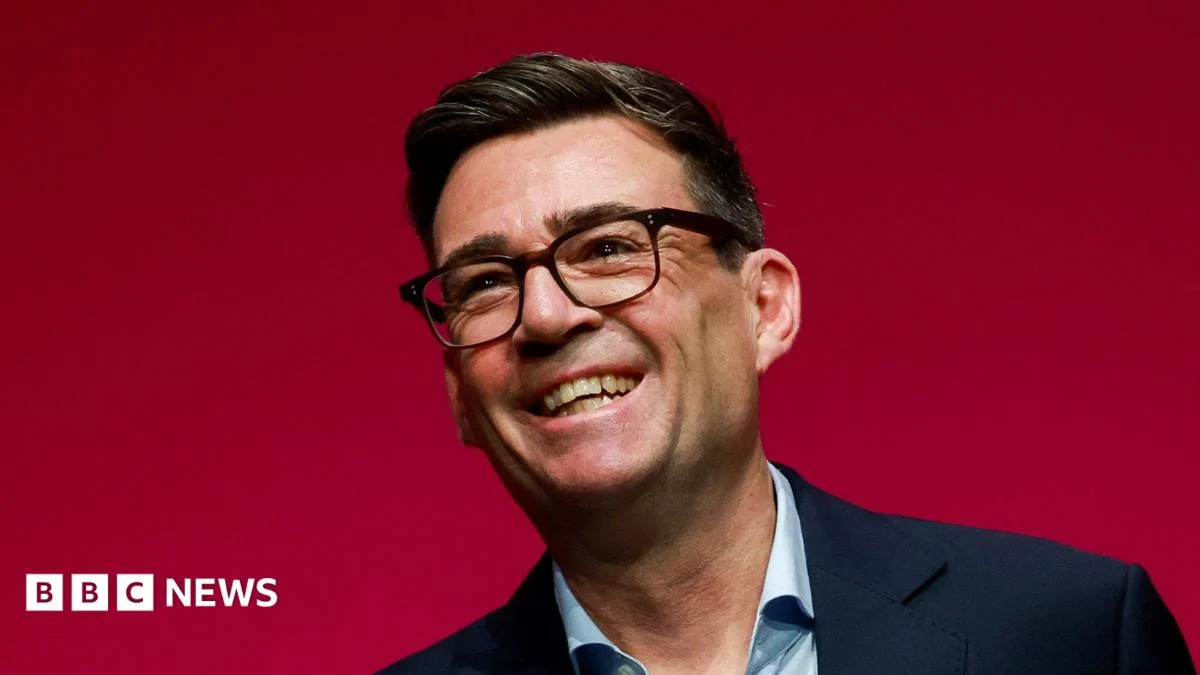
Prime Minister Andy Burnham unequivocally defended his government’s decision in Parliament, asserting that "Britain has to stand for fairness against injustice." He emphasised the moral imperative behind the sanctions, stating, "Where people are being bullied out of their homes… we will always stand with the underdog." This governmental stance underscores a commitment to international law and human rights, positioning the UK as a defender of vulnerable populations in the face of perceived injustices.
While a strong and potentially critical reaction from the United States, Israel’s most powerful ally, had been widely anticipated, President Donald Trump’s initial public comments on Wednesday were notably muted. He told reporters he would engage in discussions with both Israeli and UK leadership to "find out… their thinking" and inquire why the decision had been made "all of a sudden." This relatively cautious response from Washington suggested a degree of strategic ambiguity or a desire for further diplomatic engagement before taking a definitive public position, perhaps reflecting the complexities of US foreign policy in the region and domestic political considerations.
The Palestinian presidency, conversely, warmly welcomed the UK’s decision, hailing it as "an important step towards confronting Israel’s colonial system and its violations against the Palestinian people." This endorsement from Ramallah underscores the international recognition of the settlements as a major impediment to peace and a violation of international law, aligning with the Palestinian Authority’s long-standing advocacy for international pressure on Israel.
Within the UK Jewish community, the sanctions and their potential implications for security have elicited a spectrum of reactions, revealing a significant internal divergence of opinion. Chief Rabbi Sir Ephraim Mirvis, a revered figure, reiterated his condemnation, describing the government’s announcement as "little more than political flag bearing for mendacious anti-Israel rhetoric." Sir Ephraim voiced profound concern that "gesture politics of this kind feeds into an increasingly hostile discourse about Israel, and the cumulative effect of such punitive policies is to further embolden those, at home and abroad, who use hatred as a weapon against Jews." His comments reflect a deep-seated apprehension that legitimate criticism of Israeli policy can, in a volatile environment, inadvertently fuel antisemitic sentiments.
When pressed on Mirvis’s comments, Miliband, while expressing "great respect" for the Chief Rabbi, firmly reiterated his disagreement. He used the platform of BBC Radio 4’s Today programme to articulate his core principle: "anyone who holds British Jews – or indeed Jews around the world – responsible for the actions of the Israeli government, is engaging in antisemitism, pure and simple." This statement aimed to delineate clearly between state actions and communal identity, a distinction that many Jewish organisations also strive to uphold.
Meanwhile, the Jewish Leadership Council (JLC), a prominent umbrella body, issued a stern warning that the government’s decision "risks becoming a de facto boycott of Israel." The JLC went further, accusing Miliband of "yielding to pressure from the most extreme elements of British society," suggesting that the government’s policy was influenced by radical anti-Israel voices rather than a balanced assessment.
The Board of Deputies of British Jews, another leading communal representative body, expressed particular alarm regarding the timing of the announcement, which occurred just before Rosh Hashanah, the Jewish New Year festival. The Board highlighted that this timing brings "concerns for communal security at their highest levels… felt particularly acutely by British Jews." They also cautioned that the deteriorating relationship between the UK and Israel has the potential to "further inflame community tensions here too." However, in a nuanced position, the Board also noted that it had previously warned the Israeli government over the "intolerable settler violence" that harms Israel’s international reputation, indicating a complex stance that acknowledges concerns on both sides.
In response to the heightened security concerns, Greater Manchester Police (GMP) announced on Wednesday that additional resources would be deployed during the Jewish High Holy Days to provide "extra visibility and security" and "ensure everyone can celebrate this time safely." Ch Supt Dave Meeney affirmed, "Our officers will continue working with Jewish communities as we head into this important period for their faith, which we understand is a time which may bring heightened concern for the community." This proactive measure reflects the authorities’ recognition of the community’s vulnerability and the need for reassurance during sensitive periods.
Amidst the continuing reactions to the sanctions on Wednesday, Na’amod, a self-described movement of UK Jews committed to ending Israel’s occupation and supporting the equality of Palestinians and Israelis, warmly welcomed the decision. The group stated it had "waited years for the British government to take action," asserting that "There is no singular Jewish approach to Israel. We reject the contention that [Tuesday’s] UK government measures will contribute to antisemitism." Their statement highlighted the internal diversity of opinion within the Jewish community regarding Israel.
Similarly, the Movement for Progressive Judaism echoed this sentiment, stating that "while the vulnerability of British Jews must not be ignored," measures specifically directed at Israeli settlements "are not the same as an attack on Jews." The movement urged caution, emphasizing, "We should take care not to collapse the distinction between them," reinforcing the critical difference between criticism of Israeli government policy and antisemitism.
The sanctions have already precipitated a significant diplomatic row with Israel. In immediate retaliation, Israel closed the British consulate in East Jerusalem and imposed travel bans on 11 Members of Parliament and a prominent campaigner from entering the country. Further escalating the diplomatic tension, on Wednesday, Israel’s Diaspora Minister Amichai Chikli formally wrote to the head of Israeli border control recommending that several other British-linked organizations and individuals be refused entry to Israel. The proposed blacklist included major humanitarian organizations such as Oxfam, Save the Children, the Norwegian Refugee Council, Islamic Relief Worldwide, and Medical Aid for Palestinians, indicating a broad and severe response from Jerusalem.
Announcing the sanctions in the House of Commons on Tuesday, Foreign Secretary Miliband explained that a "new approach" was necessitated by the advanced plans for the E1 development. This highly controversial settlement project, if completed, would effectively sever the occupied West Bank from East Jerusalem and geographically divide the Palestinian territory in two, making a contiguous Palestinian state virtually impossible. Miliband also told MPs that the UK government concurred there was evidence of ethnic cleansing in areas of the occupied West Bank, directly accusing "settler terrorists" of forcibly driving Palestinians from their ancestral lands. He critically added, "And all too often, the Israeli government has turned a blind eye to this," implying a complicity through inaction.
The new sanctions will specifically target companies and individuals involved in providing services such as construction and financing for settlements. Furthermore, there will be a ban on the advertising of illegal settlements within the UK. Miliband cautioned that the full implementation of these comprehensive measures could take up to nine months to put in place, reflecting the intricate legal and logistical processes involved. The UK’s actions are not isolated, as Canada and France have also moved to ban goods originating from the settlements, indicating a coordinated diplomatic effort among allied nations to address the issue of Israeli settlements in the occupied territories.



 George Anjay
 Nakalama John
 atisusanti
 Roy Suryo
 Nana Banana