Nakalama John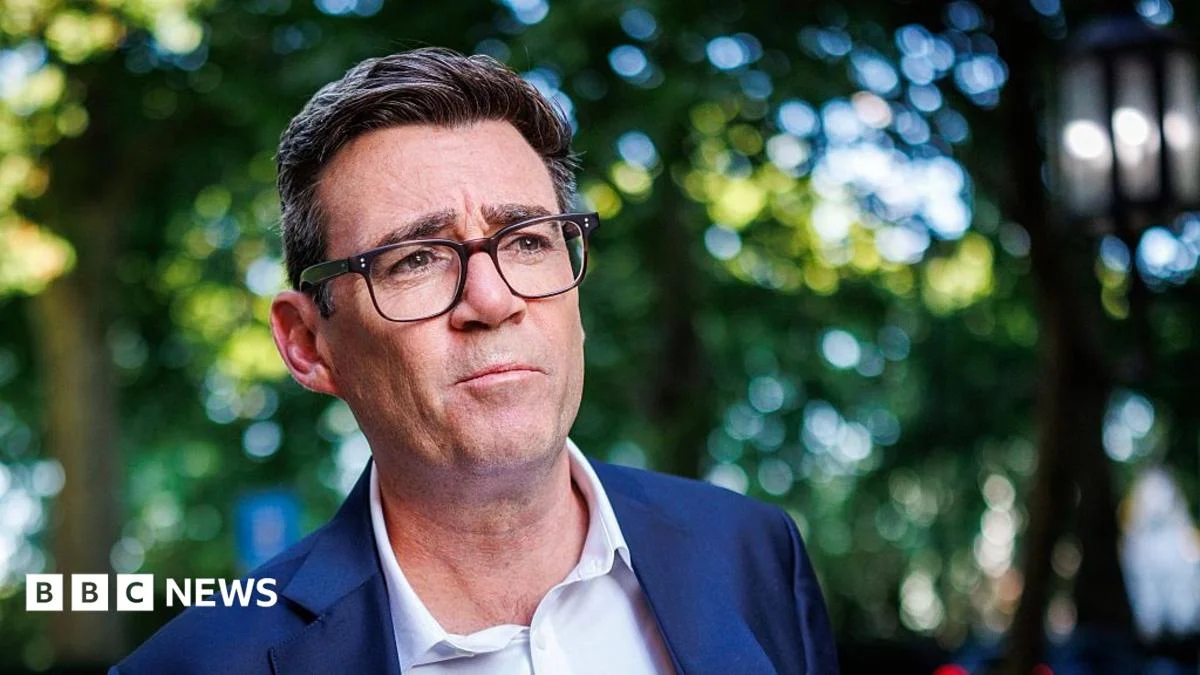
Ahead of a pivotal meeting with some of the United Kingdom’s most influential corporate leaders, Andy Burnham, the Prime Minister, has asserted the urgent need for a "culture shift" in how the nation approaches its commercial landscape. Burnham emphasized a vision where entrepreneurial spirit and risk-taking are not just tolerated but actively championed and supported by both central government and local authorities. He articulated a belief that those individuals and companies willing to innovate and take calculated risks should receive robust backing, while local leaders must be empowered with the autonomy and resources to forge direct, impactful partnerships with businesses in their regions. This strategic alignment, Burnham suggests, is crucial for fostering an environment conducive to investment, job creation, and the widespread transformation of communities across the UK.
This call for a fresh approach comes amidst considerable scrutiny of the current Labour government’s economic policies, particularly those enacted under Burnham’s predecessor, Sir Keir Starmer. Critics have pointed to measures such as increases in employer national insurance contributions and adjustments to the national minimum wage as policies that have demonstrably escalated operating costs for businesses. These changes, while often justified as necessary for social welfare or fiscal stability, have drawn fire from the business community and opposition parties alike, who argue they stifle growth, reduce competitiveness, and disproportionately burden small and medium-sized enterprises (SMEs). The debate centers on the delicate balance between ensuring fair wages and social safety nets versus maintaining a low-cost, attractive environment for business investment and expansion.
Burnham’s upcoming engagement at Number 10 is set to be a high-stakes affair, bringing together the chief executives of several of the UK’s corporate behemoths. The guest list includes industry giants such as BP, Shell, HSBC, Morrisons, Sainsbury’s, BT, Vodafone, and Rolls-Royce, alongside other significant figures from various sectors. These companies represent a vast swathe of the UK economy, encompassing energy, finance, retail, telecommunications, and advanced manufacturing. Their presence underscores the government’s recognition of the private sector’s critical role in national prosperity and the necessity of direct dialogue with key stakeholders. Each CEO will undoubtedly bring a unique perspective on the challenges and opportunities facing their respective industries, from navigating global supply chain disruptions to adapting to technological advancements and regulatory shifts.
In anticipation of these crucial discussions, Burnham articulated his commitment to instilling confidence among the populace. He stated his intention to assure individuals that "if they have a great idea, they’ll get all the support they need to bring it to life." This rhetoric signals a potential shift towards a more proactive and facilitative role for government in fostering innovation and entrepreneurship. He further elaborated on the symbiotic relationship between local leadership and national progress, noting that "When local leaders have the tools to get things done and government works in partnership with business, you can pull in investment, create jobs and transform communities." This decentralization of power, coupled with a collaborative spirit, is presented as a cornerstone of the proposed culture shift. He reiterated the government’s ambition to be "a partner for growth to make every part of Britain better off," suggesting a commitment to equitable economic development that extends beyond the traditional financial hubs.
The agenda for Monday evening is meticulously planned, commencing with a reception for the broader business community, to which local leaders are also invited, fostering a wider network of engagement. This will be followed by a more intimate, private engagement with the senior chief executives at Downing Street. This two-tiered approach allows for both broad outreach and focused, candid discussions with the most influential corporate decision-makers, aiming to build trust and shared understanding.
The timing of these high-level discussions is particularly pertinent, as the UK, like many other developed economies, grapples with significantly higher borrowing costs. These elevated costs present a formidable challenge for governments keen on deploying public funds for business support initiatives or strategic investments in infrastructure and innovation. The global economic landscape, characterized by persistent inflationary pressures and the subsequent tightening of monetary policy by central banks, has driven up the price of debt. For the UK, this issue is exacerbated by domestic factors that have contributed to a perceived erosion of investor confidence.
Official economic data recently offered a glimmer of hope, revealing a surprise boost in the economy in July. This unexpected uptick was partly attributed to a surge in investment related to artificial intelligence (AI), signaling the transformative potential of emerging technologies. However, this positive indicator is tempered by expert predictions of a slowdown in growth during the latter half of the year, primarily due to persistently high energy prices and other inflationary pressures. The volatility of the global energy market, significantly influenced by geopolitical events, continues to cast a long shadow over economic forecasts.
Indeed, the ongoing US-Israel conflict with Iran has precipitated a sharp and sustained jump in global oil prices. This increase, driven by concerns over supply disruptions in a critical oil-producing region, has rapidly translated into higher energy and fuel costs for households and businesses across the UK. The ripple effect is profound: increased operational costs for businesses, reduced disposable income for consumers, and mounting fears that inflation will remain stubbornly high. This inflationary pressure, in turn, intensifies the likelihood that central banks, including the Bank of England, will continue to hike interest rates in their efforts to bring price rises back under control. Such rate increases, while necessary for taming inflation, simultaneously increase borrowing costs for businesses and individuals, potentially dampening investment and consumer spending.
The expectation of further interest rate hikes, coupled with fierce competition for capital from rapidly expanding AI firms seeking funding for extensive research and development, has collectively driven up the cost of government borrowing in numerous countries. However, a significant chorus of economic commentators argues that the UK faces a unique and particularly acute challenge regarding its high government debt. The yield on the UK’s 10-year bonds, a crucial benchmark for assessing the cost of government debt, currently stands higher than that of comparable economies such as the United States, France, and Japan. This disparity suggests that investors demand a higher premium to lend to the UK government, reflecting a perception of increased risk or uncertainty.
Experts attribute this heightened investor caution to a confluence of factors unique to the UK’s recent political and economic history. A period characterized by frequent changes in prime ministers and chancellors, alongside numerous policy U-turns within a relatively short timeframe, has eroded predictability and confidence in the stability of the UK’s economic policymaking. This instability makes investors wary, demanding higher returns to compensate for perceived risks.
Last week, Chancellor John Healey, in an interview with the BBC, openly acknowledged the formidable challenge posed by "historic high" borrowing costs. Despite this, he issued a rallying cry for a "restoration of confidence about Britain," indicating a clear government priority to rebuild trust among domestic and international investors. His comments underscore the government’s awareness of the current fiscal constraints and the need for a coherent, long-term economic strategy.
Conversely, the Conservative opposition has been vocal in its criticism, arguing that the Labour government’s policies have, in fact, exacerbated the problems faced by businesses. Julia Lopez, the Conservative Shadow Business Secretary, articulated this viewpoint, stating, "The way for the prime minister to get businesses thriving, delivering jobs and driving growth is to cut their taxes." She lambasted what she termed "Labour’s jobs tax and employer red tape," asserting that these measures "have been devastating for businesses." Lopez claimed that the consequence of these policies has been "a drying-up of the jobs market, weaker investment and businesses facing ever greater costs." This highlights a fundamental ideological divergence, with the Conservatives advocating for tax cuts and deregulation as primary drivers of economic growth, contrasting with Labour’s focus on strategic investment, worker protections, and government-business partnerships. The upcoming meetings and subsequent policy announcements will undoubtedly set the tone for the UK’s economic trajectory in the months and years ahead, as Burnham seeks to navigate these complex challenges and steer the nation towards his envisioned "culture shift."




 George Anjay
 Ramos Leo
 Nana Banana