
 George Anjay
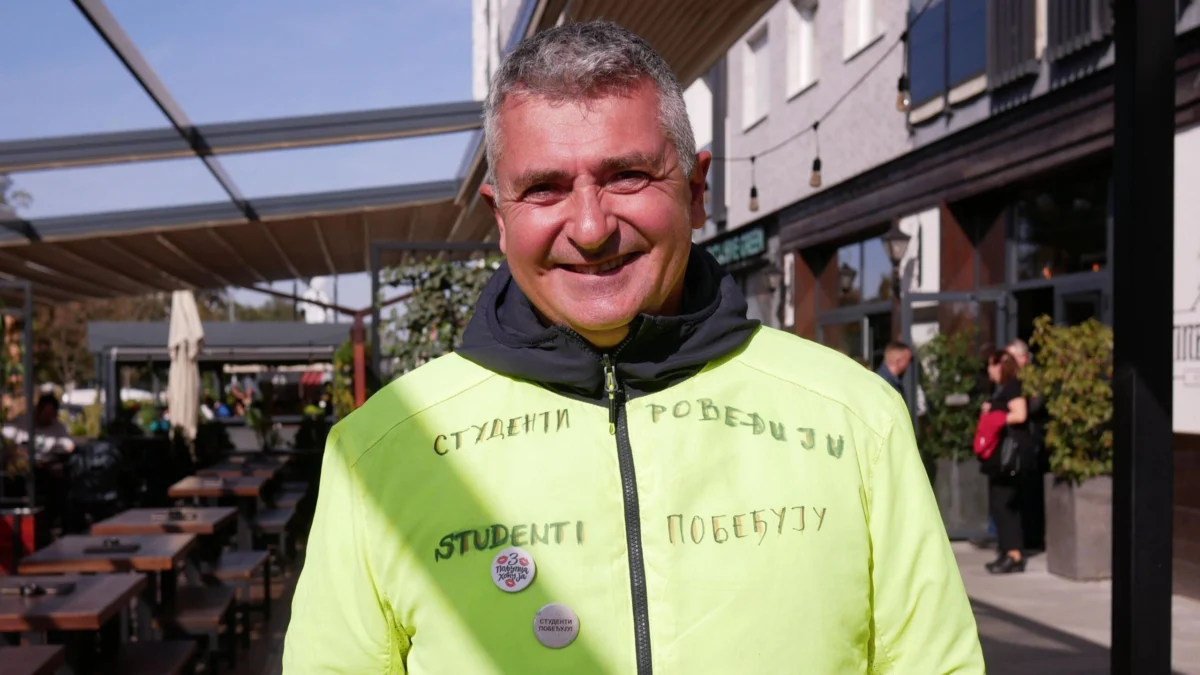
Early reports from Serbia indicate a potentially record-breaking voter turnout in the country’s parliamentary elections, a surge that could signal a significant challenge to the long-standing rule of President Aleksandar Vučić and his Serbian Progressive Party (SNS). Preliminary figures released by Serbia’s election commission showed an impressive 64.9% of eligible voters had cast their ballots by 18:00 local time, two hours before polls were scheduled to close. This high level of participation is being closely watched as it fuels the hopes of the opposition, particularly the "Student List" movement, which aims to unseat Vučić and the SNS, who have dominated Serbian politics since 2012.
The snap elections were called by Vučić following two years of widespread student protests, ignited by the tragic collapse of a train station canopy in 2024, an incident that claimed 16 lives and became a potent symbol of perceived corruption and negligence within Serbia. The Student List movement is campaigning on a platform centered on tackling corruption, advocating for the removal of officials who have violated regulations or cracked down on protesters, ensuring that public enterprises are not led by party loyalists, and restoring impartiality to the public broadcaster. Vučić and the SNS have consistently denied accusations of corruption and attempts to manipulate media influence.

Most political commentators have suggested that a final turnout exceeding 65% would likely favor the opposition, indicating a strong desire for change among the electorate. The image accompanying this report, taken in Novi Sad, Serbia’s second-largest city, shows citizens forming queues outside a polling station, a scene replicated across the country and even in Serbian diaspora communities abroad. Long lines were observed in major cities and smaller towns alike, as well as at polling stations in international locations such as Ljubljana, Munich, Los Angeles, and Chicago. In Paris, voters braved heavy rain to cast their ballots, underscoring the perceived importance of this election.
Tensions are palpable across Serbia, with police cordoning off streets around the Republic Electoral Commission (RIK) in Belgrade. The independent watchdog organization CRTA has reported a significant number of irregularities and an increase in "violent incidents" occurring outside polling stations. While the AFP news agency has reported that police have not confirmed any major election-related violence, the atmosphere remains charged. In a symbolic display of support for the Student List, cars in Belgrade were observed lowering their windows at traffic lights to blast the folk song "I want three kisses," a popular anthem for the movement, chosen because the Student List is listed as number three on the ballot. Young people on nearby pavements were seen dancing to the music, reflecting the vibrant and engaged mood among some segments of the population.
Aleksandar Vučić and his SNS party are positioned as number one on the ballot paper. Having served two terms as president, Vučić is constitutionally barred from seeking a third term in that office. His current strategy is to lead his party with the ambition of returning to the position of prime minister, a role he relinquished in 2017. The 56-year-old leader continues to command substantial support from a significant portion of the Serbian populace, who view him as a strong and decisive leader dedicated to defending the nation’s interests. His supporters often point to the country’s notable economic growth over the past decade and numerous infrastructure improvements as evidence of his effective governance.

Vučić, who supports Serbia’s aspiration to join the European Union while maintaining a stance against imposing sanctions on Russia due to its ongoing conflict in Ukraine, has pledged to increase pensions and public sector salaries, alongside further investment in state healthcare. Campaign posters for the SNS frequently feature imagery of clasped hands representing various professions – doctors and nurses, farmers, construction workers, teachers, and parents – symbolizing unity and collective effort. In his campaign videos, Vučić states, "These are the hands that hold Serbia in their palms… And with these hands, calmly and with dignity, we shall finish what we started." This rhetoric frames the election as a choice between continuity and change.
Concerns about potential electoral fraud by the SNS have led the Student List to delegate at least two observers to each of Serbia’s 8,210 voting stations. Disturbing videos circulating on social media on election day purportedly showed a cafe in the southern city of Niš where ballot papers were allegedly pre-filled, a practice known as "chain voting." Signs in the cafe windows read "private party," and upon realizing they were being filmed, the papers were quickly concealed. Reports have also emerged of attacks on election monitors and journalists at various polling stations, adding to the tension and raising questions about the fairness of the electoral process.
Žarko Korać, a former deputy prime minister and a long-standing critic of nationalist parties in Serbia, including the SNS, described the election as a "unique experiment in European contemporary history." Instead of fielding their own politicians, the student-led assemblies at Serbian university faculties have put forward 250 candidates to contest the parliamentary seats. Ilija Srdanović, a professor at Novi Sad University, is at the forefront of this diverse slate of candidates. The Student List comprises individuals from various backgrounds, including doctors, actors, academics, and sports personalities. Notably, several opposition parties have chosen not to participate in the election, instead urging their supporters to cast their votes for the Student List.

Korać expressed uncertainty about the Student List’s ability to form a cohesive government should they win, stating, "These are people that don’t know each other, you have no idea what their political beliefs are, and we now expect them to create a functioning government. So it’s anybody’s guess what happens after they win." He further cautioned that if Vučić declares victory, the students might not accept the outcome. Korać also suggested that many former loyalists of Vučić in positions of power might be inclined to switch allegiances if the Student List secures a win. A close election result, with both sides claiming victory, could potentially lead to prolonged political instability, lasting for weeks or even months.
The Serbian electoral register comprises 6.45 million voters within a total population of 6.53 million, a statistic that has raised concerns regarding its accuracy. The electorate also includes Serbs residing in Kosovo and dual Serbian citizens from neighboring Bosnia and Herzegovina, all of whom are eligible to vote.
Katarina, a 29-year-old voter, shared her experience of returning from the Netherlands to Serbia specifically to cast her ballot for the Student List, emphasizing her desire to be an active participant in what she perceives as a significant movement. Speaking outside a polling station in Belgrade’s Zvezdara district, she expressed optimism about the Student List’s chances of winning but voiced reservations about whether Vučić would respect such a result. When questioned about the potential challenges of governing with politically inexperienced candidates, she countered that their expertise in their respective fields, unburdened by political baggage, could be a valuable asset.

The additional reporting for this article was provided by André Rhoden-Paul.

 Nakalama John

 atisusanti
 Ramos Leo
 Roy Suryo
 Nana Banana
