Roy Suryo
Warning: This article contains details some readers may find distressing
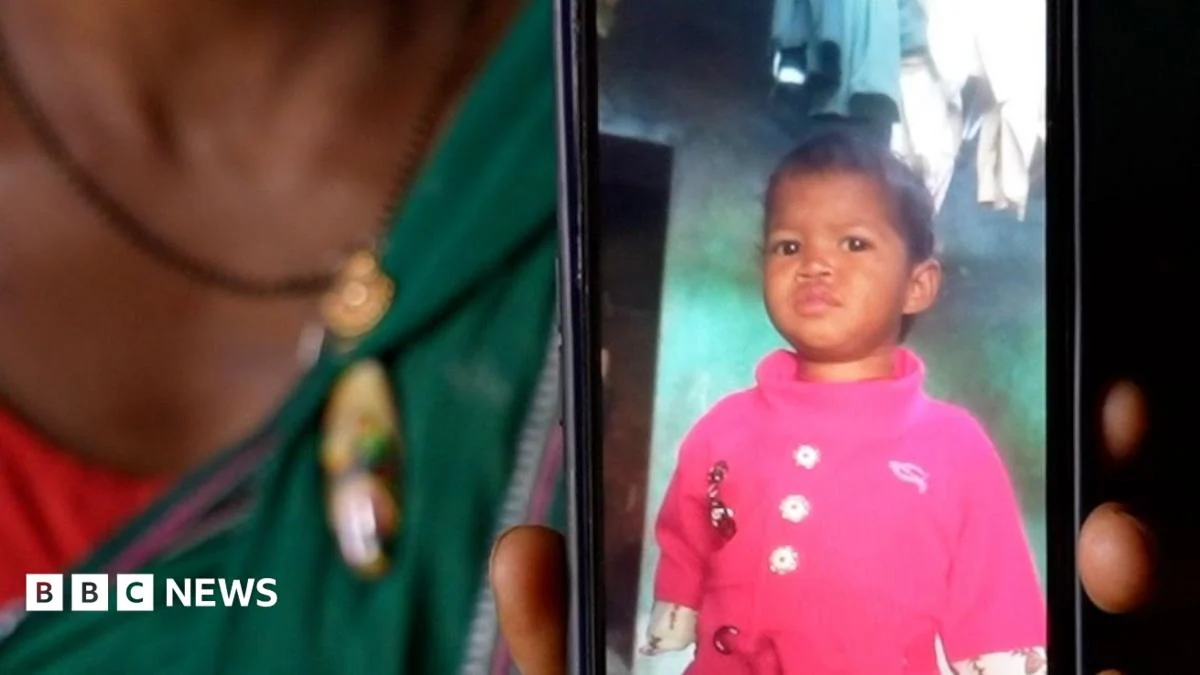
In the pre-dawn hours of a May morning, Bamita Markam’s small body began to convulse. For days, the three-year-old had been consumed by a high fever, her skin erupting in angry, red sores. Her mother, Koushila, had initially sought medical help, receiving a prescription for an ointment. While Bamita seemed to rally briefly, her illness soon returned with renewed ferocity. A local faith healer, summoned to their home in Matla village, administered syrups and tablets, but nothing offered relief. By the time dawn broke, Bamita was gone. "She cried a lot," Koushila recounted, her voice trembling with memory. "She convulsed all night." The family’s desperate attempts to make her drink water proved futile; at one point, she vomited blood. In the somber tradition of their community, they buried her in the dense jungle after midday.
Bamita’s tragic passing is one of at least 32 child deaths recorded since May in a cluster of remote villages within Balaghat district, nestled in India’s Madhya Pradesh state. These devastating losses span an age range from infants of mere months to an 18-year-old, with the majority belonging to the Baiga community, recognized as one of India’s 75 "particularly vulnerable tribal groups." Officials attribute the high mortality rate primarily to measles and malaria, conditions likely exacerbated by pervasive malnutrition and critical delays in seeking and receiving timely medical treatment. Preliminary assessments suggest that approximately eight to 10 deaths were linked to measles, with another 10 associated with malaria, and a significant number of children succumbing to multiple infections simultaneously. The precise cause for every individual fatality, however, remains elusive.
"I have never witnessed an outbreak of this magnitude. My father served as a two-term lawmaker, and I have completed three terms myself, yet neither of us has ever seen so many children perish in such a condensed timeframe," shared Sanjay Uikey, the elected representative for the area since 2013. While disease is undeniably a central factor, the story of these deaths is deeply interwoven with the profound challenges of remoteness. In the sparsely populated, forested tracts of Balaghat, an area once a stronghold of Maoist insurgency, accessing a basic health center is an arduous undertaking. The annual monsoon season transforms the already difficult terrain into an almost insurmountable obstacle. Lush paddy fields shimmer against the backdrop of red earth and low, verdant hills. Narrow dirt tracks, the lifelines of these communities, snake between cultivated fields and humble mud dwellings, often becoming treacherous, slippery, and impassable during periods of heavy rainfall.
The surrounding countryside may be bountiful, but the homes are often rudimentary. Most Baiga households are constructed with low mud walls, rough timber, and bamboo, topped with tiled or thatched roofs that are frequently patched with plastic sheeting to ward off the relentless rain. Some of these homes are accessible only via these challenging tracks. Medical professionals investigating the escalating deaths have been forced to navigate the mud in tractors. During a recent visit, the stark reality of their isolation became palpable as we walked nearly 2 kilometers uphill to reach some of the more remote dwellings. The surrounding jungle, a silent witness to these tragedies, was dotted with the unmarked graves of children who had lost their lives.
The nearest state-run hospital, a 100-bed facility situated in Birsa, is approximately 70 kilometers away. For families lacking private transportation, reaching this medical center can involve navigating muddy tracks, relying on makeshift bamboo stretchers, or making the precarious journey on a motorcycle – a trip that invariably means a day’s lost wages. When Bamita fell critically ill, her family was unable to get her to the hospital. The heavy monsoon rains had rendered the tracks muddy and slippery, and the family possessed no means of transporting her. "If I had been able to take her to the hospital, she might have lived," Koushila whispered, her grief a palpable presence. Her elder daughter, Ankita, a bright six-year-old, continues to ask about her departed sister. Like many children in these villages, Ankita has been told a comforting, yet ultimately misleading, explanation: "Mata aa gayi" – the goddess has arrived.
For certain Baiga families, specific illnesses, such as chickenpox, are perceived not as diseases to be treated but as the arrival of a benevolent disease goddess who must be appeased. This often involves a ritualistic period of seven to nine days, during which the family bathes and offers cool water and neem leaves to the local deity. Many hold a deeply ingrained belief that attempting to treat the patient before the completion of this sacred ritual could bring about death. For weeks, these traditional beliefs significantly influenced how families responded to their children’s illnesses. The full, devastating scale of the crisis only began to emerge gradually.
On July 21st, Parshuram Dhurwey, a local village council chief, received the heartbreaking news that two children from the same household in Bondari village had passed away. The following morning brought further grim tidings of another death. He promptly alerted local officials and journeyed to the affected area. The scene that greeted them was devastating. "Every other child was sick," Dhurwey reported, his voice heavy with the memory. "They had fever, they had rashes. Many were undernourished." Upon arrival, government medical officer Nimish Gautam encountered severely dehydrated children. The first case he examined was a teenage girl suffering from several days of fever and rash, her blood sugar levels perilously low. Her family, however, resisted the health team’s attempts to conduct a thorough examination. "Police were brought in to persuade them to take her to a health center. The family still refused," Gautam explained. "They stated that if we took her for treatment, she would die. So, we kept her under observation, and thankfully, she recovered." In one village, Dhurwey recounted, officials were compelled to forcibly enter homes and transport five critically ill children to the hospital. All five subsequently recovered.
By the time the outbreak became undeniably apparent to local authorities, children had already been succumbing to illness for weeks. By September, Dhurwey noted, 10 children, ranging in age from approximately 18 months to 14 years, had died across the four villages under his council’s jurisdiction: Adori, Kundekasa, Bondari, and Usri. The symptoms were alarmingly consistent and frustratingly non-specific: fever, rashes, profound weakness, severe dehydration, and, in some instances, convulsions. Complicating matters further, some children presented with scabies, fungal infections, or bacterial skin infections alongside suspected measles and malaria. In a district where malaria is endemic, a fever could easily be indicative of multiple concurrent illnesses.
Sagnibai of Bondari village experienced the unimaginable grief of losing two children within a harrowing 24-hour period. Her daughter, Lamnin, aged 12, died on June 26th, followed by her one-year-old son, Sahil, the very next day. A local healer had attributed their ailments to "Mata," and the family, like many others, lacked the financial resources or transportation to seek medical intervention. Her husband, Samaroo Dhurwey, recollected nights where their children’s bodies felt as though they were "on fire." They were unable to digest food, and their young lives were extinguished within the confines of their home. Mahasingh Parte of Matla village suffered the equally devastating loss of two children – a six-year-old girl and a four-year-old boy – within two days of each other. The family faithfully followed the instructions of a faith healer, who had explicitly advised against taking them to the hospital. "He said don’t take them to hospital," Parte recalled. Parte, a landless farm laborer, earns a meager 200 rupees (approximately $2 or £1.58) on a good day, with work being particularly scarce during the monsoon season. Despite a small primary health center being a mere 5 kilometers away, he had never visited it. Poverty and geographical isolation had cruelly stacked the odds against his children.
As the death toll continued to rise, the question of what was making the children sick became increasingly complex. An investigation conducted by the ICMR-National Institute for Tribal Health Research (NIRTH) tested 10 samples collected from the affected villages on August 7th. Six of these samples tested positive for measles, while four returned negative results. Measles, a highly contagious viral illness, typically manifests with high fever, cough, runny nose, and red, watery eyes, followed by a characteristic rash. While most children recover, severe malnutrition significantly elevates the risk of complications, including pneumonia, severe diarrhea, dehydration, and inflammation of the brain. The infection also compromises the immune system, leaving children vulnerable to secondary infections, a danger compounded by the presence of malaria. However, medical professionals cautioned that malaria did not necessarily follow measles, and not every instance of fever and rash indicated measles. Instead, a confluence of multiple infections and underlying vulnerabilities was at play.
"Sometimes, there is no single factor behind the deaths," Dr. Gautam stated. "We have malnourished children, and there is a complete lack of health education and hygiene at home." The Baiga villages, while remote, are not entirely isolated from the currents of modern India. Seasonal migration sees families travel to other states for work, such as chilli picking. Children are exposed to content on smartphones, and many families benefit from basic, solar-powered electricity, maintain bank accounts, and, in some households, have access to piped water. Nevertheless, malnutrition remains a pervasive issue, with children often receiving inadequate nutrition. A five-year-old who recently succumbed to measles weighed approximately 5 kilograms. An earlier ICMR study revealed that among Baiga children in Madhya Pradesh, an alarming 61% were underweight, 44.7% suffered from stunting, and 37% were classified as wasted.
Dr. Gautam posits that malnutrition is frequently driven by early marriage and motherhood, with some girls becoming mothers as young as 16 or 17, while their own bodies are still developing. This can lead to closely spaced pregnancies, premature births, and low birth weight infants. Young mothers often struggle to breastfeed and adequately care for their children. Dietary deficiencies are another significant concern. Many families subsist on a monotonous diet primarily comprising rice and lentil soup, lacking sufficient protein and dietary variety. Historically, the Baiga diet was more diverse, incorporating forest produce, millets, locally grown foods, fish, and other animal proteins, according to P. Shirisha, a public health researcher. "However, reduced access to forests and land, coupled with changing cultivation practices and an increasing reliance on farm labor, has narrowed that food base, leaving families increasingly dependent on staples," Shirisha explained. "This diet is deficient in adequate pulses, vegetables, fruits, and animal-source foods, resulting in insufficient protein and micronutrients crucial for optimal child growth." Studies of Baiga households indicate that these nutritional deficits are exacerbated by poor utilization of public health and welfare services. The stark disparity between services outlined on paper and their actual implementation on the ground was evident: the state’s response arrived weeks after the deaths began, and health teams struggled to reach and gain the trust of families.
Once the severity of the outbreak was acknowledged, health workers initiated door-to-door screenings in the affected villages. Mobile medical units, equipped with oxygen, nebulizers, suction equipment, malaria testing kits, and essential medicines, were dispatched to over 20 impacted villages. Dr. Neeraj Sharma, a mobile doctor, reported that teams routinely attended to more than 50 patients daily, with approximately half being children. They conducted 10 or more malaria tests each day, occasionally identifying two positive cases. According to Dr. Gautam, over 6,200 patients, predominantly children, received home-based treatment, with more than 630 referred to district hospitals. Approximately 600 patients were discharged, while around 30 remained admitted.
Vaccination became an urgent priority. Despite official records indicating 90-95% coverage in some areas, health workers encountered children without vaccination records and families hesitant to vaccinate. Consequently, authorities extended the measles-rubella (MR) vaccination drive to all children under 15, irrespective of their recorded status. Of the approximately 40,000 children identified in the Birsa block, around 27,000 received the vaccine, Dr. Gautam reported. Of the block’s 180 villages, roughly 67 are predominantly Baiga and are considered the most vulnerable. However, vaccination represents only one facet of the necessary protection for these children. Broader questions persist regarding the effective delivery of basic nutrition and other essential health services to those most at risk. A 2024 audit by India’s Comptroller and Auditor General uncovered "serious irregularities" in Madhya Pradesh’s distribution of take-home rations, intended to supplement the diets of children aged six months to three years, pregnant women, and lactating mothers. The audit highlighted issues related to beneficiary identification, production, transportation, and distribution.
The outbreak has now subsided. Officials reported that the last child death occurred more than two weeks prior to their late September assessment, and health teams continue their village visits. In Kundekasa, a medical camp that once saw around 120 children daily is now attending to fewer than 10. Back in Matla, Bamita’s mother fondly recalls her daughter, who would ask for money for snacks, play with her sister, and run inside whenever cars approached, as vehicles instilled a sense of fear in her. "I had hope she’d study and make something of herself. I never regretted I didn’t have a boy," Koushila said, her gaze drifting towards Ankita, her surviving daughter. "I want more kids," she whispered, her voice thick with emotion. "I feel alone. Ankita is alone. She keeps crying for her sister."




 George Anjay

 Nakalama John

 atisusanti

 Ramos Leo