George Anjay
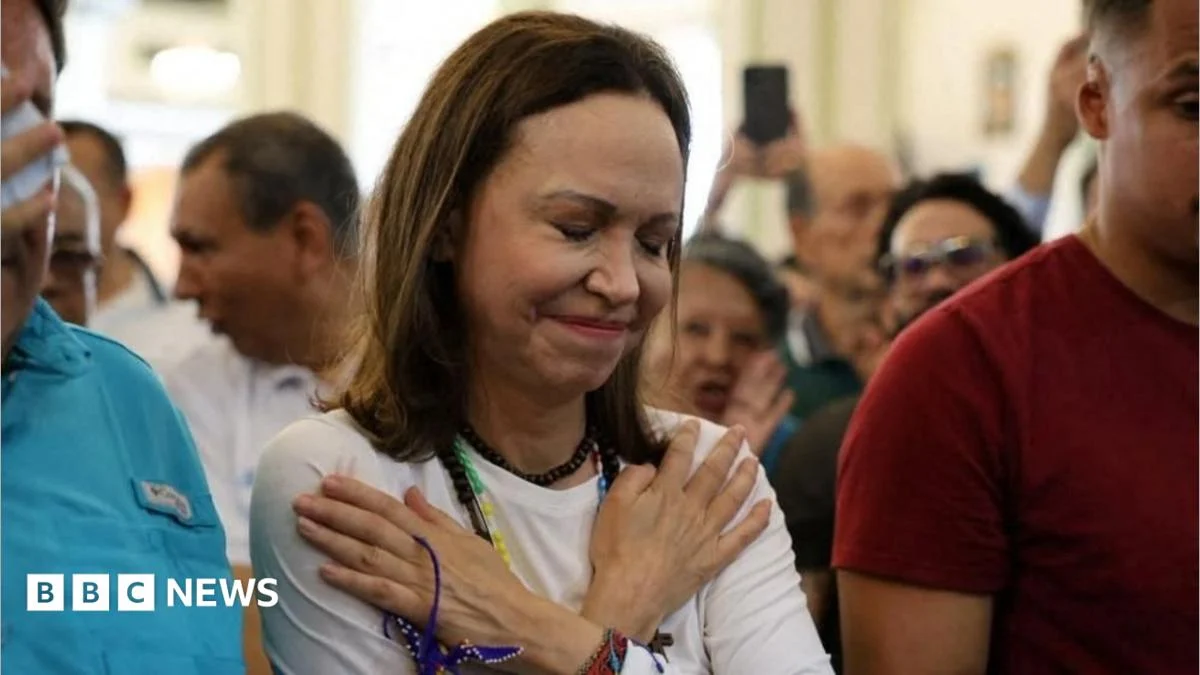
María Corina Machado, a pivotal figure in Venezuela’s opposition, has triumphantly returned to her homeland after an extended period of over 10 months in exile, stepping back into a deeply fractured political arena. Her arrival, announced on the social media platform X with the poignant declaration, "I am here. With you," marks the culmination of a series of thwarted attempts to re-enter the country. Machado’s departure in January, a clandestine journey by speedboat under the veil of darkness to accept the Nobel Peace Prize in Norway, preceded significant political upheaval. Shortly after her exit, the United States government, under the Trump administration, imposed sanctions on President Nicolás Maduro. In a move that reshaped the political landscape, the Trump administration subsequently endorsed Delcy Rodríguez, Maduro’s deputy, as the interim president. Rodríguez’s ascension was followed by the signing of an oil agreement perceived to be highly advantageous to the United States.
The return was met with an outpouring of support. On Sunday, Machado was photographed participating in a Mass at a church in the Venezuelan state of Lara, enveloped by a crowd of jubilant supporters whose embraces and clasped hands conveyed a powerful message of solidarity. From there, she embarked on a journey to the capital, Caracas, leading a vibrant caravan of cheering adherents. The route to the capital became a testament to her widespread appeal, lined with an ever-growing number of supporters eager to catch a glimpse of their leader. As night fell, Machado was captured on camera, a radiant smile gracing her face as she leaned out of a car’s sunroof, her triumphant entry into Caracas a powerful visual statement.
Her close ally, Edmundo González, a former presidential candidate who ran in her stead, confirmed her arrival, expressing his profound joy in a statement that resonated with hope: "I am thrilled to announce to you that our leader, my dear María Corina, is on Venezuelan soil." González emphasized the historical significance of this moment, stating, "Today is a very important day for Venezuelans. Our sovereign voice returns with her to lead and guide this process!" He further pledged to join Machado in Venezuela imminently, signaling a renewed push towards the nation’s liberation.
The path to Machado’s return was fraught with obstacles. An advisor revealed in September that Machado had made seven unsuccessful attempts to re-enter Venezuela in the preceding weeks, each met with denial. Reports circulated suggesting United States involvement in these delays, allegations that the US government has since refuted. The specifics of Machado’s immediate plans remain undisclosed, yet her previous pronouncements indicate an unwavering resolve to contest the presidency should elections materialize. Her re-entry into her home country, it appears, was contingent on an approval that has now been granted by the Trump administration.
Machado, a fervent advocate for democratic principles, achieved a resounding victory in an independent presidential primary election held in 2023, a contest conducted outside the purview of the Maduro government’s official electoral apparatus. Her triumph was decisive, securing over 90% of the vote. Despite this overwhelming mandate, the Maduro administration moved to disqualify her from participating in any future elections, citing accusations of fraud and tax violations. Machado has vehemently denied these charges, denouncing them as politically motivated fabrications. In the period leading up to her flight, she sought refuge in safe houses, a testament to the perilous environment she faced before her escape to Norway.
In the context of the 2024 presidential election, Machado’s compatriot and ally, Edmundo González, stepped forward to represent the opposition against Nicolás Maduro. The electoral commission, known for its close alignment with the ruling party, declared Maduro the victor, conspicuously refraining from releasing detailed vote tallies. The opposition, however, contested this outcome, presenting evidence in the form of voting tallies that they claim demonstrated González’s victory.
Adding another layer of complexity to the narrative, Nicolás Maduro was reportedly removed from Venezuela by US forces in January and is currently detained in New York, facing serious charges including drug trafficking, weapons offenses, and torture. He has maintained his innocence, pleading not guilty to all charges.
A spokesperson for Machado characterized her return as "a major step toward a democratic transition and free, fair, and verifiable presidential elections in the near future." The spokesperson, David Smolansky, extended gratitude to "President Donald Trump, Secretary of State Marco Rubio, the US Government, Congress, and allied governments for their continued leadership and support."
In his own remarks to reporters on Sunday, Donald Trump stated, "I don’t know anything about" Machado’s return, while expressing his hope for her safety. He offered a brief endorsement, calling her "a very nice woman" and referencing her Nobel Prize gift, saying, "She gave me her Nobel Prize, so how can I say anything else? And I hope she’s safe." This mention of the Nobel Prize carries a unique historical context, as Machado had visited the White House in January and presented her Nobel Prize award to Trump. The committee that bestows the prize had previously stipulated that it "cannot be revoked, shared, or transferred to others."
U.S. Secretary of State Marco Rubio lauded his country’s instrumental role in facilitating Machado’s return, attributing it to "US supported reconciliation talks." Rubio highlighted the tangible outcomes of these negotiations, stating, "which has already seen hundreds of political prisoners freed and hundreds of political opposition figures return from exile." He concluded by expressing his expectation that "all political actors to support these talks which represent the best chance Venezuela has had in thirty years to peacefully achieve not just a free and fair election but an enduring democracy."

 Nana Banana
 atisusanti
 Roy Suryo
 Nakalama John