
 Nana Banana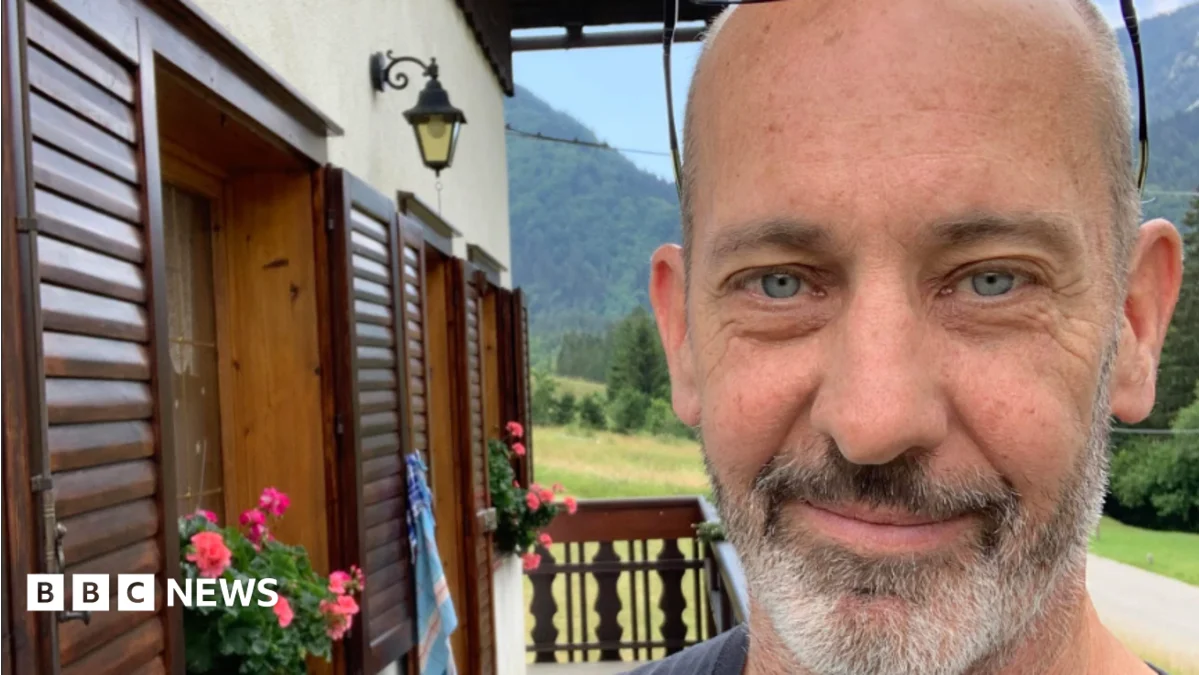
Fast forward approximately seventeen years, and the 200,000 shares initially granted to Lavoie have undergone an astronomical appreciation, now boasting a valuation of approximately $23 million (£17 million). At 63 years old, Lavoie candidly expresses his readiness to begin liquidating these assets as soon as market conditions and company regulations permit. "Every chance I get going forward, I’ll sell a little bit more," he revealed in an interview with the BBC, articulating a pragmatic approach to managing his newfound wealth. He elaborated on the rationale behind his decision, explaining that "The shares have been going up so radically it keeps messing up my life plans – you really can’t know the future, so it’s better to sell early and in intervals." This perspective underscores a cautious financial strategy, prioritizing securing gains and diversifying risk over chasing potentially endless, but uncertain, future appreciation.
Lavoie’s extraordinary financial trajectory is by no means an isolated incident within the ranks of SpaceX. Indeed, countless individuals who joined the pioneering space exploration company in its earlier days have witnessed the dramatic escalation in the value of their equity holdings. Elon Musk, the visionary founder of SpaceX, proudly asserted on Fox News that the company’s momentous listing on the stock market in June had likely transformed "several thousand" of its dedicated employees into millionaires. This remarkable feat extended even to staff "who were working on the production line," highlighting the widespread impact of SpaceX’s success across all levels of its workforce. Reports circulating in the financial media further solidified this narrative, estimating that a staggering 4,400 new millionaires were minted as a direct consequence of the company’s public debut.
Unlike the typical trajectory of many newly-listed firms, SpaceX implemented a structured, staggered release of its shares, a strategy often employed to manage market volatility and prevent a sudden flood of stock that could depress prices. The initial tranche, comprising 20% of the shares, became available for trading on August 6th, with subsequent batches scheduled for release throughout the remainder of the year. This phased approach allows for a more controlled market entry and provides shareholders with multiple opportunities to evaluate their investment strategy. Whether individual shareholders opt to divest their stake at the earliest opportunity or choose to retain their shares for potential larger gains down the line remains a deeply personal and financially complex decision. While Lavoie clearly leans towards prudent, incremental selling, others might adopt a more bullish stance, banking on SpaceX’s continued growth and future innovations.
SpaceX officially made its debut on the Nasdaq exchange in June, an event that instantly etched its name into financial history as the biggest initial public offering (IPO) ever recorded. The listing valued the innovative rocket and satellite firm at an astonishing figure exceeding $2 trillion, a valuation that momentarily propelled its founder, Elon Musk, to the unprecedented status of the world’s first trillionaire. This dizzying peak, however, proved fleeting. As is common with such high-profile listings, the initial fervor cooled, and the stock experienced a natural correction, causing Musk’s colossal fortune to dip back below the trillion-dollar milestone within a matter of weeks. Such rapid fluctuations are a stark reminder of the inherent volatility in the stock market, particularly for companies operating at the cutting edge of technology and ambition.
In its inaugural financial report as a publicly traded entity, released this week, SpaceX unveiled a mixed bag of results that provided investors with their first glimpse into the company’s performance post-IPO. The firm’s quarterly revenue nearly doubled from the previous year, soaring to an impressive $7.8 billion (£5.8 billion). However, this impressive top-line growth was overshadowed by a dramatic escalation in spending, which ballooned to $18.3 billion – more than six times the expenditure recorded in the same period a year earlier. Consequently, SpaceX posted a net loss of $143 million in the three months ending in June, contributing to an overall loss of $2 billion during the first six months of the year. These figures painted a picture of aggressive investment and expansion, characteristic of a company pouring resources into ambitious, long-term projects.
Despite the significant losses, Elon Musk remained characteristically defiant and optimistic during an earnings call, pushing back against skeptics and reiterating his unwavering confidence in the company’s trajectory. "I think people are really underestimating Starlink," Musk declared, emphasizing the immense potential of SpaceX’s satellite internet service. He highlighted Starlink as the only currently profitable segment of the company and boldly predicted its capacity to one day deliver a majority of the world’s internet connectivity. This vision underscores Starlink’s strategic importance, not just as a revenue generator but as a foundational element of SpaceX’s broader mission to connect the globe.
Nonetheless, the release of the earnings report had an immediate and palpable impact on investor sentiment, leading to a noticeable tumble in the company’s share price. Investors were generally spooked by the colossal amounts of capital being funneled into artificial intelligence (AI) initiatives, a domain where the returns are often long-term and speculative. This apprehension reflects a broader market concern regarding the sustainability of sky-high valuations for companies with significant exposure to AI development, especially those that are not yet demonstrating consistent profitability in that segment.
For Andre Lavoie, the proceeds from selling a portion of his shares are earmarked for a passion project closer to earth: the renovation of a charming hotel he owns in Pontebba, a picturesque town nestled in Italy’s northeastern Friuli region. Beyond hospitality, he also plans to invest in establishing a small brewery, fulfilling an entrepreneurial dream. His ambitions, however, extend beyond personal enrichment. Lavoie has articulated a clear priority for the future: raising awareness about air pollution in the region, a cause he intends to champion in partnership with a local environmental group, demonstrating a commitment to giving back to the community that will benefit from his investment.
Reflecting on his entry into SpaceX, Lavoie recalled being interviewed by Elon Musk himself, a testament to the hands-on approach of the company’s founder in its early days. "He’s a very charming person when he wants something," Lavoie recounted, offering a glimpse into Musk’s persuasive charisma. While he respectfully declined to comment on Musk’s often-controversial politics, stating "that’s his business," Lavoie remained unequivocally positive about the company itself. "I’ve always been happily supportive and impressed, and would work hard with those incredible people again," he affirmed, highlighting his deep admiration for SpaceX’s mission and its dedicated workforce.
However, not all market observers share Lavoie’s unreserved optimism regarding SpaceX’s valuation. Some analysts contend that SpaceX’s market capitalization is significantly overblown, suggesting it is worth less than half its current stock market price. A particular point of concern for these skeptics is the company’s intricate ties to xAI, Elon Musk’s nascent artificial intelligence venture, which they warn carries substantial financial risk. This apprehension forms part of a broader worry permeating Wall Street that the stratospheric valuations assigned to AI-linked firms, including not only SpaceX but also OpenAI and Anthropic, could prove to be inflated and unsustainable in the long run.
Sinead O’Sullivan, an economist with a background that includes work for Nasa, offered a particularly pointed critique in June, telling the BBC that she views SpaceX primarily as an "Elon Musk ego project." Her perspective suggests that investors are, to a significant extent, "buying a share of the Elon Musk brand more than any kind of space industry," implying that the company’s valuation is heavily influenced by its charismatic founder’s personal appeal and reputation rather than purely fundamental business metrics.
Conversely, Ron Epstein, a respected aerospace analyst at Bank of America Securities, offers a more nuanced interpretation of the recent share price swings. He argues that the volatility says more about the broader market dynamics than it does about the intrinsic health or performance of SpaceX itself. "A lot of it has to do with macro trends," Epstein explained, suggesting that external economic factors and market sentiment play a larger role. He emphatically states, "None of it really has anything to do with what’s going on fundamentally at the company."
Epstein further contends that investors who categorize SpaceX purely as an AI bet are fundamentally missing the intricate and multifaceted nature of its operations. "They’re not just a compute provider. They’re not just an AI company. It’s a far more complicated picture than that," he stressed, urging a more comprehensive understanding of the company’s diverse endeavors. He highlights SpaceX’s revolutionary impact on the economics of space travel, noting that the company has dramatically slashed the cost of reaching orbit from an estimated $10,000-$20,000 per kilogram to approximately $2,000 with its Falcon 9 rocket. This technological breakthrough, he eloquently concludes, signifies that "they have built a railroad to space," a foundational infrastructure that promises to unlock unprecedented opportunities in space exploration and commerce.
Despite the varying expert opinions and the inherent volatility of the market, Andre Lavoie, for his part, remains unperturbed. His decision to incrementally sell shares is rooted in personal financial planning, not a lack of faith in the company he helped build. He firmly believes that "The solid business model of SpaceX will prove itself to be worth the investment," a conviction that persists even as he prudently takes some of his own substantial winnings off the table, securing a future that his early commitment to SpaceX made possible.


 atisusanti
 George Anjay
 Nakalama John
 Ramos Leo