Nana Banana
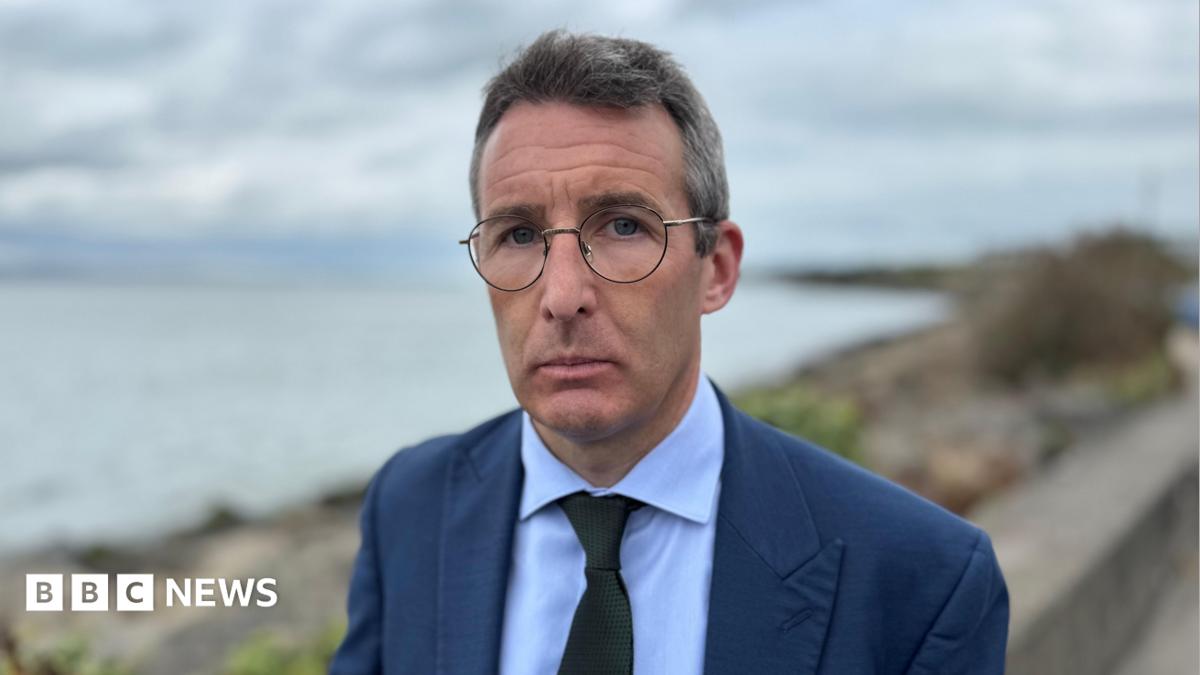
Northern Ireland’s Agriculture Minister, Andrew Muir, has issued a stark declaration, stating that "the days of the Ulster Farmers’ Union (UFU) dictating government policy are over." This assertive pronouncement comes amid a period of intense scrutiny and conflict following a controversial cattle cull in County Tyrone, which has ignited widespread anger within the farming community and led to a vote of no confidence against the Department of Agriculture, Environment and Rural Affairs (Daera) leadership. The minister’s statement signals a significant shift in the traditionally powerful dynamic between government and the influential farming lobby, suggesting a new era where policy decisions will be made independently of specific vested interests.
The escalating tensions reached a critical point after the UFU, Northern Ireland’s largest farming representative body, extended a vote of no confidence to include not only the department but also Minister Muir himself, the permanent secretary, and the chief veterinary officer. This unprecedented move reflects deep-seated dissatisfaction within the union regarding the handling of a recent incident where 51 cattle were culled in Fivemiletown, County Tyrone, in June. The manner in which the animals were dispatched – shot within earshot of members of the public – sparked considerable public outcry and condemnation. The UFU President, John McLenaghan, voiced serious concerns about the impartiality and scope of Daera’s internal review into the incident, arguing that its independence could not be guaranteed.
The contentious cull was the culmination of a protracted animal welfare case. Inspections on the Fivemiletown farm dating back to 2022 had uncovered "grotesque" conditions, as described by Minister Muir, including the discovery of 33 animal carcasses, feed contaminated with urine and faeces, and severely emaciated animals. The farmer responsible was subsequently found guilty of multiple animal welfare offences in May and received a lifetime disqualification from keeping animals. On June 8, a court issued a deprivation order, legally mandating that the farmer’s remaining livestock be removed from his ownership. This order legally obliged Daera to ensure the animals were disposed of.
Following the court order, the farmer was initially granted two weeks to appeal the sentence, or to sell, transfer, or give away his stock. This grace period was then extended by an additional week. Despite these extensions, only 21 animals were removed from the farm. By June 29, when the extended grace period had elapsed and with 51 animals remaining, Daera’s humane slaughter team arrived at the farm to carry out the deprivation order by shooting the cattle. The operation concluded on June 30. The proximity of the cull to residential areas and the distressing sounds witnessed by locals led to immediate complaints from a local councillor, quickly escalating into broader political and farming sector criticism regarding the operational choices made by Daera.
Minister Muir, a member of the Alliance Party, acknowledged the "extremely challenging" situation he inherited within the department, attributing many of the existing issues to "wrong government policy previously." His assertion of not being "beholden to one vested interest" is particularly significant in Northern Ireland, where agricultural policy has historically been heavily influenced by a small number of powerful farming groups. This statement signals a potential shift towards a more balanced approach that considers wider environmental and societal concerns alongside traditional farming interests. He also dismissed some of the rhetoric heard at a protest outside Stormont on Monday as "pure electioneering," urging his fellow politicians to "calm it down" amidst heightened emotions.
The intensity of the situation has unfortunately led to serious threats against the minister. Earlier this week, Muir revealed that a death threat had been made against him, following a previous one in June. Emphasizing the gravity of such actions, he warned that "the police will be coming looking" for those who threaten or abuse public figures. The Police Service of Northern Ireland (PSNI), in a statement to BBC News NI, confirmed its commitment to supporting politicians, stating: "we will continue to do all we can to ensure that all of our politicians are supported and that they can undertake their role free from fear and intimidation." This highlights the increasingly toxic environment in which political decisions are being debated.
The civil servants’ union, FDA, also weighed in on the UFU’s actions, with Robert Murtagh describing the vote of no confidence against named officials as a "performative stunt." He argued that "naming and targeting officials does not aid understanding and undermines the need for constructive dialogue." Murtagh further suggested that the UFU’s actions appeared to be an attempt to "pre-empt and to influence the independent review already now in train," urging them to await the review’s findings before making such pronouncements. This underscores the perception that the UFU’s move is more about political pressure than a genuine search for accountability through established processes.
In its detailed statement on Friday, the UFU reiterated its lack of confidence in the independence of the ongoing review, citing concerns over its "Terms of Reference and appointment of a single person to conduct it." John McLenaghan stressed that an investigation into such a serious incident "must be demonstrably independent, robust and capable of commanding the confidence of farm families and the wider public." He clarified that calling for resignations was not a decision taken "lightly," but that confidence in the department had been "severely damaged." McLenaghan added that the Fivemiletown incident was "just one of many instances where farmers feel that the Department has lost touch with farmers," suggesting a broader pattern of dissatisfaction with Daera’s engagement and understanding of practical farming realities. The department, in response, acknowledged the UFU’s decision and reaffirmed that an external independent review was indeed underway, emphasizing the need to collectively address "strategic issues and challenges for agriculture" to "restore our environment and ensure a sustainable future for agriculture."
The AERA (Agriculture, Environment and Rural Affairs) committee was recalled to Stormont to discuss the incident, where officials provided further details. The committee heard that officials had been working with the farmer since "numerous" inspections began in 2022. Minister Muir reiterated the "grotesque" nature of the conditions, which led to "a large number of animals were caused unnecessary suffering," making the deprivation order legally unavoidable. Deputy Chief Veterinary Officer Gemma Daly explained that the cattle were "semi-feral," presenting significant challenges for staff to handle without causing stress to the animals or risking injury to themselves. This context was crucial in understanding why an on-site shooting was deemed the most humane and safest method of disposal. Senior Principal Veterinary Officer Elsie McGarvey also revealed that approximately half of the animals were not suitable for the food chain, and others were too young, limiting alternative disposal options. She also admitted that the department was "technically" potentially in breach of the court order by extending the grace period, underscoring the complexities faced by officials.
The independent external review, central to the current dispute, will be led by Dr. Martin Blake, a former Chief Veterinary Officer for Ireland. His mandate includes examining the decision-making processes, risk assessments, and communication strategies surrounding the operation. Dr. Blake will make recommendations based on his examination of records and interviews, with Muir stating the review would be "thorough but not prolonged," aiming for completion by early autumn. However, the UFU’s call for a panel of experts, rather than a single individual, highlights their scepticism about the perceived independence and comprehensiveness of the current review structure.
This incident is not an isolated event in the uneasy relationship between agriculture and environment, which are often conflicting mandates within Daera. The UFU’s Executive had previously passed a vote of no confidence in the department last October following an outcry over the initial consultation document for the Nutrients Action Programme, which farmers argued placed undue burdens on their operations. While that programme has since been revised, the scale of the recent protest demonstrates the deep-seated discontent within the farming community. The findings of Dr. Blake’s review will be closely scrutinised, and its outcome could significantly influence future policy direction and the relationship between Daera and the farming sector. Politically, the Democratic Unionist Party (DUP) has tabled a motion of no confidence in Andrew Muir, requiring 30 signatures to reach the floor of the Assembly. While Muir’s Alliance Party is part of the Executive, such a motion would intensify pressure on the minister, who has just seven months remaining in his current term to advance crucial policies on future farming support and environmental targets.
A deprivation order, at the heart of this controversy, is a legal mandate issued by a court when an individual is convicted of animal welfare charges. It requires the convicted person to be deprived of animal ownership, and for the animal to be disposed of. The court may specify the method of disposal, or delegate this decision to an appointed person, with legislation explicitly stating that "disposal" includes the destruction of an animal. This legal framework underlines the department’s statutory obligation in the Fivemiletown case, even as the operational execution has drawn such severe criticism.

 George Anjay
 Nakalama John
 Ramos Leo