
 Nana Banana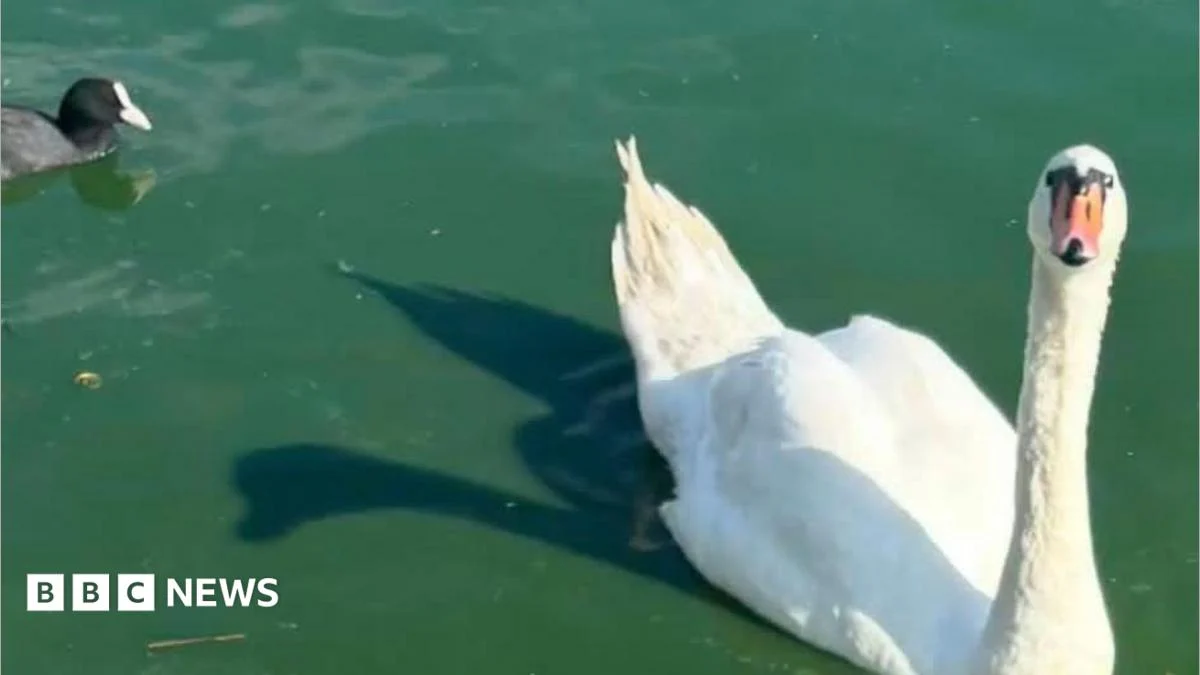
The heart-wrenching loss of an entire swan family at Canvey Lake in Essex has plunged local residents into profound grief, leaving them feeling "broken" and "devastated." The beloved avian family, comprising two adult swans and their remaining three cygnets, succumbed to what wildlife experts are certain was exposure to highly toxic blue-green algae, painting a grim picture of environmental degradation at the cherished local nature reserve. This tragedy marks the culmination of a devastating season for the swans, who had become a symbol of the lake’s natural beauty and a source of daily joy for the community.
The swans, a familiar and much-loved presence on Canvey Lake, had initially welcomed nine cygnets this year, fostering hopes for a thriving new generation. However, their journey was fraught with peril from the outset. Early in the season, two of the young cygnets were tragically lost to fox attacks, a natural but nonetheless upsetting occurrence for onlookers. The family’s woes escalated further in June when four more cygnets began to show signs of distress and were rushed to the South Essex Wildlife Hospital. Despite the dedicated efforts of the hospital staff, one of these cygnets tragically died from avian botulism, a serious paralytic illness often associated with warm, stagnant water conditions. The remaining three cygnets, along with their parents, continued to navigate the increasingly perilous waters of Canvey Lake until their deteriorating condition prompted their urgent transfer to the wildlife hospital last Tuesday. Despite a desperate fight for survival, all five members of the swan family passed away on Friday, leaving a void that residents describe as unbearable.
Martin England, 62, a dedicated committee member of the Friends of Canvey Lake, articulated the collective despair, describing the situation as an "environmental disaster." His words echo a growing chorus of concern among residents who have witnessed the lake’s ecological health decline rapidly. The loss of the swans, while deeply emotional, is seen by many as a stark indicator of a much larger, systemic problem afflicting the once-vibrant ecosystem.
Sue Schwar, the founder of the South Essex Wildlife Hospital, spoke with a chilling certainty regarding the cause of death. "I am 100% sure the deaths had been caused by exposure to blue-green algae," she stated, her diagnosis reinforcing fears that have long lingered within the community. Blue-green algae, scientifically known as cyanobacteria, is not merely an unsightly scum on the water’s surface; it is a potent producer of toxins that can cause severe illness and death in wildlife, pets, and even pose risks to humans. These toxins can affect the liver, nervous system, and skin, leading to rapid deterioration and organ failure.
For residents like Hayley Cockayne, 50, who lives in Canvey, the loss is intensely personal. "I’m absolutely broken. I’m devastated," she confessed, her voice heavy with grief. "I’ve spent four or five hours with them daily for the past three years." Her daily ritual of observing and connecting with the swans had forged a deep bond, making their demise feel like the loss of extended family. Cockayne’s sorrow is tinged with a painful sense of foresight: "I always said this year we would lose all the wildlife on this lake and I knew it was coming but it didn’t make it any easier to accept." Her heartbreaking prediction appears to be tragically unfolding, as she described the lake as "dead" and "absolutely unacceptable," adding: "You’ve got not a lot of birds on it and just several floating in it dead." This grim testimony paints a vivid picture of an ecosystem teetering on the brink, its once diverse life now succumbing to the toxic embrace of the algae.
The irony of the situation is particularly galling for long-term residents. In 1998, Canvey Lake was officially registered as a Local Nature Reserve by the Canvey Island Town Council, a designation intended to protect its invaluable wildlife and enhance site standards. The ambition was to create a sanctuary where nature could flourish, offering both ecological benefits and recreational opportunities for the community. Yet, decades later, the lake’s current state stands in stark contradiction to these noble intentions, prompting questions about management, oversight, and the true meaning of its "nature reserve" status.
The severity of the lake’s contamination became alarmingly clear in July 2023, when testing revealed that Canvey Lake contained an astonishing 2.5 million cells of blue-green algae per millilitre. This figure is more than 100 times the warning threshold of 20,000 cells, a level at which authorities typically issue urgent warnings and advise against any contact with the water. Such an extreme concentration signifies an environment critically overwhelmed by the toxic bloom, rendering it lethal for much of its aquatic life. Blue-green algae thrives in still, warm waters rich in nutrients, often exacerbated by runoff from agricultural fertilisers, sewage, and other pollutants. Prolonged periods of hot weather, coupled with insufficient water circulation and high nutrient loads, create the perfect storm for these deadly blooms to proliferate.
The shocking test results and the escalating environmental crisis had significant repercussions for the lake’s governance. The findings led Canvey Island Town Council to take the drastic step of surrendering its lease of the lake to Castle Point Borough Council. This move, while perhaps a pragmatic decision in the face of an intractable problem, highlighted the immense challenges and responsibilities associated with managing such a severely degraded natural asset. It effectively passed the burden of responsibility for the lake’s future onto the borough council, which now faces the daunting task of remediation.
In response to the growing concerns and the undeniable evidence of the lake’s deterioration, Castle Point Borough Council had previously allocated £500,000 in June towards restoring the lake. However, following the latest tragedy and the intensified public outcry, the council has now committed a more substantial £1m of funding towards "major restoration works." While the specifics of these works are yet to be fully detailed, they are expected to encompass a range of interventions, potentially including dredging to remove accumulated sediment and nutrient-rich organic matter, improving water circulation through aeration or engineered flow systems, and implementing measures to control external pollutant inputs. The aim is to break the cycle of algal blooms and restore the lake to a healthier, more hospitable state for wildlife.
An Environment Agency spokesperson confirmed that the lake was managed by Castle Point Borough Council and stated that the agency was supporting the authority in responding to the complex issues at hand. The nature of this support typically involves providing expert advice on environmental management, monitoring water quality, and potentially assisting in the development of long-term remediation strategies.
Castle Point Borough Council expressed its profound sadness over the loss of the swans and acknowledged the deep emotional impact these deaths would have on local residents. The authority reiterated that recent testing had confirmed the presence of blue-green algae, describing it as a "naturally occurring phenomenon" that can develop in still water during prolonged periods of hot weather. While technically correct that cyanobacteria are natural, this phrasing can sometimes downplay the role of human activity in creating the conditions for severe, toxic blooms. The council also pointed out that similar problems, including algal blooms and impacts on wildlife, had been reported in lakes and other standing bodies of water across the region during the recent heatwave and drought conditions. This broader context, while true, does little to assuage the specific grief and anger felt by the Canvey community over their cherished lake.
The commitment of £1m for restoration works signals a significant investment, but the road to recovery for Canvey Lake will be long and arduous. Residents, while cautiously hopeful, remain vigilant, demanding transparency, accountability, and demonstrable progress. The death of the swan family serves as a poignant and devastating reminder of the fragility of our ecosystems and the critical importance of effective environmental stewardship. The community’s bond with the lake and its wildlife remains strong, and their collective determination to see Canvey Lake restored to its former glory will undoubtedly be a driving force in the challenging years ahead. The tragedy has galvanized a community’s resolve to ensure that no more lives are lost to a preventable environmental catastrophe.


 atisusanti
 George Anjay
 Nakalama John

 Ramos Leo