
 Ramos Leo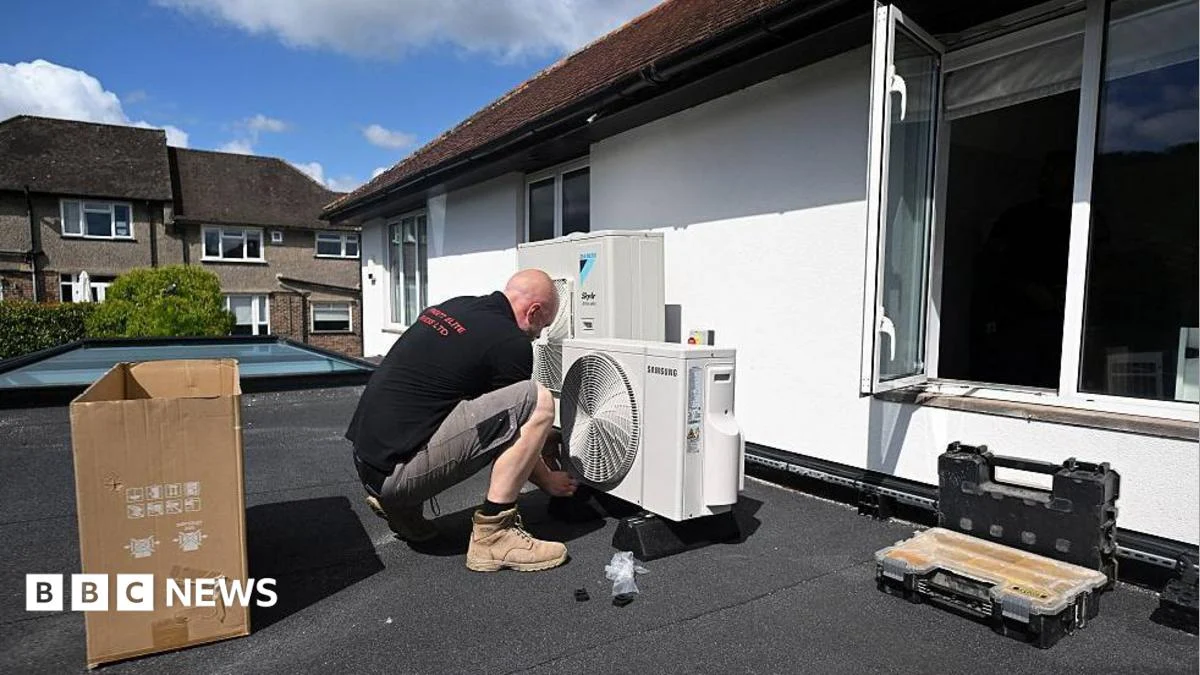
The Liberal Democrats are advocating for a proactive national strategy to equip new homes, schools, and hospitals with air conditioning systems, or other effective cooling mechanisms, in response to the escalating threat of climate change and increasingly extreme temperatures. The party’s proposal comes as a critical adaptation measure, aiming to safeguard public health and ensure building resilience against future heatwaves, which are predicted to become more frequent and intense across the United Kingdom.
This policy push is underpinned by stark warnings from the UK’s independent adviser on tackling climate change, the Climate Change Committee (CCC). In a comprehensive report published earlier this year titled "A Well-Adapted UK," the CCC estimated that a staggering 92% of existing homes in the country would be at significant risk of overheating by the year 2050. This alarming projection highlights a systemic vulnerability in the nation’s housing stock, much of which was designed for colder climates and lacks the necessary features to cope with prolonged periods of high temperatures.
Speaking to Matt Chorley on BBC Radio 5 Live, Liberal Democrat MP Tim Farron articulated the urgency behind the party’s stance. "We want to make sure that we’re not being hysterical but we’re recognising that we have more extreme temperatures, more extreme weather," Farron stated, emphasizing the need for a pragmatic and forward-thinking approach. He stressed the importance of future-proofing the nation’s infrastructure, asserting, "I want the homes that people live in in the future to be ready for that, that we be climate-ready and prepared." This sentiment underscores a broader concern about the societal and economic impacts of climate change, extending beyond mere discomfort to encompass serious health risks, decreased productivity, and strain on public services.
For new residential developments, the Liberal Democrats contend that the cost of incorporating cooling systems would be relatively small when compared to the overall expense of constructing a home. They argue that such an investment would not only enhance the comfort and liveability of properties but also make them significantly more attractive to prospective buyers in a future where climate resilience is a key consideration. The party points to the long-term value proposition, where climate-ready homes offer a tangible advantage in a changing environment, potentially commanding higher market value and reducing future retrofitting costs.
Crucially, the party’s vision for cooling systems is not one that exacerbates the very climate crisis it seeks to address. Farron specifically highlighted the potential of air source heat pumps, advocating for their installation as a sustainable alternative to conventional air conditioning units. Air source heat pumps are highly efficient, capable of both heating and cooling a building by transferring heat between the indoor and outdoor environments. By utilising electricity, especially from renewable sources, these systems offer a lower carbon footprint compared to traditional refrigerants and energy-intensive AC units. Their dual functionality also provides a holistic solution for year-round climate control, aligning with broader decarbonisation goals for the built environment.
However, the widespread adoption of air conditioning units is not without its critics, who raise valid concerns about their environmental impact. One significant issue is the phenomenon known as the "urban heat island effect." Michael Whittall, sustainability manager at property developer Fairview New Homes, elaborated on this concern to news agency PA. "Air conditioning systems work by removing heat from inside buildings and releasing it outdoors," Whittall explained. "When this happens at scale, particularly in dense urban areas, it can contribute to the urban heat island effect – adding to higher outdoor temperatures and increasing heat stress in cities." The urban heat island effect describes how urban areas experience higher temperatures than surrounding rural areas due to human activities and materials like concrete and asphalt absorbing and re-emitting solar radiation. Increased outdoor heat from AC units only intensifies this effect, creating a feedback loop that can make cities even hotter and more uncomfortable.
Whittall therefore stressed that the primary focus should be on "passive cooling" strategies. These involve designing buildings to naturally mitigate heat gain and promote cooling without relying on mechanical systems. Examples include optimising building orientation to minimise sun exposure, incorporating effective shading solutions such as external shutters, awnings, or strategically placed trees, and implementing robust natural ventilation designs. Other passive cooling techniques involve using light-coloured materials for roofs and facades to reflect solar radiation, incorporating green roofs and walls for insulation and evaporative cooling, and leveraging thermal mass in building materials to absorb heat during the day and release it slowly at night. These strategies reduce the need for energy-intensive active cooling, offering a more sustainable path to indoor comfort.
Amanda Williams, head of environmental sustainability at the Chartered Institute of Building (CIOB), echoed the sentiment that while air conditioning or reversible heat pumps would "undoubtedly have a crucial role in some circumstances," making them the default option "risks locking in higher energy consumption." She emphasised that the priority should be designing homes that "remain comfortable for as much of the year as possible" through intelligent architectural and material choices. This perspective highlights the importance of a hierarchical approach to cooling, where passive design principles are prioritised, followed by highly efficient active systems like heat pumps only when necessary. Relying solely on mechanical cooling without addressing fundamental design flaws can lead to increased energy demand, higher utility bills for occupants, and a greater carbon footprint if the electricity is not sourced from renewables.
The Home Builders Federation also weighed in, with a spokesperson stating that "New build homes are required to be exceptionally well insulated which helps keep them both warmer in winter and cooler in summer." They added that this makes living in a new build "more comfortable and significantly cheaper to run than older, less well-insulated homes." Modern building regulations, such as Part L of the Building Regulations in England, mandate high standards for thermal efficiency, airtightness, and ventilation in new constructions. These standards aim to reduce heat loss in winter and prevent excessive heat gain in summer, contributing to better energy performance and occupant comfort. While these measures undoubtedly improve the performance of new homes compared to older properties, the central question posed by the Lib Dems and the CCC report is whether current standards are sufficient to withstand the unprecedented heat expected in the coming decades, especially given the predicted 92% overheating risk for existing homes. The challenge lies in adapting to future extremes, not just current norms.
Beyond new homes, the Liberal Democrats have also argued vehemently for government funding to equip essential public buildings such as schools and hospitals with adequate cooling systems. The vulnerability of these institutions to extreme heat is particularly acute. In hospitals, high temperatures can exacerbate the conditions of vulnerable patients, including the elderly, infants, and those with chronic illnesses, leading to increased heat stress, dehydration, and potentially life-threatening complications. For medical staff, operating in overheated environments can impair concentration and increase the risk of errors. Similarly, in schools, excessive heat can severely impede learning, reduce concentration levels among students and teachers, and even pose health risks, particularly for younger children. The mental and physical well-being of both educators and pupils is compromised, undermining educational outcomes.
The party asserts that the costs of inaction in preparing for climate impacts far outweigh the costs of acting immediately. They reference the CCC’s report once more, which estimated that the economic consequences of climate impacts could range from £60 billion to £260 billion per year by the 2050s if no further action is taken. In stark contrast, the report suggests that the cost of protecting people and infrastructure from these impacts would be significantly lower, between £7 billion and £22 billion per year. This compelling economic argument underscores the fiscal prudence of investing in climate adaptation now to avoid much larger expenses and societal disruptions in the future.
To finance the necessary upgrades for healthcare facilities, the Liberal Democrats have specified that the cost of fitting hospitals with air conditioning would be drawn from their proposed £10 billion investment plan for the National Health Service (NHS). This dedicated funding mechanism highlights the party’s commitment to ensuring that critical public services are resilient in the face of a changing climate. While specific funding details for schools were not explicitly outlined in the initial announcement, the principle of government responsibility for ensuring climate readiness in public buildings remains central to their policy.
In conclusion, the Liberal Democrats’ call to mandate air conditioning or equivalent cooling systems in new homes, schools, and hospitals represents a significant policy proposal aimed at enhancing the UK’s climate resilience. While acknowledging the environmental concerns associated with traditional air conditioning, the party champions sustainable alternatives like air source heat pumps and underscores the economic imperative of proactive adaptation. The debate surrounding this proposal brings into sharp focus the complex interplay between climate change, urban planning, building design, public health, and national infrastructure, necessitating a comprehensive and nuanced approach to safeguard the nation’s future well-being.




 Roy Suryo

 Nakalama John
 atisusanti
